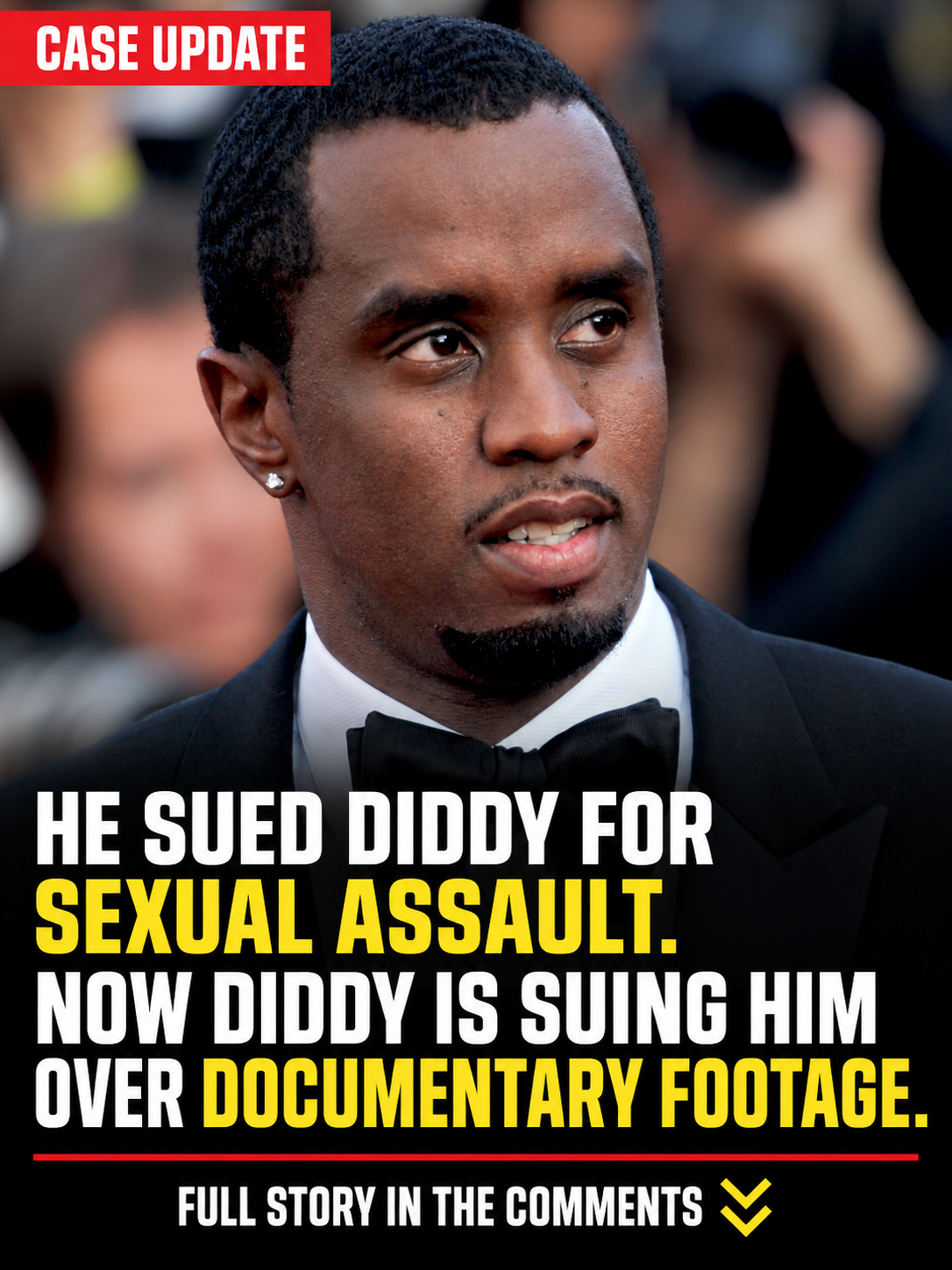
He Sued Diddy for Sexual Assault. Now Diddy Is Suing Him Over Documentary Footage.
Rodney Jones sued Sean Combs with allegations that included sexual assault. Now Combs has made claims of his own against the producer and videographer, centering on documentary footage. The new legal move adds another dispute to the case; it does not by itself establish that either side’s allegations are true. [1] The reversal in courtroom roles gives the development an immediate hook, but the substance concerns two different sets of claims. Jones’s allegations address misconduct during a working relationship. Combs’s counterclaim addresses recordings and statements. The new filing makes the dispute more complicated because it adds issues for the court to consider rather than erasing the issues already raised.
Jones, known professionally as Lil Rod, worked with Combs on The Love Album: Off the Grid. His lawsuit describes alleged misconduct during that working relationship. The allegations are contested, and Combs has denied them. The article’s subject is the reported counterclaim, rather than a verdict on Jones’s original accusations. [2] The professional connection explains why the two men had access to one another and why recorded material became part of the dispute. A producer or videographer may work closely with an artist over a project. That history supplies context, but proximity alone does not decide either an allegation of abuse or a disagreement about what could be done with recordings.
The counterclaim was filed on August 11, according to reports published two days later. Combs accused Jones of gaining unauthorized access to footage intended for a project about Combs’s own life. His lawyers alleged that material was later used in a documentary critical of the music executive. [3] The date identifies the legal action behind the headline. It separates the counterclaim from the earlier lawsuit and from the documentary’s release. Those events belong to a sequence, not one simultaneous incident. Understanding the order helps readers see why a dispute about material collected earlier could become a new court filing after the footage appeared publicly.
That is a claim made by Combs’s side, not a court finding that Jones stole anything. The difference should remain visible whenever the allegation appears. A countersuit can introduce an accusation with serious consequences while still requiring evidence and legal examination before any liability is established. [4] The language used to describe an accusation changes what the audience understands. Saying Combs alleges unauthorized access identifies the source of the claim. Announcing that Jones committed a theft would go further and supply a conclusion the filing itself cannot establish. Preserving that difference is essential to telling the story of the counterclaim accurately.
XXL reported that the dispute involved computer drives and footage associated with Sean Combs: The Reckoning, the documentary project linked to 50 Cent. Combs’s position was that he had lost control of material intended for his own authorized documentary. Those assertions came from the counterclaim. [2] The documentary connection explains why recordings may have value beyond the moment in which they were made. Material collected for one project can become important to another program and another public account of a person’s life. The dispute asks how that material moved between those settings and what authority, if any, governed its use.
The presence of video makes the story easy to misread. Readers may assume that any footage at issue necessarily proves or disproves a sexual-assault allegation. The reported dispute concerns ownership, access, use and statements associated with the material. Those questions are distinct from whether particular alleged abuse occurred. [4] A recording can show particular events while leaving ownership and permission unanswered. Those issues may depend on arrangements surrounding the work rather than on what a viewer sees in the final program. The footage dispute therefore cannot be treated as a shortcut to resolving every allegation between the parties. Different questions require different parts of the record.
Combs also accused Jones of defamatory statements, according to The Source. That adds a dispute over speech to the claims about the footage. A legal complaint over defamation does not establish that a statement was false simply because the person it concerns has filed suit. [3] The speech claim introduces another distinction. Statements about a person and the right to use a piece of footage are not the same issue, even when both appear in one documentary. Combs’s filing raises objections to both. Reporting those objections requires attention to what is alleged to be false and what material is alleged to have been obtained or used improperly.
Jones’s original case included allegations of sexual assault, harassment and unpaid work, XXL reported. The working relationship and compensation issues form part of the history between them. It would be misleading to reduce the entire case to a fight over a television documentary that appeared after the original lawsuit. [2] The earlier working relationship remains important because the documentary did not create the original conflict. Jones had already made claims concerning his experience with Combs. The later filing adds a dispute connected to media coverage of that experience. Keeping the beginning in view prevents the article from turning an allegation of abuse into merely a quarrel about a television production.
Us Weekly’s account of the counterclaim described a trip to St. Barts in 2022. Combs’s filing connected access to him during that period with the later dispute over footage. Again, the narrative about what Jones did comes from a party’s legal claim, not an independent finding by this article. [1] The trip provides the setting for Combs’s account of the recordings. It explains when his lawyers say the disputed access occurred and why they connect that access to the later documentary. The location can make the story vivid, but it does not verify the allegations. The reader still needs to know that the narrative comes from the counterclaim.
For readers outside the entertainment industry, the practical issue is recognizable. A person hired to help create material may gain access to valuable recordings. A later breakdown in the relationship can produce competing claims about what was authorized, who owned the material and how it could be used. [4] Ordinary workplaces also depend on understandings about access. Being allowed to see or handle material does not necessarily answer every question about copying, distributing or selling it. This general distinction helps readers recognize the kind of disagreement the filing raises. The actual answer in this dispute depends on the evidence and arrangements involving the specific recordings.
The counterclaim sought damages and action concerning copies of the footage, according to mxdwn’s report. Requests made in a filing should not be confused with relief already awarded. The report described what Combs wanted the court to order, not a completed ruling granting every demand. [5] Requested relief tells the reader what a party hopes to achieve through litigation. It does not show that the request will succeed. A claim concerning copies of footage may seek action affecting their possession or use, while a demand for damages concerns alleged loss. Those requests should remain described as requests until a reported decision establishes an outcome.
This distinction is especially important with a figure whose legal affairs already involve multiple proceedings. A civil accusation, a counterclaim and a criminal judgment can appear together in coverage while addressing different conduct. The existence of one proceeding does not resolve the evidence or legal questions in another. Multiple proceedings can produce understandable confusion when the same famous person appears in each headline. The important identifying questions are who brought the action, what conduct it concerns and what stage it has reached. Applying those questions here distinguishes Jones’s claims from Combs’s counterclaim and both from criminal proceedings involving different charges.
mxdwn’s account discussed Combs’s separate prison sentence arising from transportation-for-prostitution convictions. That background should not be described as a rape conviction in Jones’s case. The counterclaim over documentary material and Jones’s assault allegations have their own legal histories and should remain separately identified. [5] The criminal background may help explain public attention, but it cannot provide a verdict in this civil dispute. A conviction on specified charges establishes an outcome on those charges. It does not automatically decide a separate allegation or a claim about recordings. Keeping the accounts distinct gives readers a more useful picture of the legal situation than a single dramatic label.
The Source’s reporting highlights a reversal in courtroom roles: an accuser who filed a suit also faced claims from the person he sued. That can be a powerful headline without turning the case into a claim that the original accusations collapsed. A counterclaim is a legal action, not proof of such a collapse. [3] Counterclaims change the direction of litigation by allowing the responding party to put claims of its own before the court. They can have practical consequences for both sides, but their existence is not an answer to the original allegation. The newsworthy development is the added dispute, with its own assertions and requested remedies.
Netflix had publicly rejected complaints about the documentary’s footage when the program was released. Us Weekly reported the distributor’s position that material had been obtained legally and that the production held the necessary rights. That response differs from Combs’s allegations about unauthorized access and use. [1] That response is part of the available coverage and gives readers a competing account about the material’s use. It does not establish that every piece of footage mentioned by Combs was obtained in the same way. Its importance is that the documentary’s distributor publicly defended its acquisition, which helps explain why authorization remains a disputed issue.
Jones has maintained his allegations, according to XXL’s reporting. Combs disputes them and has brought claims of his own. Keeping both positions visible is more informative than presenting one side’s court papers as the complete history. Readers need to know when the facts remain under dispute. [2] Presenting both positions does not require treating every assertion as equally persuasive. It requires identifying who is making each assertion and what has actually been established in the reporting. The audience can then understand the disagreement without an article silently adopting one party’s filing as the authoritative account of the entire working relationship.
There is also a difference between public interest in a documentary and a court’s evaluation of it. Viewers may reach their own impressions from a program. A legal proceeding considers particular claims, evidence and legal standards. Popularity, outrage or a famous producer’s involvement does not substitute for that examination. A documentary is a public narrative assembled for viewers. A court dispute examines the particular allegations put before it. Those processes can involve some of the same material while serving different purposes. The prominence of a program can explain why a filing attracts attention, but it cannot decide the accuracy or legal significance of every statement included in it.
Us Weekly reported the filing through documents it had obtained. The significant development is therefore concrete: Combs opened a new legal front involving Jones and the footage. No additional dramatic ending is needed, and the article should not predict a payment, dismissal or criminal charge that has not been reported. [1] The filing’s significance is concrete enough to report without predicting a result. It expands the conflict to include allegations about recordings, access and statements in a documentary. What happens next depends on the proceedings. The article can explain why the new claims matter while remaining clear that a request for relief is not the same as receiving it.
The relief described in mxdwn’s report makes the remaining issue clear. Combs wanted the court to address alleged harm from the use of recordings and statements. Whether he would receive that relief remained a different question from his request for it. The same care applies when describing Jones’s own allegations. [5] That symmetry matters throughout the account. Jones’s original claims and Combs’s new claims should be described according to their actual status. A reader should not have to infer from the tone which side the article treats as proven. Clear attribution preserves the distinction between the public dispute and any outcomes that must be established through the record.
The story now contains two sets of contested claims between people who once worked together. Jones alleges abuse; Combs denies wrongdoing and alleges misuse of footage. Understanding that development requires following the record, keeping the cases distinct and resisting a headline that announces a verdict no court has given. The strongest ending returns to the former collaboration and the questions it now raises. People who worked together disagree about alleged conduct, recorded material and how that material was later presented. The counterclaim supplies a substantial new chapter, but it does not supply the final answer. Following that distinction gives the reader the development without a false verdict.