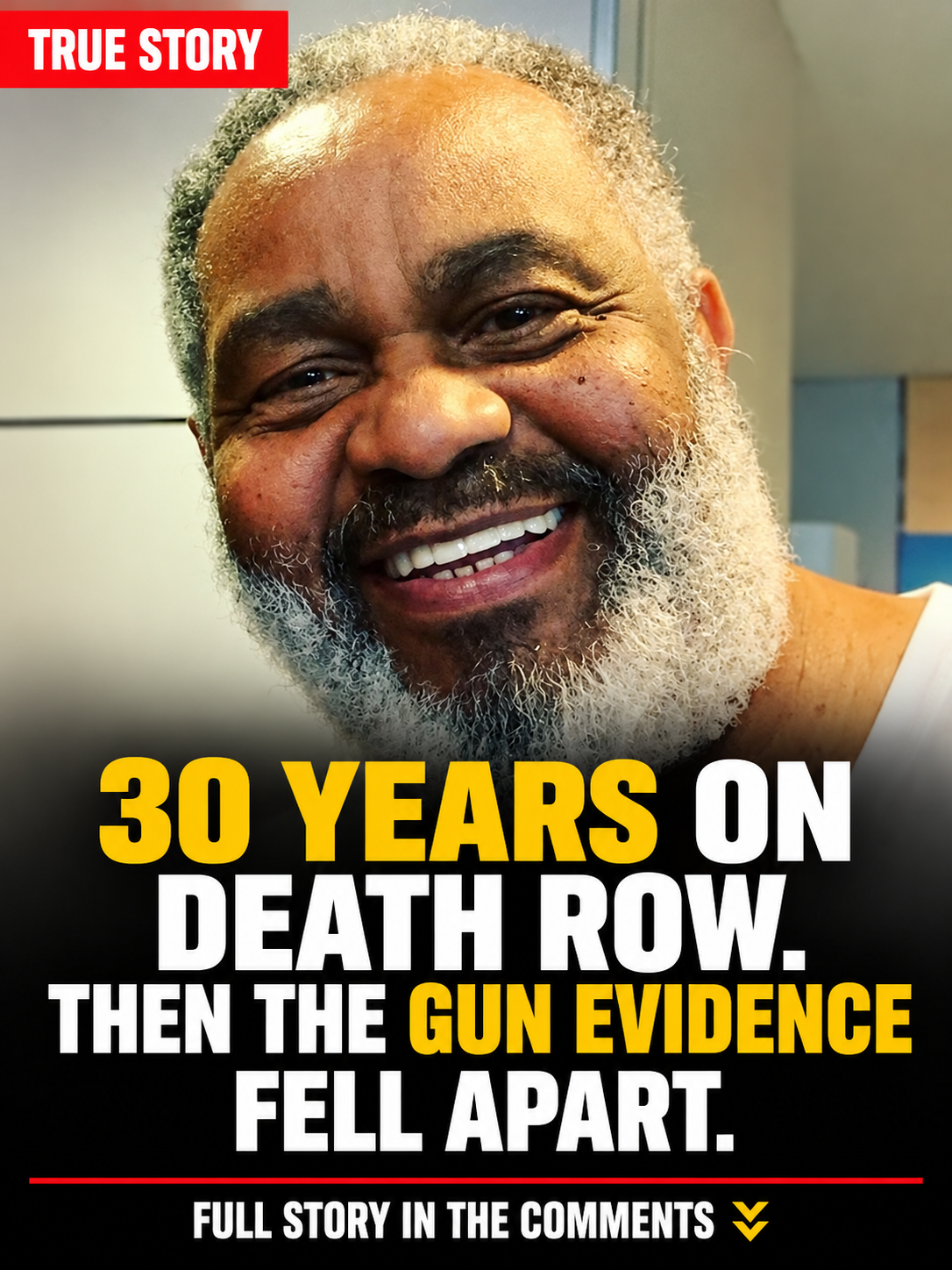
Thirty Years on Death Row. Then the Gun Evidence Against Anthony Ray Hinton Fell Apart.
Anthony Ray Hinton walked out of an Alabama jail in April 2015 after spending 30 years on death row for crimes he did not commit. The photograph of a free man is the hopeful part of the story. The harder part is understanding why a case built around disputed gun evidence lasted so long. [1] Thirty years is long enough for a family to move through an entire generation. Hinton’s release therefore carries two realities at once: freedom was finally restored, and decades could not be returned. The case’s central question is not simply why he left prison, but why the challenge to the evidence took so long to produce that result.
The original prosecution concerned the killings of two Birmingham-area restaurant managers in 1985. Police connected Hinton to the crimes through a revolver taken from his mother’s home. State examiners said the weapon matched bullets associated with the shootings, making the gun evidence central to the capital case. [1] Firearms testimony connected an object found in a family home to killings committed elsewhere. That connection gave the weapon its importance in the prosecution. A revolver’s existence alone could not answer the case; the asserted match was what made it incriminating. Understanding that chain helps explain why a qualified examination of the bullets became so consequential.
This was not a DNA exoneration. The decisive problem concerned firearms identification and the defense’s ability to challenge it. Describing the case as solved by a newly discovered DNA sample would provide a familiar television ending while losing the actual mechanism that had put Hinton on death row. [4] Different kinds of forensic evidence answer different questions. Here, the dispute concerned whether examiners could reliably link the recovered bullets to a particular firearm. That required expertise focused on the physical evidence at issue. Keeping the mechanism clear allows readers to understand the actual failure in the case rather than substitute a more familiar story about genetic testing.
His appointed lawyer misunderstood the money available for an expert. Believing funding was sharply limited, the lawyer retained someone who lacked the needed qualifications in firearms examination. The Supreme Court later examined that decision when considering whether Hinton had received the constitutionally required assistance of counsel. [2] A defense lawyer’s choice of expert can appear like a technical detail until the case depends on it. The issue was access to someone able to evaluate and challenge specialized testimony. Without the necessary qualifications, a defense witness cannot provide the scrutiny that the prosecution’s central scientific claim requires. The funding misunderstanding therefore had consequences far beyond a budget line.
The consequence reached beyond an accounting mistake. The prosecution’s central evidence needed a meaningful challenge from a qualified defense expert. Without that challenge, testimony presented as a reliable match could carry extraordinary weight. The failure affected the fairness of the process in which Hinton’s life was being decided. [2] Jurors are not expected to arrive with the training of firearms specialists. They rely on the evidence and explanations presented in court. That makes the quality of the expert testimony especially important. If one side’s central claim is not meaningfully tested, the fact-finding process can leave the jury with an impression of certainty that the underlying evidence does not justify.
Equal Justice Initiative lawyers later secured the views of highly qualified firearms examiners. Their conclusions undermined the asserted connection between the revolver and the crime evidence. The organization argued that Hinton’s conviction could not stand on testimony that specialists had shown to be unreliable. [3] The later examinations shifted attention back to the material itself. They asked whether the revolver could be connected to the bullets with the confidence asserted at trial. That work was essential because criticism of a lawyer, by itself, would not explain whether the key evidence was reliable. The technical review addressed the foundation on which the prosecution had relied.
Evidence favorable to him did not immediately bring release. EJI’s account of the litigation describes efforts to obtain relief while courts continued considering the case. For a prisoner on death row, having an argument is different from having an order that permits him to walk out. [3] Court proceedings create a difficult separation between a substantial challenge and an immediate remedy. A lawyer may present evidence undermining a conviction, but a court still has to decide what legal response follows. Hinton’s long confinement shows how that interval can matter to a person whose daily life continues inside prison while the case travels through review.
Years passed between expert examinations and the eventual result. The long delay is central to the emotional force of the story. A person can be waiting for officials to review scientific evidence while ordinary life outside moves through birthdays, family changes and the aging of people he loves. [5] Time in such a story should be understood as lived time. The calendar moves even when a legal question remains unresolved. Family members age, opportunities pass, and routines outside change. Hinton’s decades on death row give the case an emotional scale that cannot be conveyed by the words appeal or hearing alone, however important those proceedings are.
In 2014, the United States Supreme Court unanimously granted relief concerning the ineffective assistance of Hinton’s trial lawyer. The ruling focused on the unreasonable misunderstanding about expert funding. It did not simply announce a new theory of the crime; it addressed a failure in the defense he had received. [2] The unanimous decision gave national authority to the conclusion that the defense had failed in a crucial way. Its focus on the lawyer’s misunderstanding also made the error concrete. The ruling was about the representation Hinton received in a capital case, where the decision to obtain suitable expert assistance could affect the evidence presented to the jury.
That ruling moved the case toward a new trial, but freedom still required further steps. Subsequent testing by Alabama’s own forensic scientists did not establish the claimed match between the crime bullets and Hinton’s mother’s gun. Prosecutors ultimately could not proceed on the foundation that had supported the original conviction. [4] The next stage mattered because a new trial requires evidence a prosecution can actually use. Reexamining the gun evidence exposed the weakness of the asserted connection. The path from a court’s ruling to release therefore involved both legal procedure and forensic review. Describing only the Supreme Court decision would leave out the later development that made the charges unsustainable.
The charges were dismissed, and Hinton was released on April 3, 2015. EJI describes him as one of the longest-serving condemned prisoners freed after evidence of innocence. The length of his confinement makes the date both a celebration and a record of how much time had already been lost. [1] Dismissal changed his status in a way continued argument could not. He was able to leave confinement and resume life outside. The public image of that moment is powerful because it records an official reversal, not a temporary pause in litigation. At the same time, the date marks the end of a period that had already taken decades from him.
The Death Penalty Information Center counted him as the 152nd person exonerated from U.S. death row since 1973. That placement puts an individual story within a wider history of wrongful capital convictions. His release was extraordinary for him and his family, but the problem was not unique to one name. [4] The innocence count places that reversal in a wider public record. Each entry represents a separate person and a separate failure requiring examination. Hinton’s place on the list does not explain all other cases, but it shows why his experience belongs to a broader discussion about the reliability of capital convictions and the mechanisms available for correcting them.
The Supreme Court’s reasoning gives the story a practical dimension. Qualified expert assistance can be essential when a prosecution depends on technical evidence. A defense lawyer’s misunderstanding of available funding can have consequences that extend through decades. The court’s decision identified an error capable of changing the outcome. [2] The practical concern is whether technical claims receive the scrutiny they deserve before a verdict is reached. An expert’s confidence can sound persuasive to a nonspecialist, yet confidence alone does not establish accuracy. Hinton’s history shows the importance of a defense having the means and knowledge to test the prosecution’s account when specialized evidence carries decisive weight.
EJI also drew attention to racial bias, poverty and the quality of legal representation in the case. Those are parts of the organization’s documented account, not a reason to invent a conversation or assign motives to every individual involved. The supported history is serious enough without imagined details. [1] Those concerns also direct attention to resources. A defendant with limited money may depend on appointed counsel to identify what assistance is necessary and obtain it. When that process fails, the consequences fall on the person being tried. The case illustrates why fairness involves the practical capacity to present a defense as well as the formal existence of one.
The release attracted international attention, according to EJI’s review of the coverage. The image of a man leaving death row after three decades invited an immediate question: how could an official process have taken so long to respond to evidence that challenged its central claim? [5] The question matters because review is supposed to offer a way to address serious errors. When years pass despite a substantial challenge to central evidence, the public needs an explanation of the obstacles along the way. Hinton’s history makes that discussion personal by placing the procedures beside the length of a human life spent waiting for their result.
For readers who have raised children or helped aging parents, 30 years is a deeply recognizable measure. It can encompass a child’s journey from infancy into adulthood. Hinton’s case asks the public to think of confinement in that human scale, beyond the legal phrase of a lengthy sentence. [5] For a grandparent, three decades can contain the births and growing up of grandchildren. For a parent, it can contain nearly a child’s whole journey into independent adulthood. Those comparisons do not describe Hinton’s private family history; they help readers grasp the duration. A legal record’s number becomes easier to understand when measured against familiar stages of life.
The earlier litigation shows why persistence mattered. Attorneys continued presenting arguments about the expert evidence and the adequacy of the original defense. Legal advocacy is often described in terms of a single dramatic hearing. Here, the path to the decisive result extended across multiple courts and many years. [3] Persistence in this case involved returning to evidence and procedure across a long period. It required the ability to distinguish what needed examination, what a court had decided and what remained unresolved. That kind of work is less visible than the release photograph, but it is part of why the photograph could eventually exist.
An exoneration does not answer every emotional question that follows it. A dismissed charge establishes a crucial legal change; rebuilding a life is a different task. It would be wrong to invent Hinton’s private thoughts, but reasonable to recognize the enormous practical difference between being released and recovering lost time. [5] Freedom can restore choice without restoring the circumstances that would have existed absent the wrongful conviction. Housing, work and relationships belong to ordinary life, but ordinary life may have changed enormously during a long confinement. Recognizing that gap gives an exoneration story depth without claiming to know exactly how one person experiences every part of the transition.
The case’s place on the innocence list preserves that distinction. The record marks an official result and allows readers to understand the history that preceded it. Hinton was not merely granted mercy after a long sentence. He was exonerated after a case against him failed to withstand examination. [4] Mercy would leave the central account of guilt in place while reducing or ending punishment. This case reached a different result through challenges to the conviction and its evidence. That distinction explains why describing Hinton simply as a released prisoner misses the significance of the outcome. The legal history behind his freedom is central to what readers are being asked to remember.
Anthony Ray Hinton’s freedom is the ending readers hope for, but his story asks them to look at the years before it. The gun evidence did not hold up, and the defense had failed to challenge it properly. Truth eventually changed the result; persistence was necessary to make the system respond. [3] The hopeful ending should therefore lead back to the difficult questions rather than close them. Hinton’s release demonstrates that a conviction can be corrected, but the length of the wait demonstrates the cost of correction arriving late. Remembering both parts honors the achievement of obtaining freedom while keeping attention on the error that made such an effort necessary.


