For eighteen months, I slept on a folding bed beside my grandmother’s room.
I measured her medicine, cooked the soft foods she could swallow, washed her silver hair, and listened when she woke before dawn asking for my grandfather.
My older sister Denise visited three times.
So when Grandma died and Denise announced that the house belonged to her, I thought grief had confused me.
“Grandma signed it over last spring,” she said, laying a deed on the kitchen counter. “You can stay until the end of the month.”
The house had been in our family since 1958. My grandfather bought it after a bank refused him a mortgage and a Black church credit union gave him a chance.
Every doorway carried a history. My mother learned to walk in the hallway. My cousins slept shoulder to shoulder in the basement during summer reunions. Grandma fed half the neighborhood from that kitchen.
Denise tapped the document. “It’s legal, Maya.”
I looked at the signature. It resembled Grandma’s, but the final letters tilted upward. Grandma’s hand had trembled downward after her stroke.
“When did she sign this?”
“You were at work.”
I had reduced my nursing shifts to two days a week so Grandma would never be alone. Denise had apparently chosen one of those days.
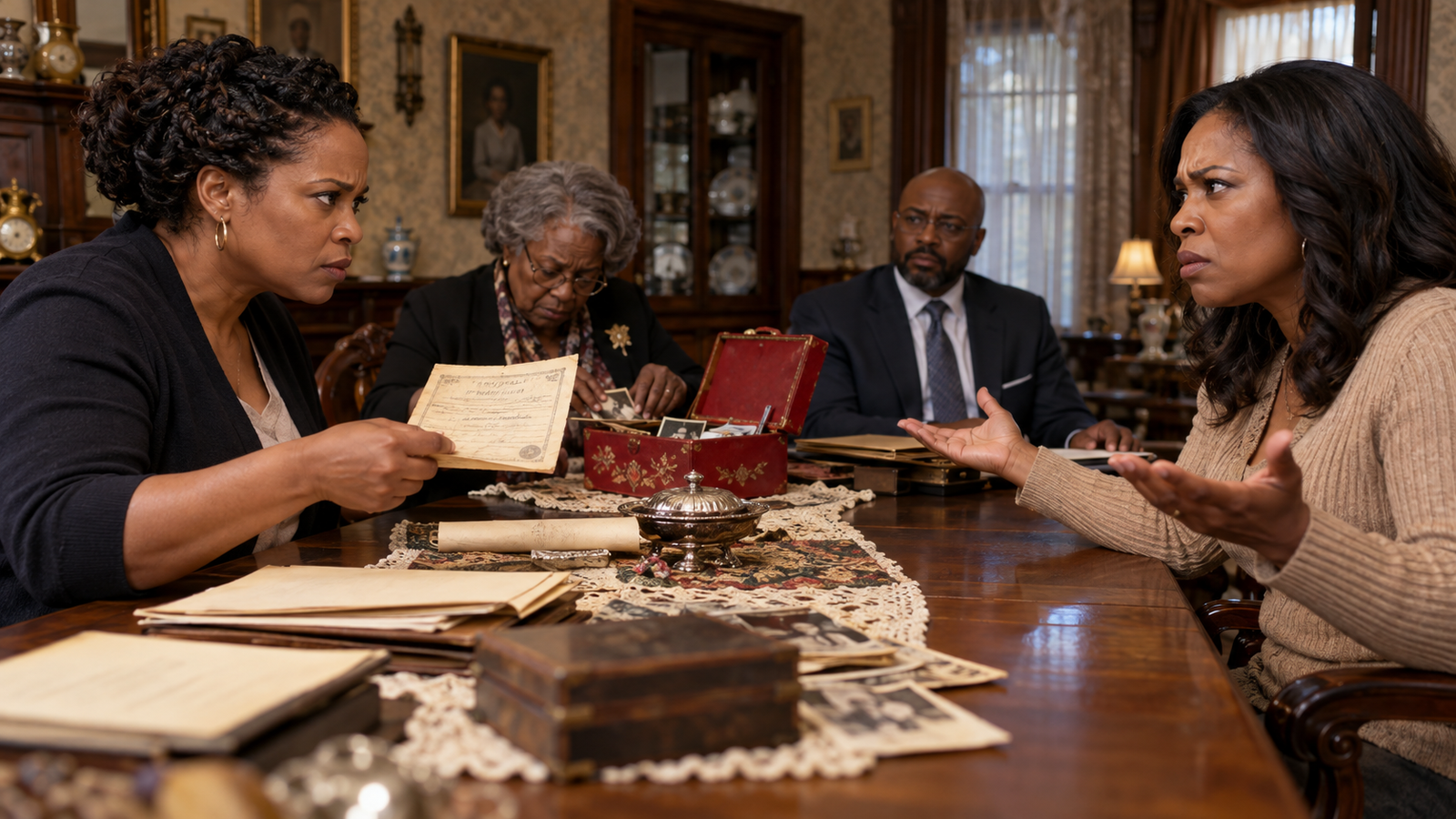
Our aunt Lorraine arrived for the will reading carrying Grandma’s red sewing box. Attorney Samuel Price placed his briefcase on the dining table and asked Denise to sit.
Denise smiled as though the meeting were a formality.
Mr. Price read the first pages. Grandma left small gifts to her church, grandchildren, and neighbors. Then he paused.
“Regarding the residence,” he said, “there is a complication.”
Denise pushed the deed toward him. “There isn’t.”
He did not touch it.
Instead, Aunt Lorraine opened the sewing box and removed a small digital recorder.
Grandma had purchased it after her stroke because writing had become difficult. She recorded grocery lists, prayers, and memories for the family.
Two weeks before the deed was signed, Grandma had recorded something else.
Her voice filled the room, thin but unmistakably clear.
“Denise keeps asking me to sign papers about the house. She says it will make taxes easier. I told her no. This home is to remain for the family, and Maya is to be its caretaker because she cared for me without asking what she would receive.”
Denise stood so quickly her chair struck the wall.
“That proves nothing.”
Mr. Price opened another folder. The notary on the deed was Denise’s business partner. Security footage from a nearby pharmacy showed Grandma there at the exact time the deed claimed she was signing documents across town.
My sister’s face lost its color.
I wanted to shout. Instead, I remembered Grandma’s final week, when she squeezed my hand and said, “Do not let anger turn you into the person who hurt you.”
The deed was challenged and later voided. Denise avoided prison by admitting fraud, returning the property, and accepting probation and restitution.
Some relatives said I should forgive her immediately because family is family.
I told them forgiveness was not the same as pretending trust had never been broken.
The valid will did not give the house solely to me. Grandma placed it in a family trust with one condition: it had to serve the neighborhood that helped our family survive.
For months, I repaired the roof, painted the rooms, and replaced broken pipes. Church volunteers arrived every Saturday. Children from the block carried brushes and argued over paint colors.
On Grandma’s birthday, we opened the Brooks House Community Room.
The front parlor became a tutoring space. The dining room hosted free legal clinics for seniors. The basement became a pantry stocked by local businesses.
I kept Grandma’s kitchen almost exactly as she left it.
A year later, Denise appeared at the gate holding two grocery bags. I did not invite her inside immediately.
“I’m not asking you to forget,” she said. “I’m asking if I can start doing something right.”
I gave her a list of pantry items and a volunteer shift on Saturday morning.
She arrived early.
Repairing our relationship took years, not one scene. Denise attended counseling, repaid the legal costs, and showed up when no one was watching.
The house remained in the family, but Grandma’s final gift was larger than property.
She taught us that inheritance is not only what someone leaves in your hands. It is also the responsibility they leave in your character.
Above the front door, we placed a brass plaque with her favorite sentence:
A home survives when everyone who enters it leaves with more dignity than they brought.


