My new boss handed me an empty tray and told me the kitchen needed help.
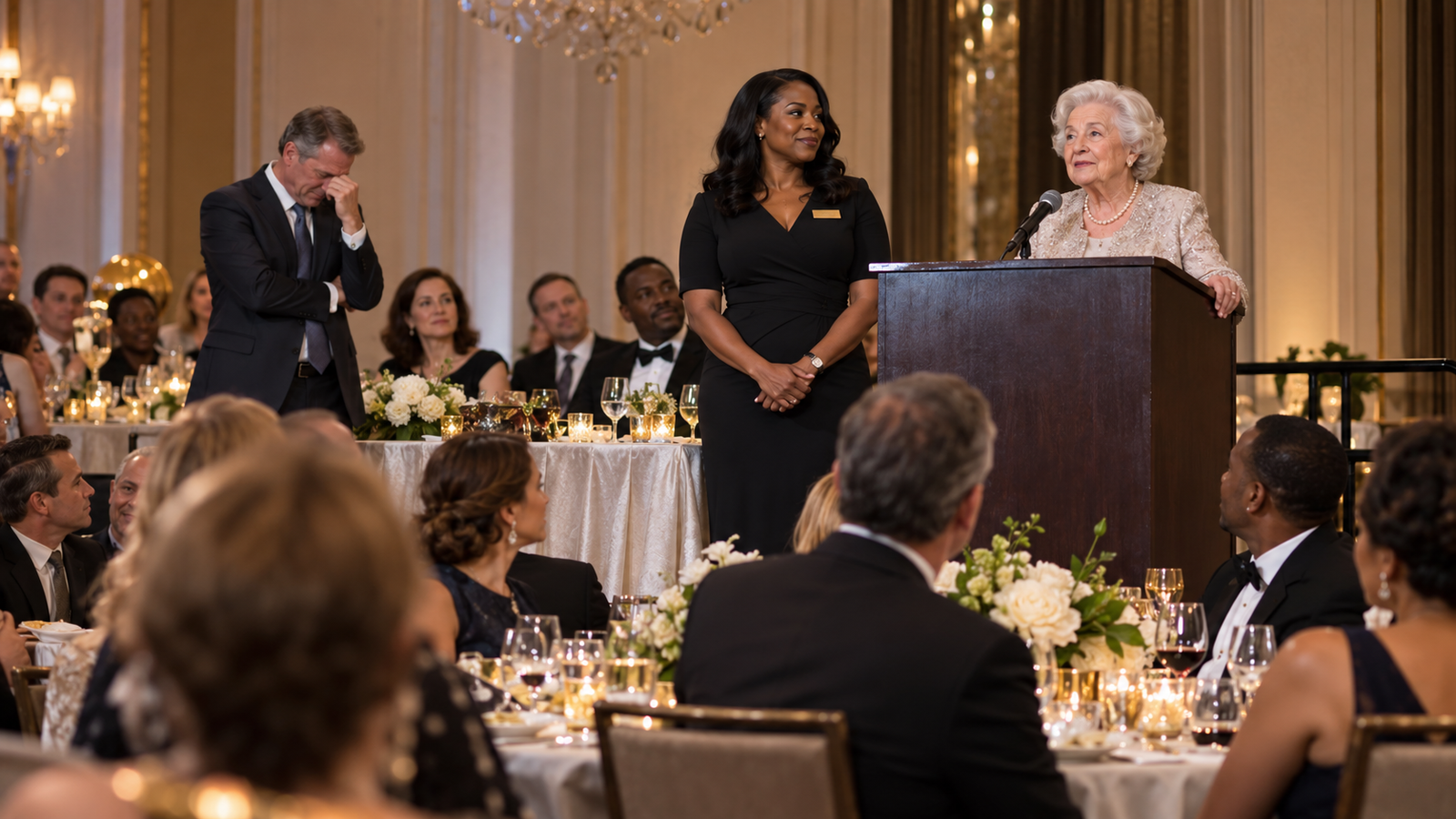
We were standing inside the ballroom of the Hawthorne Hotel at our company’s annual leadership dinner. I wore a black silk dress, a gold name badge, and the heels I had bought after signing my executive contract.
“I’m not catering staff,” I said.
Richard Bell glanced at my badge without reading it. “Then find someone who is. We can’t have the help standing around while guests arrive.”
Three people heard him. None spoke.
My name is Dr. Simone Carter. I had spent fourteen years designing medical supply systems for rural hospitals. Meridian Health recruited me to lead a national division after my team reduced emergency delivery times by forty percent.
Richard had approved my appointment by email. We had never met face to face.
I placed the tray on a table. “You should read my name.”
He finally did.
His expression changed, but only for a second.
“Ah,” he said. “The new diversity hire.”
This time, the silence around us felt louder.
I could have left. I wanted to.
But at the far end of the ballroom stood a display showing photographs of clinics my team had helped keep open. Nurses in Mississippi. A pediatric unit in Georgia. A mobile pharmacy serving families across Alabama.
I had not come for Richard. I had come for them.
Dinner began. My place card was at the head table beside the company’s founder, eighty-one-year-old Evelyn Shaw. Richard saw it and quietly instructed a server to move me to a table near the back.
The server hesitated. “Ms. Shaw approved the seating chart.”
“I’m approving a change,” he replied.
I sat where he sent me.
Halfway through the meal, Evelyn Shaw approached the microphone. She spoke about the company’s difficult year, hospital shortages, and the obligation to serve communities that major distributors ignored.
Then she said, “The future of this company depends on a leader many of you are meeting tonight.”
Richard straightened his jacket.
Evelyn looked toward the empty chair beside her.
“Dr. Carter, would you please join me?”
Every face turned toward the back table.
I walked across the ballroom without rushing.
Evelyn took my hand. “This woman’s work kept eleven rural hospitals supplied during last winter’s storms. Our board voted unanimously this afternoon to place her in charge of national operations.”
Then she noticed my place card had been moved.
“Why were you seated back there?” she asked.
No one answered.
I could have protected Richard from the consequences of his own words. Black professionals are often expected to absorb disrespect gracefully so everyone else can remain comfortable.
I decided comfort had already cost the company too much.
“Mr. Bell mistook me for catering staff,” I said. “After learning my position, he called me a diversity hire.”
Evelyn did not look shocked. She looked tired.
“Richard,” she said, “stand up.”
He did.
She asked the three witnesses what they heard. One by one, they confirmed it.
Evelyn turned back to the room. “Silence is not neutrality. Silence is how capable people are humiliated in public while institutions later claim they never saw a problem.”
Richard was placed on leave that evening. An investigation found other complaints that managers had ignored. He did not return.
I accepted the operations role with conditions: transparent promotion criteria, independent reporting channels, and paid leadership training connected to measurable outcomes—not decorative speeches.
Some employees called the changes excessive.
Six months later, employee retention rose. Delivery errors fell. Two women who had been overlooked for years became regional directors.
At the next annual dinner, I arrived early.
A young Black intern stood near the entrance holding a folder, unsure where to sit. A manager walked past her twice without acknowledgment.
I approached and introduced myself.
“You’re Alana from Howard University,” I said. “Your logistics proposal was excellent.”
Her shoulders relaxed.
I led her to the head table, where a place card already carried her name.
Respect should not depend on a powerful person recognizing you after someone else has already tried to make you invisible.
It should be the first thing waiting for you when you enter the room.


