The man pointing a gun at me knew my real name.
For four months, nobody in that little Washington town had called me Emily Carter. I had different hair, different clothes, and a different answer when somebody asked where I came from.
But he knew.
And standing behind the reception desk of a veterinary clinic, I understood that saving one stranger had cost me everything—and hiding had only delayed the bill.
Four months earlier, I was a thirty-three-year-old trauma nurse in Sacramento. My apartment was small, my Honda was older than some of our interns, and my proudest possession was the nursing badge my mother had photographed on my first day.
Mom had died two years before. Nursing was the last thing in my life that still felt connected to her.
At 2:17 on a Tuesday morning, three men in motorcycle vests dragged a fourth through our emergency entrance.
The injured man was enormous. His boots hung beyond the stretcher. A patch above his pocket said MERCER.
I recognized him: Jack Mercer, an officer in the Iron Saints motorcycle club. People lowered their voices when they mentioned him.
That night, he couldn’t lift his head.
I pushed the stretcher toward a trauma room, calling for help. Beneath the leather vest was a man with injuries to his chest and leg, barely conscious, losing more blood than we could replace.
Dr. Bennett arrived, looked at the patient’s face, and stopped.
I had worked beside him for seven years. I knew his tired expression, his impatient expression, even the smile he saved for frightened children.
I had never seen that expression.
“We need the surgeon now,” I said.
He told me to step back.
The pressure dressing wasn’t holding. The monitor kept sounding. I looked from the screen to Jack’s face and knew we were running out of time.
I maintained pressure while the team worked around me, refusing to let go when Bennett ordered me away. My shoulders shook. Somebody brought blood. Somebody finally reached the surgeon.
Jack opened his eyes for a second.
He looked at my badge, then at me.
“Emily?” he whispered.
“Yes. Stay here with us.”
His fingers closed weakly around my wrist.
When they took him upstairs, I had to peel his hand away.
Three days later, the hospital administrator, Diane Whitmore, summoned me to her office. Bennett sat beside a lawyer, staring at the carpet.
They called my actions insubordination. They said I had put the hospital at risk. They said my employment was terminated and my license could face review.
“He survived,” I said.
Whitmore folded her hands.
“This meeting concerns your conduct.”
I left carrying my locker contents in a cardboard box. On top was Mom’s photograph, tucked into the little frame she had bought at Walgreens.
In the parking garage, a man in a gray suit stepped between me and my car.
“You’re the nurse,” he said.
I reached for the alarm button on my keys.
“Mr. Mercer wasn’t supposed to make it out of that room.”
He said my apartment number correctly. Then he told me I had until the weekend to understand how serious my mistake had been.
He walked away without touching me.
That was somehow worse.
At home, I packed jeans, my documents, Mom’s picture, and $4,300 I’d spent three years saving. I left my phone on the counter.
By midnight, Sacramento was behind me.
Two weeks later, I sold the Honda to a salvage dealer in Oregon. I dyed my hair brown and kept moving north until I reached a logging town called Alder Falls.
There, I became Kate Wilson.
Dr. Helen Price hired me to clean kennels and handle paperwork at her veterinary clinic. I rented the room above her garage. She never pressed me about why a woman who claimed to have worked reception understood medical equipment so well.
Once, she found me crying beside a frightened shelter dog.
“Some things take a while,” she said, and left a clean towel beside me.
I wanted to tell her everything.
Instead, I thanked her for the towel.
Four months passed. I learned which stairs creaked. I checked locks twice. I stopped wearing my watch because its alarm reminded me of the hospital.
I told myself I was safe. I told myself the gray suit had moved on.
I was wrong.
Then came the storm.
Helen had gone home, and I was watching a golden retriever recover from surgery when the back door clicked.
I called her name.
Nobody answered.
The dog lifted his head. Footsteps approached along the hallway.
I backed toward the reception phone.
The man in the gray suit appeared, rain dripping from his sleeves.
“Emily Carter,” he said. “You made this inconvenient.”
He raised his gun before I reached the receiver.
I crouched behind the desk, holding a pair of shears with fingers that could barely close.
“Please,” I said. “I only helped a patient.”
He stepped around the counter.
“Yes,” he said. “And your doctor told you exactly why you shouldn’t.”
The back door exploded inward.
Not kicked—exploded, the frame splintering, and through the rain came three men I recognized from that terrible Tuesday night. Motorcycle vests. The Iron Saints.
The gray suit spun, gun swinging toward them.
“Don’t,” said the biggest one. His voice was calm. “You really don’t want to do that.”
The man in gray hesitated. Three against one, and these three looked like they had been waiting four months for this exact moment.
“Emily Carter saved Jack Mercer’s life,” the big man said. “We’ve been looking for her since the hospital fired her. Turns out she was harder to find than we expected.”
“You work for Bennett,” I whispered to the gray suit. “He paid you.”
The gray suit’s jaw tightened. He didn’t deny it.
They disarmed him in seconds. One of them zip-tied his wrists to the reception desk while another called someone—not the police, not yet.
“Talk,” the big man said. His name, I learned later, was Cole.
And the gray suit talked.
Dr. Bennett had been paid $200,000 by a rival club to let Jack Mercer die on the table. The “insubordination” hearing was staged to discredit me before I could ask questions. The gray suit—his name was Harlan Voss, a private fixer—was hired to scare me into silence.
“He was never going to kill you,” Cole said, reading the shock on my face. “Not at first. Just frighten you enough to disappear. But when you ran, Bennett panicked. Dead witnesses don’t file complaints.”
Voss confirmed it all. On tape.
The clinic door opened again, and this time it was him.
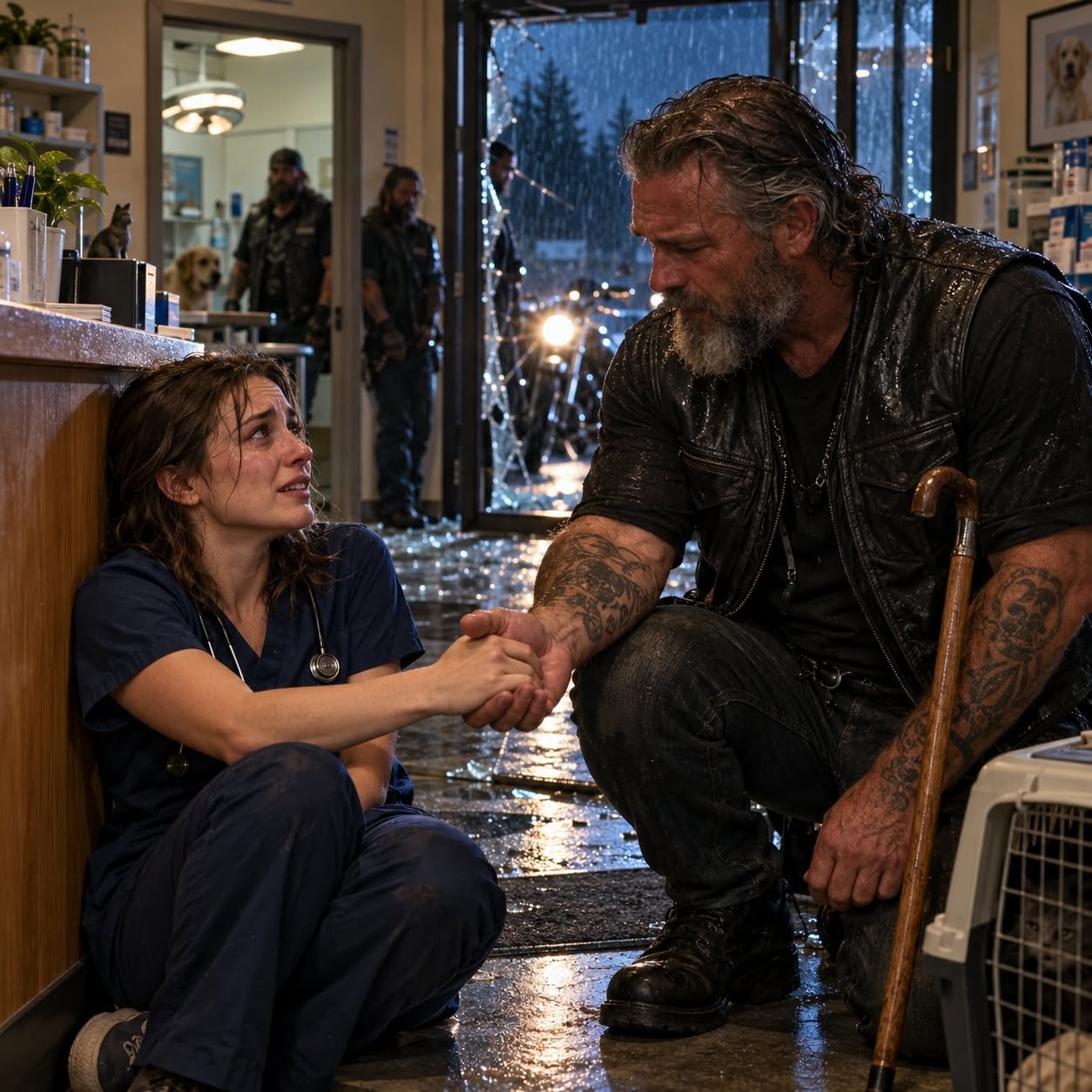
Jack Mercer. Alive. Walking with a cane but walking. The chest wound had healed into a scar he wore like a badge.
He looked at me—really looked at me—for the first time since that night.
“You held my hand,” he said. “I remember. I was drowning and somebody held my hand and wouldn’t let go.”
I started crying. I couldn’t help it.
“You lost everything because of me.”
“No,” he said. “I got everything because of you. Bennett’s in custody as of an hour ago. Voss’s recording just went to the FBI. And the hospital board—” he smiled, a real smile—”the hospital board is about to have a very bad week.”
It happened fast after that.
The FBI raided Bennett’s office. They found the wire transfers. They found emails coordinating with the rival club. Whitmore, the administrator, resigned within days when investigators discovered she’d known about the payment and helped cover it up.
My nursing license was fully reinstated. The “insubordination” was expunged. The hospital offered me my job back with back pay and a public apology.
I turned them down.
Instead, I took the settlement money—substantial, once the lawyers finished—and did something Mom would have been proud of.
I opened a free clinic in Alder Falls.
Not a big one. Just a small building on Main Street with an exam room, a waiting area, and a sign that read: “Carter Community Care — Everyone Welcome.”
Dr. Helen Price became my partner. She sold the vet clinic’s old annex to me for a dollar.
The Iron Saints showed up on opening day. Twenty of them, engines rumbling, and Jack Mercer cut the ribbon with his good hand.
They’d started a fund—bikers passing a helmet at rallies across three states. It covered our first year of operations.
People ask me if I regret it. If I’d do it again, knowing the cost.
I think about that Tuesday night. The blood. Bennett’s face. Jack’s fingers around my wrist.
I think about my mother, who taught me that nursing wasn’t a job but a promise.
“I’d do it in a heartbeat,” I tell them. “Every single time.”
Because here’s what nobody tells you about doing the right thing: it doesn’t always feel brave. Sometimes it just feels like holding pressure on a wound and refusing to let go, even when someone with more power tells you to step back.
Emily Carter didn’t disappear that night in Sacramento.
She just needed four months, a logging town, and a pack of bikers to remind her who she’d always been.
And now, every morning, when I pin on my badge—the same badge, the one Mom photographed—I know exactly who I am.
I’m the nurse who wouldn’t let go.