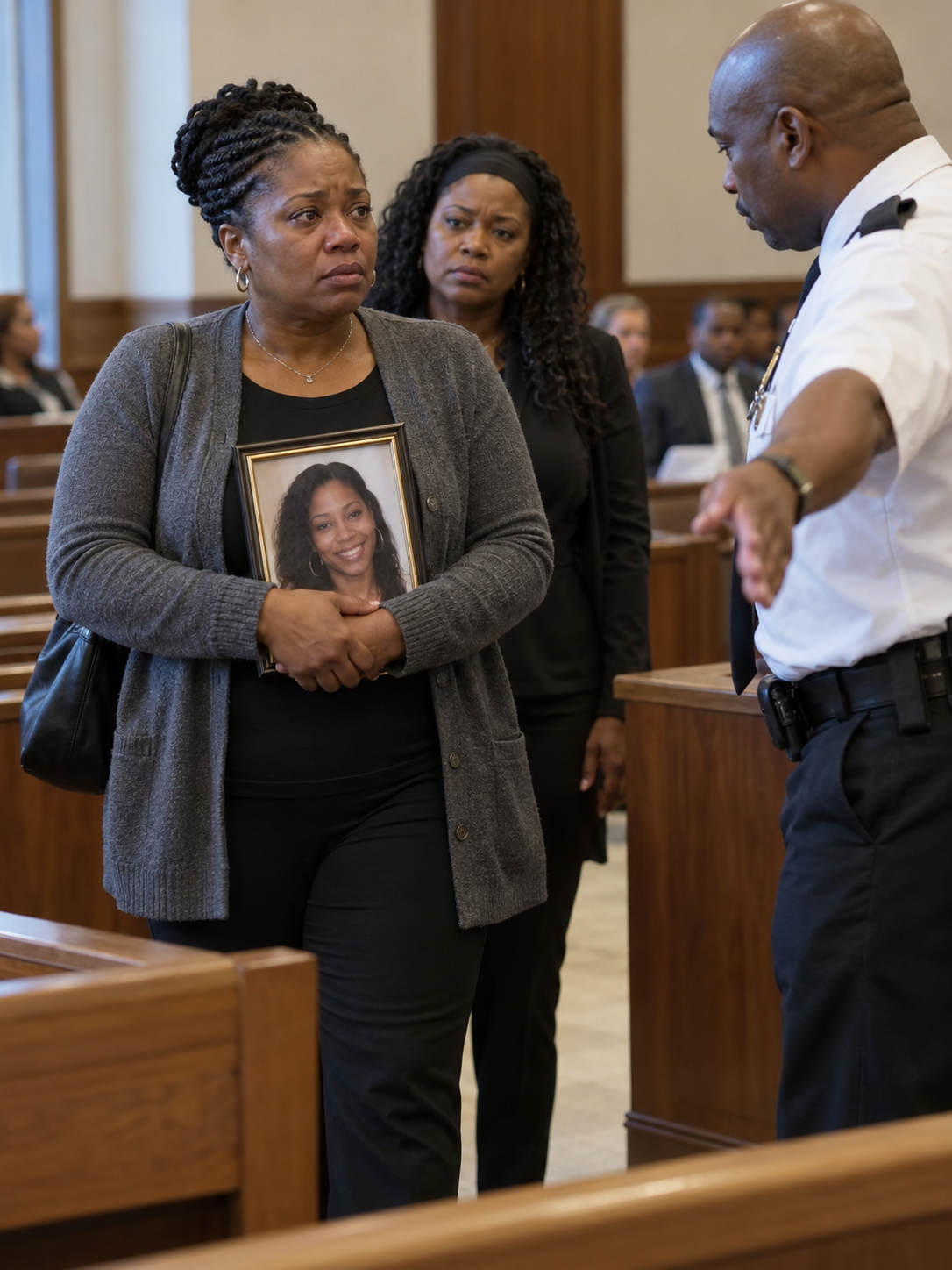
Angela Brooks held a framed photograph of her sister as she entered the courtroom. A security officer told her the front row was reserved and pointed her toward the back. Her sister’s hearing was about to begin. Angela had taken a day off work to be there, but the people already seated seemed to know something she did not.
Her sister, Nicole, had died after a traffic collision. The hearing concerned a dispute over a memorial fund set up in Nicole’s name, not a criminal case. Angela hoped the court would determine where the donations should go. She was exhausted by months of paperwork and by strangers speaking about Nicole as though she were a line in an account.
The officer had a seating sheet listing attorneys and parties. Angela’s name was not there. She explained that she was Nicole’s sister and that the fund’s organizer had invited the family. He said he could not make exceptions. The woman behind Angela, a community volunteer, asked whether the clerk could check the hearing file.
Angela did not want to cause a delay. She moved toward the back while still holding the photograph. From there she could barely see the table where the lawyers placed their folders. Her sister had loved lively rooms and would have laughed at the idea of being remembered through a seating dispute.
The volunteer, Celia, had helped organize the first fundraiser. She knew Nicole’s family had been consulted in the early months. She asked the clerk to review the contact list, saying Angela should at least know whether the family had been given a place. The clerk found Angela’s email in the record but no seating designation.
One lawyer had submitted an updated list without forwarding a copy to the family. Whether it was carelessness or strategy, Celia could not tell. Angela could only see that her name had disappeared from the place she expected it. She had brought the photograph because she did not want Nicole reduced to numbers.
The judge entered and noticed a discussion at the back. She asked the clerk what was happening. The officer said a visitor had requested the reserved row. Angela almost objected to that description. She had requested a view of a hearing about her sister, not a privilege over anyone else.
“What is your name?” the judge asked. Angela gave it. The judge checked the docket and saw that the fund’s documents named her as a family contact. She asked why the revised seating sheet omitted that information. Nobody at the front table had an immediate answer.
The judge had an open seat near the aisle provided for family observers. She directed the clerk to place Angela there and made clear that the seating correction did not decide the legal dispute. Angela thanked her. Celia carried the photograph while Angela moved, careful not to let the glass knock against the wooden benches.
The hearing began with bank records and dates. Angela listened closely. Some funds had gone to legitimate community projects; other expenses had not been explained well. The judge asked for supporting receipts and gave both sides time to clarify. Angela understood that the truth might be slower and less dramatic than any accusation spoken outside the room.
When the organizer described Nicole as an inspiration, Angela felt the old anger rise. Inspiration was an easy word. Nicole had a name, a job at the local library, and a habit of bringing soup to people who were sick. Angela wrote those details in the margin of her notes so they would not be lost amid ledger entries.
The judge allowed a brief statement about the fund’s purpose. Angela spoke without raising the photograph. She said Nicole had wanted people to feel included, particularly families who could not afford the fee for community programs. She asked that any remaining money follow the purpose donors had been given, with clear accounting.
The judge did not announce a final decision that day. She ordered additional records and scheduled a follow-up. Angela was disappointed, but she also knew an immediate ruling based on incomplete numbers would not honor Nicole. The court had heard her account and would require documents that could be checked.
Afterward, the officer apologized for relying on the shortened seating sheet and describing Angela as merely a visitor. She told him why it hurt. He listened and said the staff would check the underlying file when a family relationship was disputed. Angela could not know whether the habit would last, but she appreciated the specificity.
Celia offered to carry the photograph to the parking lot. Angela let her. They talked about Nicole’s library story hours instead of the arguments in court. Celia remembered how Nicole let a shy child turn the page even if it took several minutes. That was the kind of patience Angela hoped people would connect to her sister’s name.
At the follow-up hearing, the missing receipts were produced. The judge directed a clear accounting and a plan to use the remaining funds for the community programs named in the original appeal. Angela did not receive a personal victory or a dramatic punishment for anyone. She received a documented path for the money Nicole’s neighbors had entrusted.
The library later hosted a free reading day using part of the fund. Angela attended with Celia and placed the framed photograph beside the books. Children chose stories, parents sat on folding chairs, and nobody asked to see a seating list. Nicole would have liked the uneven noise and the way people lingered after the scheduled ending.
Angela kept the court papers in a drawer. She did not enjoy rereading them. She kept them because the fund’s purpose was written down and enforceable, not merely promised. The photograph returned to her mantel, where visitors could see Nicole’s face before they heard the story of the dispute.
Sometimes Angela thought about the judge asking her name. It was a simple question, yet it changed the room. People had been speaking around Nicole’s family while making decisions in Nicole’s name. The question placed a person back into the record, without pretending that affection could substitute for evidence.
At the next reading day, a child asked who the woman in the photograph was. Angela answered with Nicole’s name and then told one short story about the soup. The child nodded and chose a book. That ordinary exchange felt more faithful to her sister than the first row, the back row, or any argument about where Angela had been told to sit.