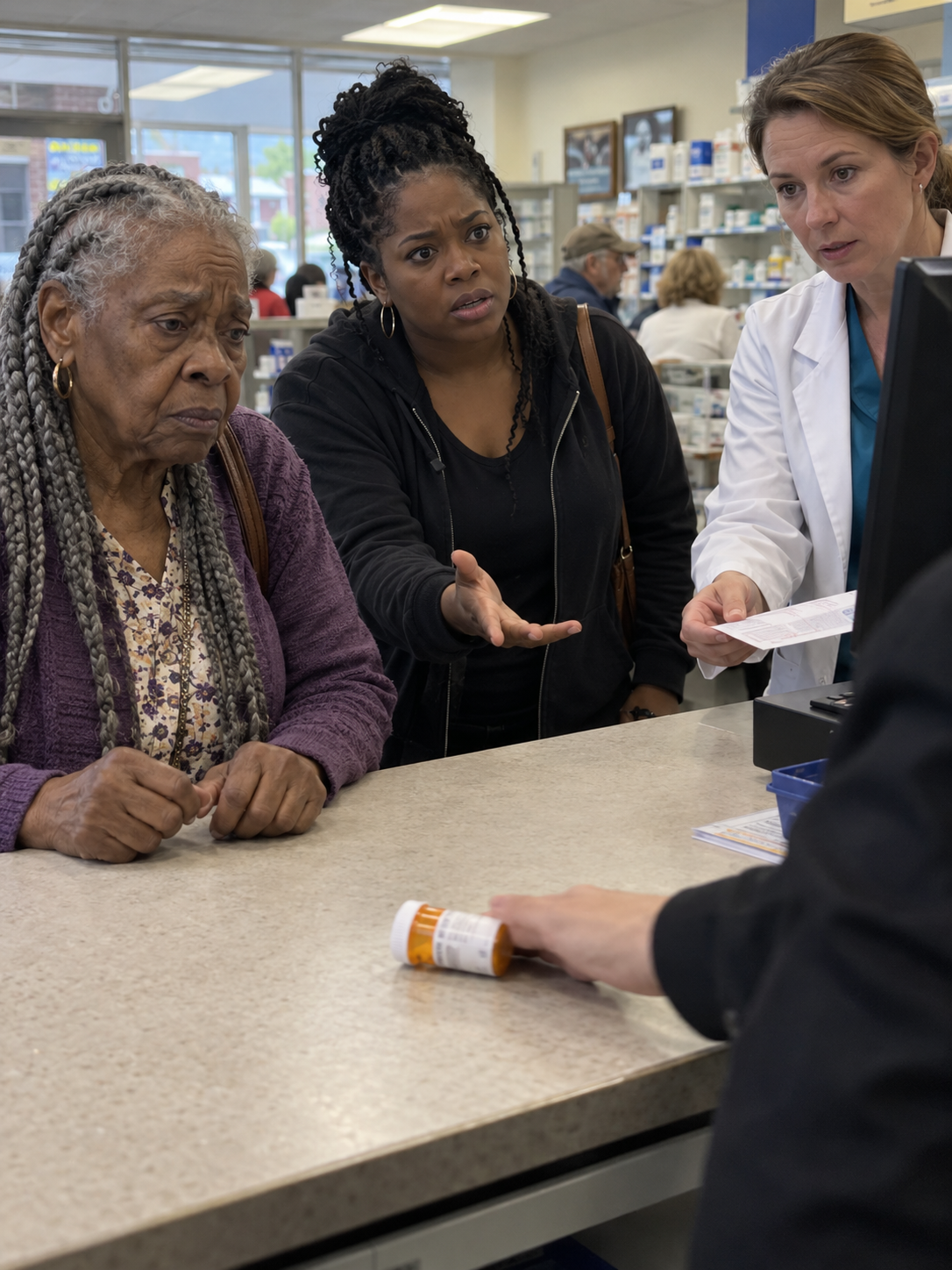
The orange bottle slid across the counter and stopped just beyond Evelyn Carter’s reach. Her granddaughter Maya asked the clerk why the price had changed. Evelyn, seventy-eight, watched the pharmacist step over with a printed receipt and a troubled expression. No one in the line behind them knew what had brought them there.
Evelyn had lived in the same neighborhood for forty-four years. She kept her appointments on a kitchen calendar and stored every pharmacy receipt in an old cookie tin. She disliked asking for help, which was why Maya had been surprised by the call she received that morning.
“Could you come with me?” Evelyn had asked. “I think I misunderstood something.” Maya left work early. She found her grandmother sitting at the kitchen table with a neat stack of papers and a prescription bag that was still sealed from the previous month.
The pharmacy had filled the prescription before. Evelyn had counted out enough money for the expected copay, with a little extra for a loaf of bread. At the counter, the clerk gave her a total several times higher. Evelyn believed she might have brought the wrong card.
Maya asked the clerk to check the insurance entry. The clerk said the screen showed no coverage and moved the bottle aside to help the next customer. Evelyn reached toward it, then withdrew her hand. Maya stepped closer because she could see how embarrassed her grandmother had become.
“Please don’t announce her account to the whole line,” Maya said. She kept her voice low, but the clerk answered loudly that she could not release the medicine without payment. Two people turned to look. Evelyn stared at the scratched counter instead of their faces.
The pharmacist, Claire, heard the exchange from the consultation area. She took the receipt Maya had brought and compared its numbers with the information on her screen. Then she noticed a single digit in the birth date had been entered incorrectly during a recent record update.
Claire asked the clerk to pause and moved Evelyn and Maya to a quieter space. She explained that she needed to rerun the claim, not that Evelyn had done anything wrong. Evelyn still apologized. Maya told her she did not need to apologize for asking someone to check a bill.
The corrected claim returned at the usual amount. Claire called the prescribing office as an additional check and confirmed the medication name and instructions before preparing the pickup. She did not suggest changing doses or delaying anything; those decisions belonged to Evelyn and her own clinician.
While they waited, Evelyn showed Maya the other papers from the cookie tin. For three months she had paid a higher amount for one refill because the same wrong date had appeared on earlier transactions. She had reduced other spending rather than complain, believing the change must have been her fault.
Claire reviewed what could be corrected at the pharmacy and what the insurer would need to handle. She printed the transaction history and gave Evelyn a direct number to call, offering to stay on the line with her. The administrative mistake was small on a screen and large in Evelyn’s kitchen.
The clerk returned with the bottle and an apology. Evelyn accepted it, but Maya asked for something more practical: a note on the account so the next refill would use the corrected information. Claire added the note and had another staff member verify the entry before they left.
Evelyn admitted that she had almost gone home without saying anything. She remembered raising two children on a tight budget and knew how to make a few dollars stretch, but this price had frightened her. Maya took her hand, wondering how many other small worries had gone unspoken.
On the drive home, they stopped for the bread Evelyn had planned to buy. She insisted on paying for it herself. Maya offered to carry the bag, and Evelyn let her. At the traffic light, Evelyn asked whether Maya could help her sort the rest of the receipts that weekend.
Saturday afternoon became a patient exercise at the kitchen table. They called the insurer using the number on the card, wrote down the representative’s name, and submitted the older claims for review. The final adjustment would take time; neither woman pretended that a quick apology solved every part of it.
Maya learned that the cookie tin held more than bills. Under the receipts were birthday cards, a postcard from Evelyn’s late husband, and a note Maya had written in second grade. Her grandmother had saved that uneven handwriting for twenty years beside the records she feared losing.
Claire called the following week to confirm that the corrected account worked for the next scheduled refill. She could not promise the insurer’s decision about prior payments, but she did give clear steps and a way to follow up. Evelyn wrote each step in her calendar.
Maya also asked her grandmother to call sooner if another bill looked wrong. Evelyn said she would try. It was not an easy promise for someone who had spent a lifetime solving problems privately. Maya answered that asking a question was its own kind of strength.
At their next visit, the clerk spoke to Evelyn at a normal volume and handed her the correct receipt. There was no crowd, no dramatic announcement, and no bottle pushed away. Evelyn checked the amount, smiled at Claire, and tucked the paper into her purse.
Back home, she opened the cookie tin and placed the new receipt on top. Then she moved Maya’s childhood note into a small frame by the stove. When her granddaughter came over for dinner, Evelyn said she wanted that reminder where she could see it: help had been close all along.


