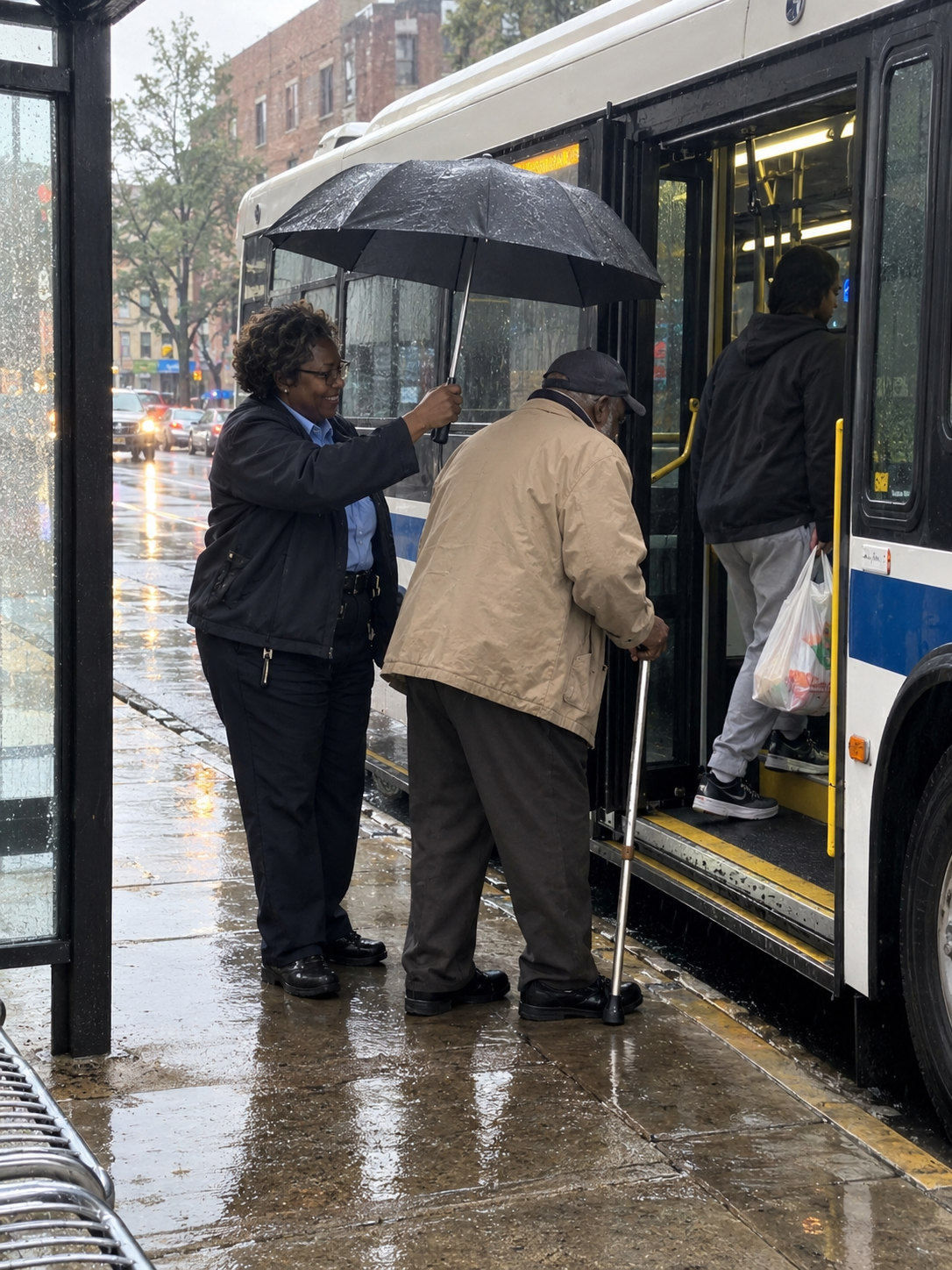
The rain began before sunrise and never really stopped. By midafternoon, the sidewalks were shining, the gutters were full, and every bus in the city seemed to be running late. People stood beneath awnings, checking watches and pulling jackets tighter around their shoulders.
Bus operator Denise Freeman had driven the same route for eleven years. She knew which stops had broken pavement, which passengers needed extra time, and which corners flooded after a hard storm. She also knew that a schedule mattered less than getting people where they needed to go safely.
At the next stop, Denise saw an elderly man named Mr. Raymond Cole waiting with a cane. He held two grocery bags and wore a thin tan jacket that was already wet at the shoulders. The bus pulled up, but Raymond hesitated at the curb because the puddle between him and the door was deep.
A passenger inside called that they were already late. Denise raised one hand to quiet the complaint, set the bus in park, and stepped outside with the umbrella she kept behind her seat. She held it over Raymond while he moved carefully toward the steps.
Raymond apologized for slowing everyone down. Denise told him he did not need to apologize for needing a safe way onto the bus. She carried one grocery bag while he held the rail with both hands.
A teenager named Malik stood near the front. When he saw Denise struggling with the second bag, he moved down the steps and took it without being asked. Raymond thanked him, but Malik only said that his grandfather used a cane too.
Once Raymond was seated, Denise adjusted the ramp and checked whether his shoes were stable. The bus was quiet. People who had been impatient a moment earlier watched as Raymond removed his wet cap and caught his breath.
He explained that he had been buying ingredients for his daughter, who was recovering from surgery. He had not wanted to ask anyone for help because she was already worried about him. Denise told him that accepting help was not the same as being helpless.
Malik placed the grocery bags beside Raymond’s seat. One bag had torn slightly, and an orange rolled into the aisle. Another passenger picked it up. Then someone handed Raymond a dry paper towel. The delay had become a chain of small decisions made by people who could have continued looking away.
At the next stop, a woman offered Raymond a plastic cover for his bags. At another stop, an older passenger moved seats so Raymond could sit closer to the exit. Denise continued driving, but she smiled each time she looked into the mirror.
When the bus reached Raymond’s stop, Denise waited again. Malik carried the groceries to the sidewalk, and another passenger held the umbrella while Raymond unlocked the gate. It took several minutes, but no one complained.
Raymond turned to the bus before walking toward his building. He said he had spent most of his life believing that strong people were the ones who managed everything alone. That afternoon, he said, he remembered that strength could also mean trusting neighbors to help.
The following week, Raymond returned to the route with a note for Denise. He had baked a small loaf of bread and wrapped it carefully. Denise tried to refuse, but Raymond told her that she had carried his groceries, and he wanted to carry something for her in return.
Malik happened to be on the bus again. Raymond recognized him and gave him the first slice. Malik laughed and said his grandfather would have liked him. Denise kept the note in the driver’s compartment where she stored her route map.
The bus was delayed that rainy afternoon, but nobody remembered the delay for long. They remembered the umbrella, the grocery bag, the orange rolling down the aisle, and the way strangers became a community for a few wet minutes. Sometimes kindness does not require a grand plan. Sometimes it only requires someone to stop the bus and wait.