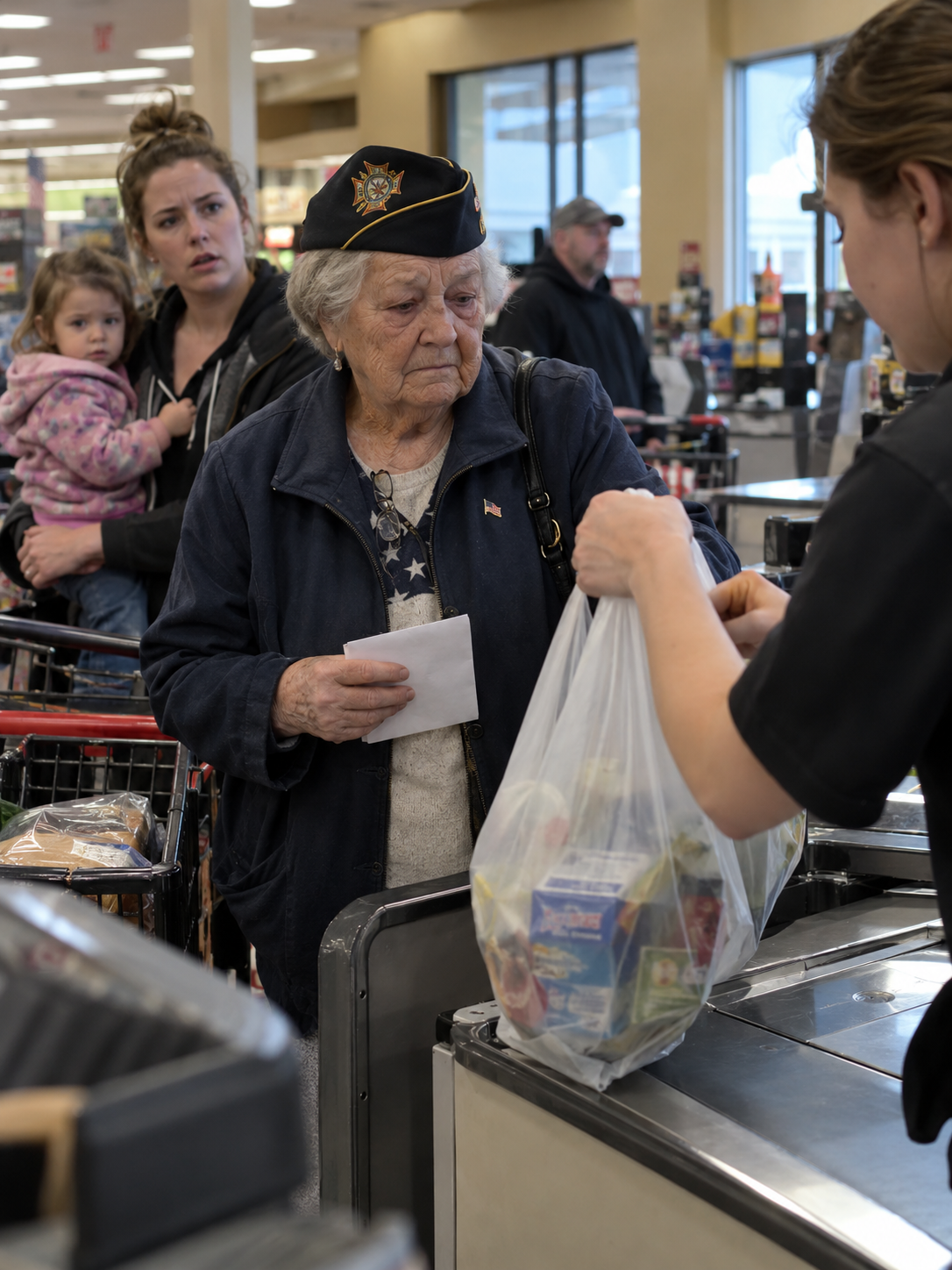
The cashier lifted the grocery bag off the counter just as Ruth Miller reached for it. Behind Ruth, a young mother holding a sleepy child saw the folded letter in her hand. Ruth wore a veteran’s cap and had already paid for the items. The problem, it turned out, was what the register said happened afterward.
Ruth was seventy-six and shopped every Thursday morning. She bought oatmeal, canned tomatoes, apples, and enough chicken for two dinners. Her husband had died the previous winter, and cooking for one still felt strange. She had taken to making a second portion for her neighbor, who was recovering from a fall.
That morning she also carried a letter from the neighbor’s daughter. It thanked Ruth for bringing food and asked her to stop paying for everything herself. Ruth had folded it into her purse, embarrassed by the praise and a little proud that someone had noticed.
At the checkout, her card appeared to approve. The cashier printed a receipt and bagged the food. Seconds later, the system displayed a warning that the payment had been reversed. The cashier took the bag back, telling Ruth she would have to pay again before leaving.
Ruth showed the notification on her phone, but it was too small for her to read without her glasses. The cashier pointed to the terminal and said a screen never lied. People in line began shifting their weight and looking toward the next register.
The young mother, Elena, offered to wait while the issue was checked. Her daughter rested against her shoulder. Ruth said she did not want to hold them up, yet she would not authorize a second charge until she understood the first. She had learned to watch every dollar.
The cashier called a supervisor but kept the bag behind the counter. “You can move aside,” she told Ruth. Elena noticed the older woman’s knuckles turning pale around the letter. She asked whether there was a customer service desk where they could talk without an audience.
Ruth unfolded the letter only because she needed a flat surface for her glasses. Elena caught a line about dinners left at a neighbor’s door. She did not read more. She did, however, understand why the bag mattered beyond the inconvenience of a delayed shopping trip.
The supervisor checked the transaction number against the payment processor. The first charge had gone through; a register communication error had displayed the reversal. Another charge would have taken the money twice. The cashier’s certainty had been louder than the evidence.
The supervisor returned the bag and apologized. Ruth asked for a printed confirmation that the payment was complete. She had spent enough time on the telephone correcting mistakes to know that memory would not be enough if the charge appeared twice later.
Elena helped Ruth compare the receipt with her phone notification while her daughter pointed at the apples through the plastic. Ruth thanked her and said her neighbor liked those apples baked with cinnamon. Elena asked if the neighbor would mind one more visitor sometime.
“She might enjoy the company,” Ruth answered. She did not turn the exchange into a lesson about military service. Her cap was part of her life, but the day’s small battle had been about being believed when she asked a perfectly ordinary question.
The cashier came around the counter before Ruth left. She admitted she should have called someone sooner and should not have pulled the bag away. Ruth accepted the apology but asked her to remember that people standing at a register might be calculating more than a grocery total.
Outside, Elena offered a ride. Ruth had her own car, so they exchanged numbers instead. Elena’s daughter asked whether the cap meant Ruth had flown airplanes. Ruth laughed and said she had worked on equipment that helped other people get where they needed to go.
On Sunday, Elena and her daughter visited Ruth’s neighbor with a small loaf of banana bread. Ruth brought chicken soup. They stayed for an hour, talking about gardens and the school down the street, never once discussing the embarrassing scene at the checkout.
The grocery store manager later checked its systems and arranged a register update. Ruth appreciated the call, especially when the manager said staff had been reminded to verify a disputed charge before asking for another payment. The fix was less dramatic than the argument and far more useful.
Ruth’s neighbor pinned her daughter’s thank-you letter to the refrigerator. Ruth objected, then gave up when she saw how pleased the woman looked. Elena’s little girl taped a drawing of three people carrying grocery bags beside it.
Over the following weeks, Thursday shopping became easier. Elena did not appear every time, and Ruth did not need her to. Knowing someone had stood beside her when the room went quiet made the store feel like a place she could enter without bracing herself.
One afternoon the cashier pointed Ruth toward a sale on apples and asked how her neighbor was doing. Ruth answered, “Better than last month.” It was a small conversation, but one conducted face to face, without a disputed screen between them.
Ruth loaded the apples into her trunk and unfolded the letter once more before driving away. She had been thanked for carrying food across a sidewalk. That day she understood the gesture could travel in both directions: someone else had stood still long enough to carry a difficult moment with her.


