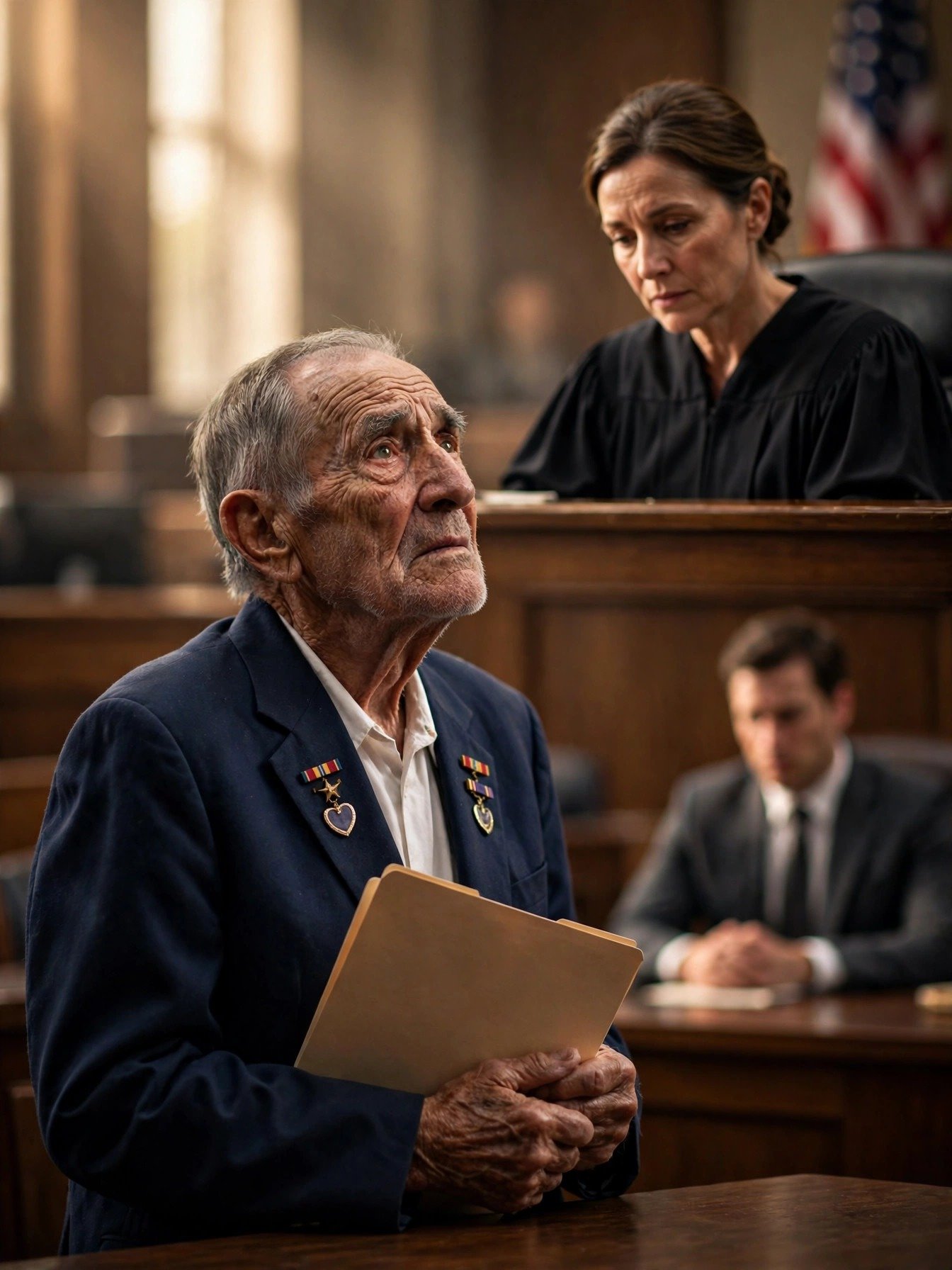
My Brother Told the Lawyer I Was “Too Senile” to Inherit Dad’s House — Then the Judge Asked to See My Service Record
My brother Frank told the estate lawyer I was too senile to inherit our father’s house. He said it calmly, like mentioning the weather. I was sitting ten feet away.
Our father, Joseph Callahan, died in January, two weeks after a stroke put him in a Dayton, Ohio hospital. He was eighty-nine. The will was simple: the house on Maple Street, the one he built in 1962, split evenly between me and Frank.
I am seventy-two. I served two tours in Vietnam with the 101st Airborne and came home in 1971 with a Bronze Star, a Purple Heart, and a left knee that aches when it rains. I ran a heating-and-plumbing shop for thirty-one years. My wife, Donna, passed in 2019.
Frank is sixty-six. He sold commercial real estate until the market turned on him. He owes money — the kind men like Frank don’t mention at Thanksgiving. Dad’s house is worth about two hundred and sixty thousand dollars. Frank wanted it sold, fast.
Two months after the funeral, Frank’s lawyer filed a petition. It called me “cognitively impaired” and asked the court to name Frank executor, with power to sell the house. Frank had a doctor — a golf buddy, not my doctor — write a letter after a fifteen-minute chat with me at the funeral reception.
I read that letter twice, then folded it into the drawer where I keep Donna’s letters. I wasn’t angry at first. I was embarrassed — the way you feel when someone says something cruel about you in front of people you respect.
I hired Ruth Adler, a probate attorney who charges less than she should and fights harder than lawyers twice her age. She told me not to worry. I worried anyway, and started carrying a notebook — not because my memory was failing, but to write down dates, names, and words.
The hearing was a Tuesday morning in Montgomery County Probate Court. I wore the navy suit Donna picked out in 2004. Frank wore a suit that cost more than my first truck. He smiled at me in the hallway like we were there for a ballgame.
Judge Marian Reyes took the bench at nine sharp — fiftyish, with the face of someone who has heard every excuse in Ohio. Frank’s lawyer went first, speaking of “concern for an aging veteran.” He used the word “diminished” four times. I counted. It’s in my notebook.
Then Frank stood up. He said he’d always looked after me, that I’d gotten “confused” — left the stove on twice, forgotten Dad’s birthday. The stove story was from 2016, when Donna was alive. It was her stove, her kitchen. He was counting on nobody checking.
When my turn came, I spoke plainly. The shop. The taxes I file myself every April. The Wednesday volunteer shifts at the VA clinic. I named the two medications and the doctor who prescribes them — Dr. Patel, my doctor of eleven years. Ruth read his letter into the record, word by word.
Judge Reyes listened without writing. Then she looked at Frank’s lawyer. “Before I rule, I’d like to see Mr. Callahan’s service record.” Ruth slid the folder across. It was thin — DD-214, Bronze Star citation, Purple Heart order. I’d kept it thin on purpose.
She read for a long time. The courtroom went so quiet I could hear the clock on the wall. Frank shifted in his chair. His lawyer stared at his own hands. I kept my eyes on the flag in the corner.
Finally she set the folder down, folded her hands, looked straight at my brother, and said four words: “You should be ashamed.” She didn’t raise her voice. She didn’t have to.
Then she ruled. Petition dismissed. The will stands exactly as our father wrote it — the house split evenly, no sale without both signatures. Frank pays the court costs. “Your father,” she told him, “did not raise you to do this to your brother.”
Frank didn’t look at me. He gathered his papers the way men do when they need their hands busy, and walked out with his lawyer. In the hallway he stopped, and for a second I thought he’d speak. He didn’t. The elevator doors closed between us.
That was eight months ago. I still live above the old shop. Dad’s house on Maple Street is ours, fifty-fifty, and sits empty most weeks. Saturdays I drive over and mow the lawn. I fixed the back steps. His workshop still smells of sawdust and machine oil.
Frank calls sometimes. Short, careful calls. He asked about the roof in October. I think shame is heavy to carry, and I won’t add to it. But I haven’t forgiven him yet, either. Forgiveness, like a house, takes time to build right.
People ask if the judge’s words felt like victory. They didn’t. They felt like being seen by someone with the authority to say the truth out loud. Frank tried to take my dignity with a doctor’s letter. The judge gave it back with four words.
Last Sunday I sat on Dad’s porch with coffee and watched Maple Street wake up. A neighbor’s kid stopped his bike and asked about the flag by the door. I told him it was my father’s, and mine, and that some things are not for sale. Then I went inside to sand the cabinets. The house isn’t finished. Neither am I.