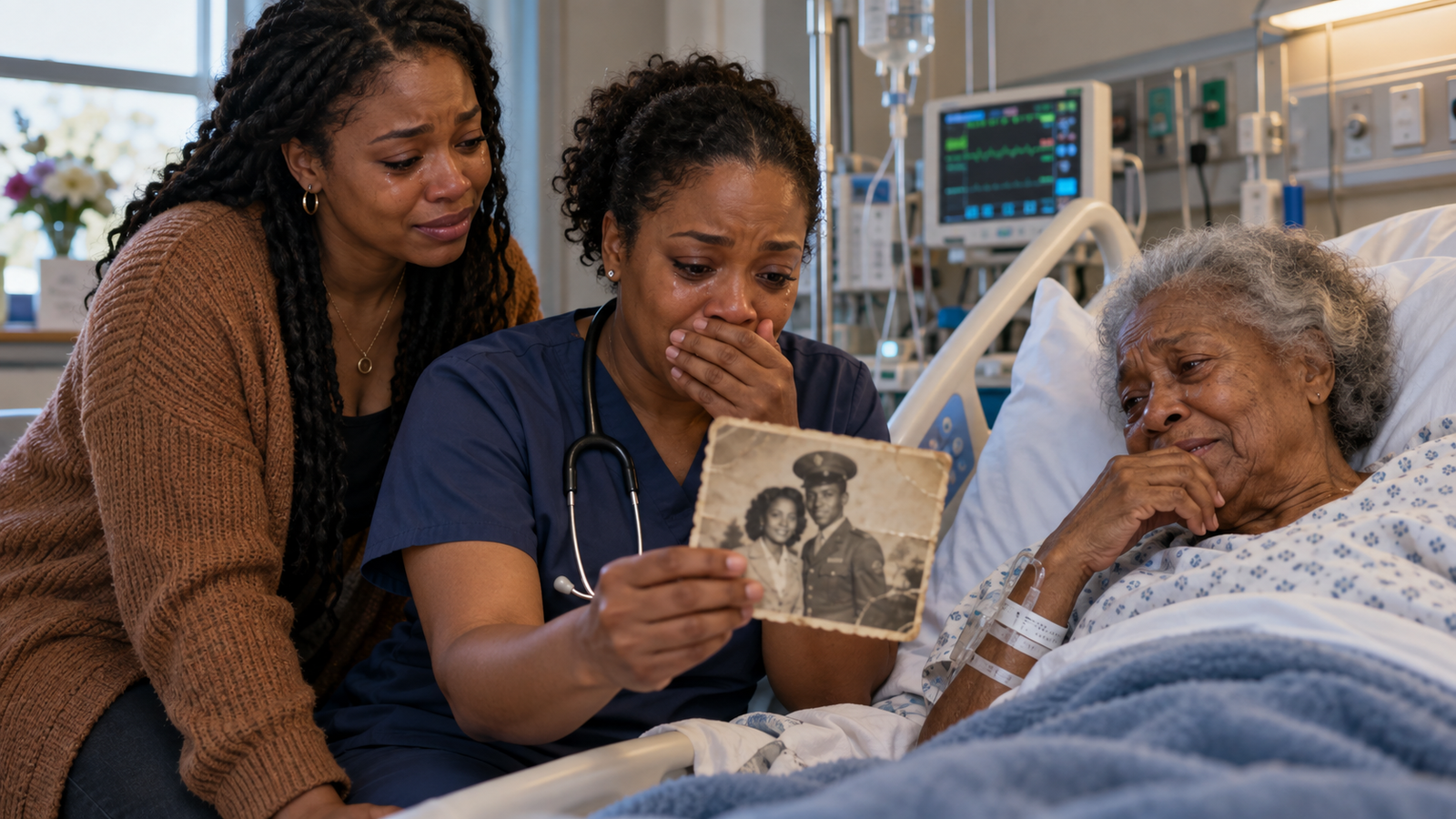
The photograph fell from my grandmother’s winter coat while a nurse searched the pocket for her insurance card.
It showed two young Black women standing outside a diner in 1963. They wore white uniforms, cat-eye glasses, and matching smiles.
On the back, in faded blue ink, someone had written: Ruth and Evelyn—first day they let us serve the front room.
The nurse stared at the name.
“My grandmother was Evelyn,” she said.
My grandmother Ruth, eighty-seven and recovering from pneumonia, opened her eyes.
When she saw the nurse’s face, she gripped my hand.
“Ask her mother’s maiden name,” she whispered.
The nurse’s name was Tasha Williams. Her grandmother had been Evelyn Mae Williams from Birmingham, Alabama.
Grandma began crying.
Sixty-three years earlier, Ruth and Evelyn worked together at a highway diner. Black employees cooked, cleaned, and carried food through the kitchen, but they were forbidden from serving customers in the front room.
During the spring of 1963, the owner reluctantly allowed them to work one daytime shift as servers because several white employees had quit.
A customer photographed them beneath the diner sign.
Three weeks later, civil rights demonstrations intensified across the city. Evelyn joined a march. Ruth remained home to care for her younger siblings.
After police arrested demonstrators, Evelyn’s family moved north. Letters traveled between the women for years, then stopped when both families changed addresses.
Grandma had carried the photograph in every winter coat she owned.
“I kept thinking I would find her,” she said.
Tasha called her father from the hallway.
Within an hour, we learned Evelyn was alive and living in Milwaukee.
She was ninety.
The two women spoke by video that evening.
For several seconds, neither said anything.
Then Evelyn laughed. “Ruthie, you still tilt your head when you’re about to cry.”
Grandma answered, “And you still laugh before you apologize.”
They talked for two hours.
They remembered burnt pies, secret tips hidden beneath plates, music from the kitchen radio, and the day a little Black girl saw them serving the front room and told her mother, “I want to work here someday.”
Grandma’s breathing improved over the next week. Tasha said medicine deserved the credit. We believed hope helped too.
After discharge, both families arranged a reunion at the site of the former diner. The building had become a pharmacy, but a section of the original tile remained near the entrance.
Evelyn arrived in a wheelchair wearing red lipstick. Grandma wore her best blue coat.
They held hands beneath the place where the diner sign once hung.
Tasha recreated the photograph.
Then the pharmacy manager surprised them with a plaque recognizing local Black workers whose courage helped change everyday public spaces.
The story spread through the community. Former employees contacted us. Their children shared photographs and letters.
A local history center created an exhibit called The Front Room, documenting ordinary people who challenged segregation through work, service, and persistence.
Grandma and Evelyn recorded interviews together.
“We were not famous,” Grandma said. “We were tired young women who wanted the same dignity as everybody else.”
Evelyn squeezed her hand. “History is full of people nobody thought to name.”
When Grandma died two years later, the old photograph rested beside her at the memorial.
Tasha stood with our family.
She was no longer the nurse who had found something in a coat pocket. She was part of the family that photograph had been trying to find for sixty-three years.
We donated the original to the history center and kept copies in both homes.
Sometimes the past does not return as a grand discovery.
Sometimes it slips from an old pocket and waits for the right person to recognize a name.


