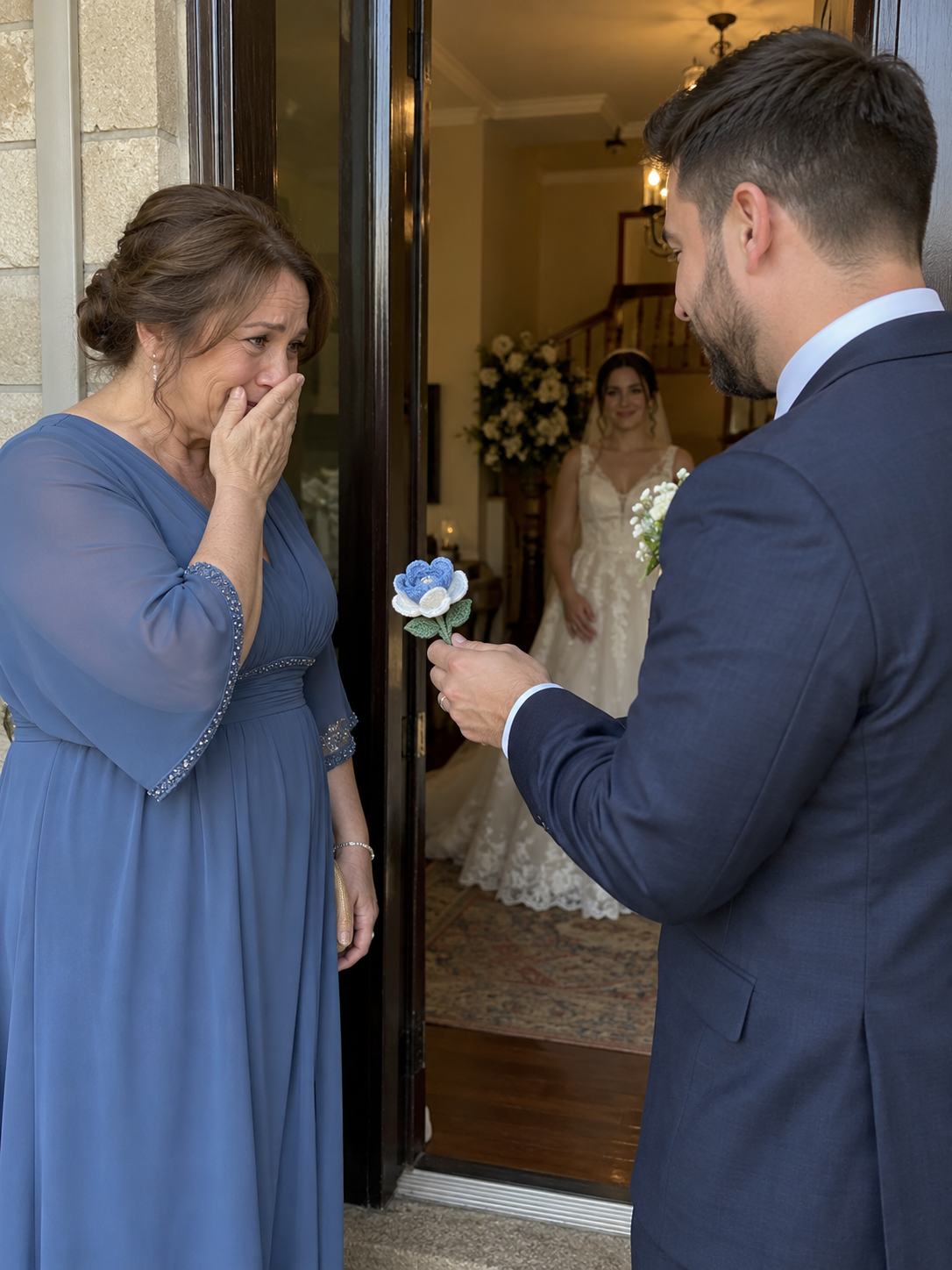
At the entrance to the wedding room, a man in a dark suit told Rosa Martinez her name was not on the guest list. She wore a blue dress she had altered herself and held a small fabric flower in one hand. Through the open doorway, her daughter saw the exchange and stopped walking toward the ceremony.
Rosa had raised Isabel after her husband died, sewing hems for neighbors in the evenings to make the mortgage. She had helped with the wedding without asking to choose the venue or the music. Isabel had asked her to sit in the front row. Rosa had practiced being calm about it, knowing she would cry when she saw the dress.
The man at the door was the event coordinator’s assistant. He checked a tablet and said the front-row seats were assigned to another party. Rosa showed the printed invitation with her name. He said invitations did not control the seating chart. Guests arriving behind her slowed down, creating the particular embarrassment of becoming a problem in a doorway.
Rosa asked whether he could call Isabel’s wedding planner. The assistant said the ceremony was starting and she needed to wait outside. He did not touch her, but his arm across the entrance made the message clear. She folded the invitation carefully, unwilling to let a stranger see how her hands had begun to shake.
The fabric flower was a small blue rose made from a piece of Isabel’s childhood blanket. Rosa had intended to pin it inside her daughter’s bouquet before the ceremony. Isabel knew about the blanket but not the flower. It was not a valuable object. Rosa had worked on it late at night because she wanted her daughter to carry a quiet piece of home.
From inside, Isabel saw her mother turn toward the lobby. She asked the planner why Rosa was leaving. The planner frowned at the tablet and said the family rows had been rearranged after a last-minute change. Isabel had authorized moving two cousins, not her mother. She set her bouquet down and walked to the door.
The assistant told Isabel the discrepancy could be handled after the vows. Isabel answered that there would be no vows while her mother stood outside. The room went silent enough that Rosa heard the end of the sentence. She wanted to tell Isabel to go back, to spare her the scene, but the girl she had raised was already crossing the threshold.
Then Isabel noticed the blue flower in Rosa’s hand. “Is that my blanket?” she asked. Rosa nodded. The assistant looked between them, finally understanding that the woman he had tried to seat elsewhere was not a distant guest. The seating chart had been printed without the updated family page.
The planner brought the corrected chart from her email. Rosa’s name appeared beside Isabel’s father’s photograph, which had been reserved a place in the front row. The assistant apologized and stepped aside. Isabel did not let the mistake become an argument with every guest watching; she took her mother’s arm and walked with her to the seat.
Rosa pinned the blue rose beneath the bouquet ribbon with a small safety pin she had brought. Isabel held the flower for a second before the music began. “You made this from the one I dragged everywhere?” she whispered. Rosa nodded. She remembered washing that blanket after camping trips, illnesses, and long car rides.
The ceremony began several minutes late. No one complained. The officiant mentioned Isabel’s father with care, then spoke about the people whose labor is woven into a family’s ordinary days. Rosa sat beside the photograph and looked at her daughter, no longer thinking about the tablet or the stranger at the door.
At the reception, the assistant approached Rosa again. He had discovered the planner’s final update had reached the venue but not the entrance staff. He took responsibility for relying on an incomplete list and for dismissing the invitation she had shown him. Rosa accepted the apology, then asked him to check with the other guests moved by the error.
He did. Two cousins had been sent to the back when their names were also missing from the old chart. The staff corrected their places before dinner and changed the check-in process for the rest of the evening. Small mistakes can travel outward when the person holding a list assumes the list is more reliable than the people in front of him.
Isabel and Rosa finally had a minute alone near the coatroom. Isabel said she had seen her mother turn away and felt, for an instant, like a child watching Rosa leave for another late shift. Rosa told her she had been trying not to interrupt the wedding. Isabel said her mother’s presence was part of the wedding, not an interruption.
Rosa confessed that she had wondered whether the blue rose was too sentimental. Isabel laughed and said she would have cried even if Rosa had brought a button from the old blanket. She asked for the story of how the flower was made, and Rosa described cutting the smallest usable corner and stitching it around a piece of soft cotton.
The photographer took a picture of their hands around the flower. It was not the carefully planned portrait Isabel had requested. Rosa’s fingers showed needle marks from the final stitches, and Isabel’s bouquet ribbon was crooked. When the proofs arrived, that was the picture Isabel chose for the mantel in her new apartment.
Months later, the venue manager wrote Rosa to say the check-in team now carried the final seating list and had a direct line to the planner. Rosa appreciated the note. She cared more that Isabel had not spent her wedding day wondering whether her mother had been made to stand outside the room.
The blue flower dried after the celebration. Isabel put it in a small box with the ribbon and the ceremony program. When she visited Rosa, she sometimes brought it out and asked about the blanket again. Rosa could tell the story differently each time, because the important part was never only the cloth.
Rosa had been told she could wait outside a room she had helped her daughter reach. Isabel had paused the entire ceremony to bring her in. Neither forgot the embarrassment. They also remembered the walk from the doorway to the front row, an ordinary distance that felt, that day, like being welcomed home.
Years after the wedding, Isabel still kept the photograph by the door. Visitors noticed the tiny blue flower before the expensive bouquet. When they asked, she told them her mother had sewn it from an old blanket. She did not always tell them about the seating mistake. The flower already explained who had belonged in the front row.


