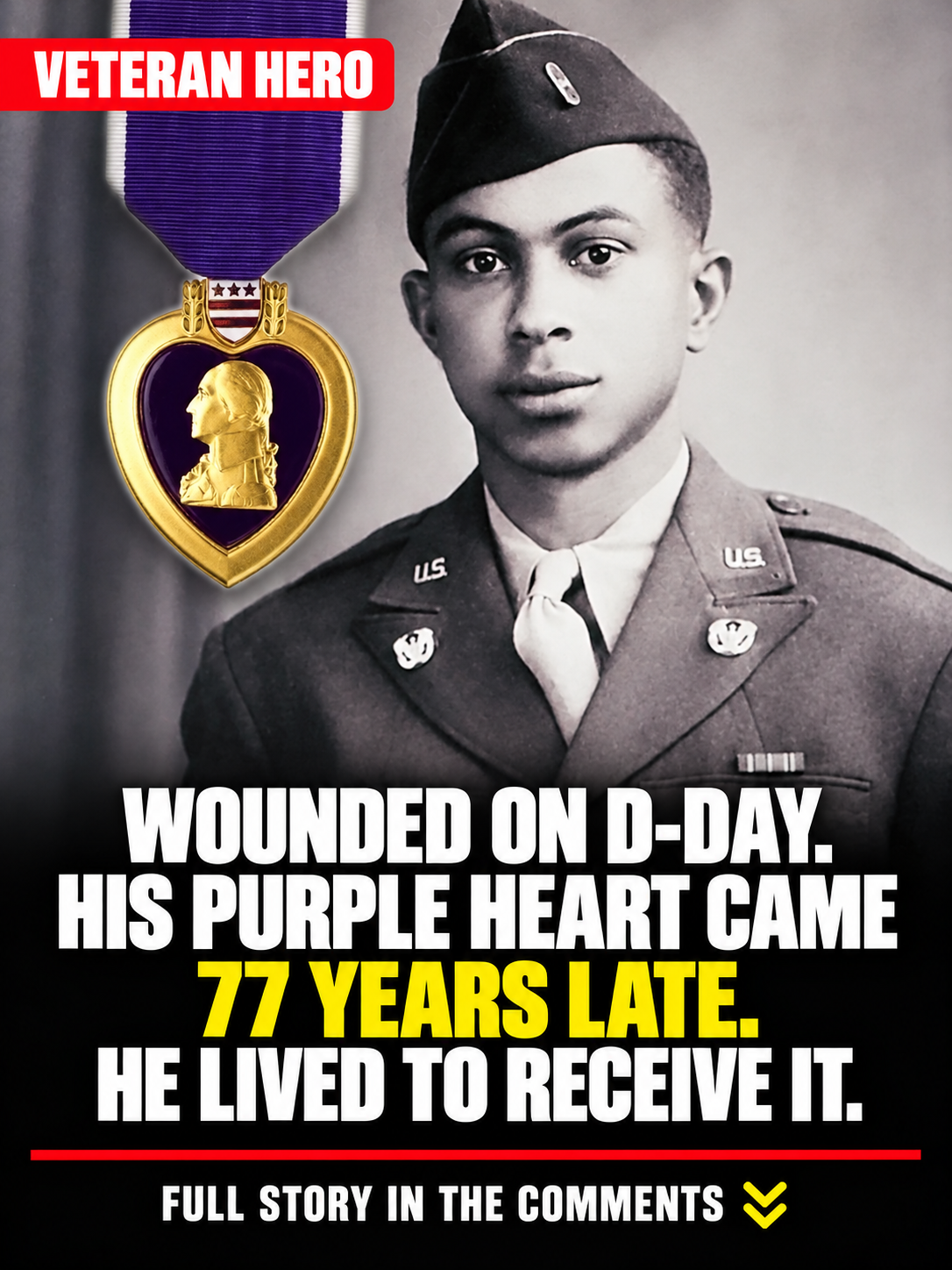
Johnnie Jones was 101 when the medal finally reached him. On June 26, 2021, a Purple Heart was presented to the Louisiana veteran for wounds sustained during World War II, seventy-seven years after the events that earned it. He had lived long enough to receive the honor himself, a fact that gives the ceremony its particular emotional weight. The award recognized a young soldier’s injuries, but the person accepting it had already lived another lifetime as a lawyer, civil rights advocate and elder in his community. Behind the medal was a history far larger than one delayed presentation. [1][2]
Jones served during the Normandy invasion, one of the defining operations of the war. The official account identifies him as a warrant officer in the 494th Port Battalion, part of the 6th Engineer Special Brigade. Naming the unit matters because an invasion depends on more than the few battlefield roles most often shown in films. Port and support personnel were part of the operation’s essential work. Jones’s story belongs within that larger military history, not outside it as a curiosity about a very old veteran. His service was real, his injuries were documented, and the recognition addressed them. [2]
He was injured when his ship struck a mine, according to the accounts published around the award. The blast threw him between decks and caused a back injury. Other wounds came from shrapnel during German air attacks. These details explain why the decoration mattered without requiring a reconstructed battle scene or an imagined rescue. The Purple Heart concerns wounds received through enemy action, and Jones’s history included precisely the injuries officials later acknowledged. The distance between those wartime events and the ceremony is what makes the medal’s arrival so striking: the wounds preceded the public recognition by most of his life. [2]
The Army’s reporting placed his case alongside another veteran receiving delayed recognition. That context helps distinguish a formal correction from a birthday gift or a commemorative honor. Officials were addressing military service that had not received the appropriate award when it occurred. For relatives and advocates, the process required information that an institution could evaluate. A family’s knowledge of a loved one’s history can be strong, but a military decoration depends on a record that supports it. The eventual result therefore reflected both the original sacrifice and the later work needed to put that sacrifice before the officials able to recognize it. [3]
At the ceremony, Senator Bill Cassidy presented the award at Louisiana’s Old State Capitol in Baton Rouge. The setting connected the national military honor with the community in which Jones had lived and worked. For readers who have watched an older relative receive long-awaited acknowledgment, the significance is familiar. The event allows the family to see something private become public: the stories remembered at home are given an official place in the record. Here, that acknowledgment also allowed the veteran himself to be present, rather than leaving the honor entirely to relatives receiving it after his death. [2]
The contrast in ages is difficult to overlook. The injuries belonged to a young man in wartime; the medal was received by a centenarian. Seventy-seven years can contain children growing up, careers beginning and ending, and whole communities changing around a person. An award cannot return those years or alter every occasion on which recognition might have mattered. It can still change the public account. Jones’s ceremony is moving because it shows both truths together: the correction was meaningful, and the length of the delay remained part of what the correction had to acknowledge.
Jones’s life after the war added another kind of courage to that account. Veterans Affairs reporting described him returning to a country in which racial inequality remained a daily reality. His military service overseas did not guarantee fair treatment at home. That contradiction gives the story a broader meaning for Black veterans and their families. A person could serve in a struggle associated with freedom and still confront exclusion or abuse when he came back. Jones did not remain only a witness to that problem. His later work placed him within efforts to challenge the conditions he had encountered. [1]
The VA account included Jones’s description of being attacked by a white police officer while traveling for medical care after the war. The reported incident should remain attributed to him, rather than embellished into a scene with invented dialogue or motives. Its importance lies in the contrast it establishes: a wounded veteran seeking treatment could still face violence because of the racial order around him. For older readers, that history may connect military remembrance with memories of segregation. The same life can include service abroad, injury, unequal treatment at home and a decision to work for change. [1]
He became a lawyer, and his work connected him to the 1953 Baton Rouge bus boycott. The official account describes the Rev. T. J. Jemison recruiting him soon after he completed law school to help organize the boycott and defend participants. This was practical legal work within an active local struggle. It reminds readers that civil rights movements required more than speeches and crowds. People also needed representation, coordination and someone able to respond to the legal consequences of protest. Jones’s contribution gave his professional training a purpose connected to the community around him. [1]
The Baton Rouge boycott preceded the more widely remembered Montgomery boycott. Recognizing that sequence widens the public memory of the movement and makes room for work carried out in smaller or less familiar settings. Jones’s involvement matters because national change often develops through local experience. A community tests an approach, people learn what is possible, and later campaigns draw on earlier efforts. The story of one lawyer therefore belongs within a much larger history without needing to claim that he alone created it. His work was part of the practical foundation on which others could build. [1]
Legal advocacy also meant standing beside people whose public participation could place them at risk. The VA profile described Jones defending students and other civil rights protesters. In that setting, a lawyer’s work connects an individual’s constitutional rights with the immediate problems of detention, charges and opposition. The public may remember a protest through a photograph; participants also need someone to answer questions and act when the photograph ends. Jones’s later life makes that less visible responsibility part of his legacy. The soldier who survived wartime danger became a professional who helped others navigate danger within a different struggle. [1]
That history prevents the Purple Heart feature from reducing him to his age. A 101-year-old receiving a medal is an arresting image, but the years between the wound and the award were not empty. He worked, contributed and became important to a community. For older readers, this distinction matters. An elder’s present appearance can hide a long record of decisions and responsibilities. Looking beyond the ceremony restores that record. The point is not simply that Jones waited long enough. It is that the man waiting had continued living a substantial public life while the military acknowledgment remained unfinished.
The effort to obtain the award required another person’s persistence. Veterans Affairs identified Russell Kelly as the friend who spent about eighteen months gathering paperwork to support recognition. That detail gives the story a second form of service. Jones had done the work that earned the medal; someone else helped ensure that the institution could finally act on it. The contribution was neither glamorous nor instantaneous. It involved documents and continued attention. Families often depend on precisely that kind of help when an elder’s history deserves recognition but the process is difficult to navigate alone. [1]
Paperwork may sound like an unromantic part of a moving history, but it can determine whether a correction becomes possible. A memory has to be connected with the records, dates and official requirements that support an award. The advocate’s task is to keep that process moving while respecting what the evidence can establish. Jones’s presentation shows why the work matters. It turned a long-standing concern into something he could receive in public. The emotional photograph at the end of the process rests partly on the patient administrative effort that preceded it and rarely receives the same attention.
The recognition also became an occasion to consider how Black veterans are remembered. Military history can be incomplete when some names are repeated while others remain within family stories. A delayed award can draw attention to a person’s contribution and invite readers to learn the wider account. It should not be asked to settle every question about recognition across generations. Its value is more specific: the record for this veteran changed, his sacrifice received formal acknowledgment, and more people had a reason to ask who he was and what he had done beyond the day of the ceremony.
The official reporting also described Jones receiving care at home in his later years. That detail belongs to the same life as the medals and legal work. A public hero is still a person with practical needs, health concerns and relationships with people who help him continue living. For families caring for older veterans, the connection is familiar. Respect includes remembering service, but it also includes attending to the person who remains after the ceremonies. Recognizing those ordinary needs keeps a veteran’s humanity visible rather than allowing the honors to turn him into an untouchable symbol. [1]
Jones died in April 2022 at 102, less than a year after receiving the Purple Heart. Senator Cassidy later honored his life on the Senate floor. The timing gives the earlier presentation an added poignancy: the recognition reached him while he was still alive to experience it. This article revisits that documented history and does not describe him as living today. Keeping the dates clear protects the meaning of the story. The ceremony was a real event within his final period of life, and the memorial tribute acknowledged both his military service and his long commitment to civil rights. [4]
For grandparents and veterans’ families, the history offers a reason to listen while a loved one is still available to explain it. The official record and the family account may contain different pieces of the same experience. Preserving papers, asking patient questions and keeping names attached to events can help prevent a person’s contribution from becoming only a vague recollection. That is not a promise that every delayed award will be corrected. It is a recognition that memory often needs practical support, and that someone else’s willingness to provide that support can have lasting consequences for an elder and a family.
The ceremony can therefore be understood as both an ending and an opening. It ended a particular failure to recognize Jones’s wartime wounds. It opened his history to readers who might otherwise have known nothing about the veteran or his legal work. That second effect matters because a medal is most meaningful when people understand the person behind it. Jones’s life connects the beachhead, the courtroom, the community and the care received in old age. Together, those settings make the award more than a remarkable object presented to a remarkable age.
Johnnie Jones survived the war, challenged injustice at home and reached 101 before his Purple Heart arrived. He lived to receive it, and the country had an opportunity to recognize more of the life associated with that delayed honor. The story remains affecting because the time cannot be ignored: seventy-seven years passed between the wounds and the award. Yet the ending also contains something hopeful. The correction came while the veteran was still present, and the man whose service had waited so long for acknowledgment could finally stand within the public recognition of his own history.


