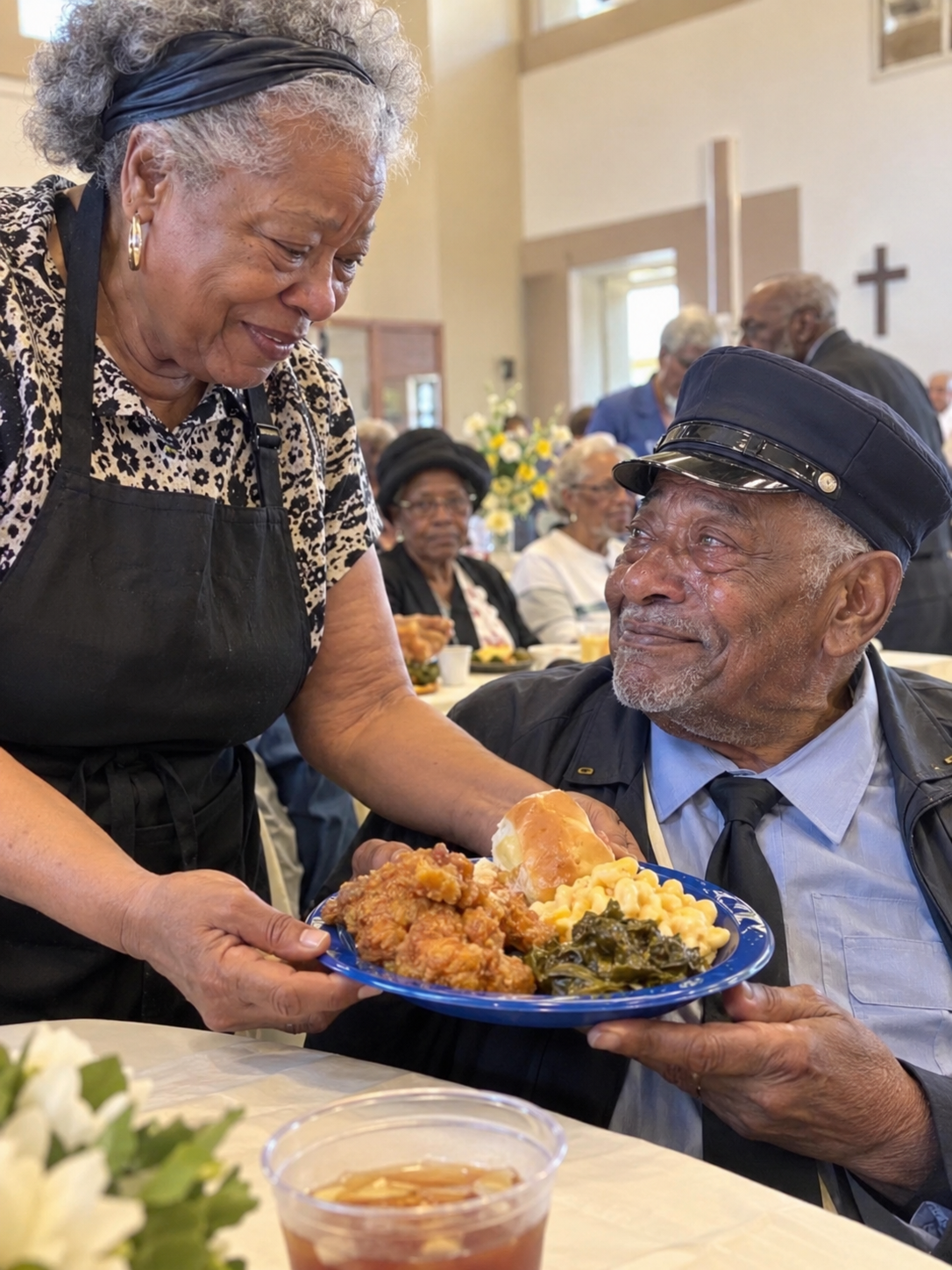
Every Sunday, Clara Johnson filled a blue plate with chicken, greens, and cornbread, covered it with foil, and set it beside the church kitchen door.
At sixty-seven, Clara Johnson had learned that the smallest routines often carried the heaviest memories. In Charlotte, North Carolina, familiar walls and familiar streets could still hold a surprise. That morning, even the ordinary sounds seemed to ask for closer attention.
The plate was for Mr. Lewis, a retired bus driver who began eating alone after his wife died and rarely entered the fellowship hall.
People around Clara Johnson knew pieces of this history, but no one held the entire account. Time had softened the public version while leaving the private questions untouched. Every relative remembered a different detail and protected a different silence.
One rainy Sunday the plate remained untouched. Clara learned Mr. Lewis had fallen at home and was recovering without nearby relatives.
The discovery made a blue Sunday dinner plate feel heavier than it looked. What had seemed ordinary now connected a present decision to a past nobody had fully explained. Setting it aside would have been easier, but it would not have brought peace.
When she visited, she found twenty-seven neatly washed foil covers in a drawer. He had saved one from every meal because each carried Clara’s handwritten blessing.
There was enough evidence to keep looking and enough uncertainty to cause harm. Clara Johnson chose to ask one more question before accepting the easiest answer. The answer would affect people who had built entire lives around the older story.
Mr. Lewis apologized for keeping them and said the notes made the house feel occupied. Clara realized her hurried weekly gesture had become his conversation table.
That choice brought old loyalties into the open. Love, pride, and fear had been occupying the same room for years, each pretending to be the only truth. Nobody could move forward while those feelings remained disguised as facts.
She asked the church not merely to deliver food, but to rotate visits. Mr. Lewis resisted until three former passengers arrived with stories about his years behind the wheel.
No single conversation could repair everything. Still, speaking plainly changed what everyone could deny, and silence stopped controlling the next decision. For the first time, each person had to respond to what actually happened.
They remembered him waiting for running children, carrying groceries, and changing routes so nurses reached night shifts safely during storms.
The truth did not erase the lost years. It gave those years their correct names and allowed the people carrying them to put down some of the blame. Grief remained, but it no longer had to defend a false version of the past.
The man who believed he had been forgotten heard how his ordinary work had protected hundreds of lives. He cried into the same blue plate.
What happened next was quiet and practical. A call was returned, a chair was pulled closer, and the first honest plan was made without demanding instant forgiveness. Small actions made the new promise believable in a way speeches could not.
After his recovery, Mr. Lewis returned to the fellowship hall and sat at a table marked “Drivers Welcome.” He began serving cornbread to newcomers.
Word traveled through the community, not as gossip but as an invitation to help. People offered time, records, food, rides, or simply their presence. Each contribution showed that care becomes strongest when it is given a specific job.
Clara still prepares the blue plate, but it no longer waits by the door. It sits across from hers every Sunday.
That is why a blue Sunday dinner plate remained important. It became a witness to how a small weekly kindness becomes family, and a reminder that one brave act can change how a family remembers itself. Its meaning would now be passed forward with the complete story attached.


