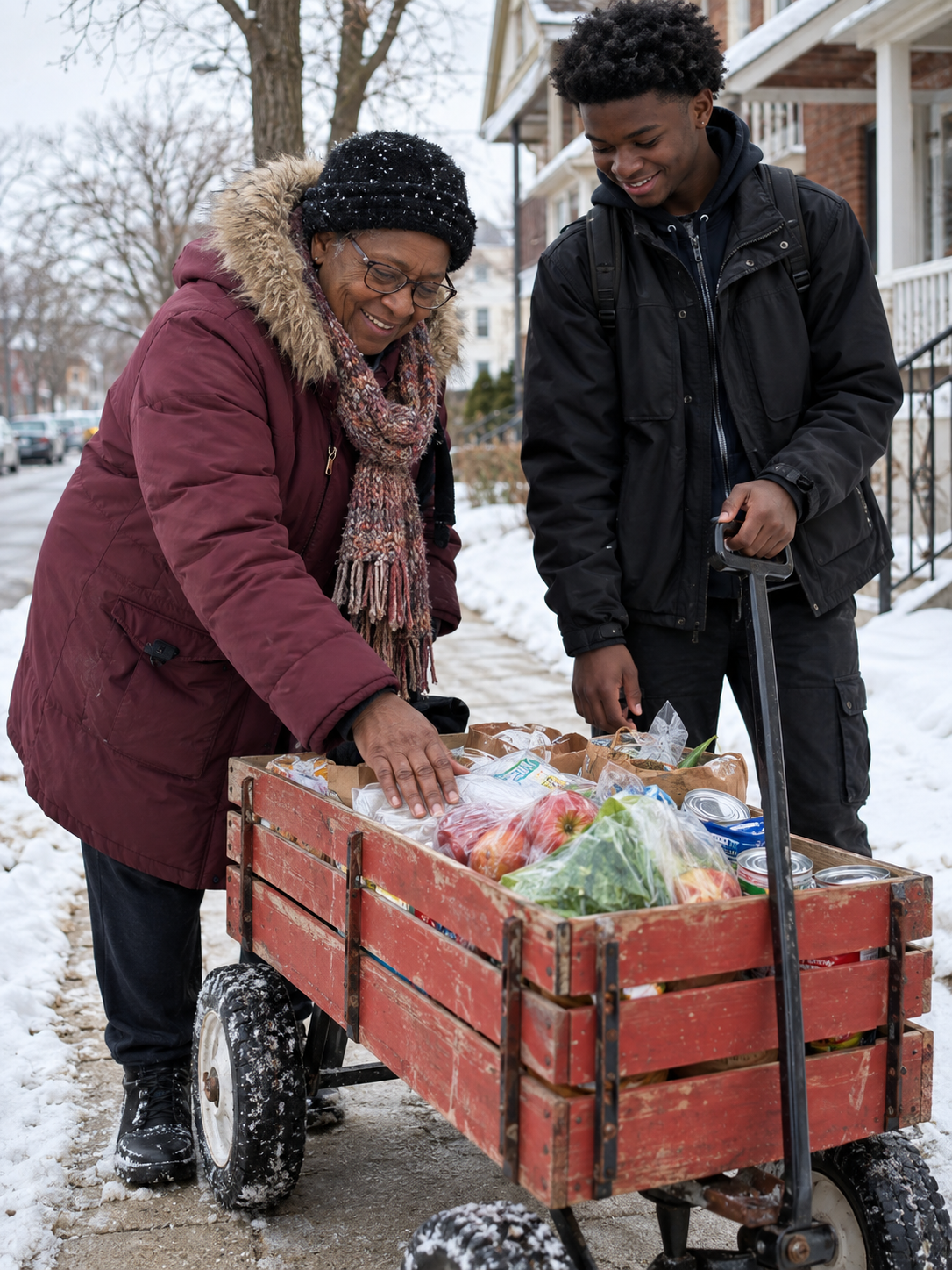
Every Thursday, Evelyn Moore pulled a faded red wagon to the food pantry and loaded it with groceries for three older neighbors in her building.
At sixty-six, Evelyn Moore had learned that the smallest routines often carried the heaviest memories. In Milwaukee, Wisconsin, familiar walls and familiar streets could still hold a surprise. That morning, even the ordinary sounds seemed to ask for closer attention.
The wagon had belonged to her son, who died young. Using it for deliveries gave an ordinary childhood object a reason to keep rolling.
People around Evelyn Moore knew pieces of this history, but no one held the entire account. Time had softened the public version while leaving the private questions untouched. Every relative remembered a different detail and protected a different silence.
One snowy morning a wheel broke several blocks from home, spilling canned goods into the slush while Evelyn tried to gather them with numb hands.
The discovery made a restored red wagon feel heavier than it looked. What had seemed ordinary now connected a present decision to a past nobody had fully explained. Setting it aside would have been easier, but it would not have brought peace.
A teenage boy named Jamal stopped, carried the bags, and took the wagon to his vocational school without asking for anything.
There was enough evidence to keep looking and enough uncertainty to cause harm. Evelyn Moore chose to ask one more question before accepting the easiest answer. The answer would affect people who had built entire lives around the older story.
Evelyn worried the wagon would be replaced with something shiny and unfamiliar. She asked Jamal to preserve every scratch her son had made.
That choice brought old loyalties into the open. Love, pride, and fear had been occupying the same room for years, each pretending to be the only truth. Nobody could move forward while those feelings remained disguised as facts.
Jamal’s class reinforced the frame, repaired the wheels, and matched the faded red paint while leaving a small handprint visible on the side.
No single conversation could repair everything. Still, speaking plainly changed what everyone could deny, and silence stopped controlling the next decision. For the first time, each person had to respond to what actually happened.
The students learned why the wagon mattered, then discovered the deliveries themselves mattered more. Several volunteered for the Thursday route.
The truth did not erase the lost years. It gave those years their correct names and allowed the people carrying them to put down some of the blame. Grief remained, but it no longer had to defend a false version of the past.
When they returned it, Evelyn ran her fingers over the handprint and cried. Jamal said old things should be strengthened without erasing where they had been.
What happened next was quiet and practical. A call was returned, a chair was pulled closer, and the first honest plan was made without demanding instant forgiveness. Small actions made the new promise believable in a way speeches could not.
The school built six more wagons for pantry volunteers. Each includes insulated bags, safer handles, and a painted name chosen by its route leader.
Word traveled through the community, not as gossip but as an invitation to help. People offered time, records, food, rides, or simply their presence. Each contribution showed that care becomes strongest when it is given a specific job.
Evelyn’s original wagon still leads the line every Thursday. Its repaired wheels sound steady on the sidewalk, even through snow.
That is why a restored red wagon remained important. It became a witness to dignity carried one grocery bag at a time, and a reminder that one brave act can change how a family remembers itself. Its meaning would now be passed forward with the complete story attached.


