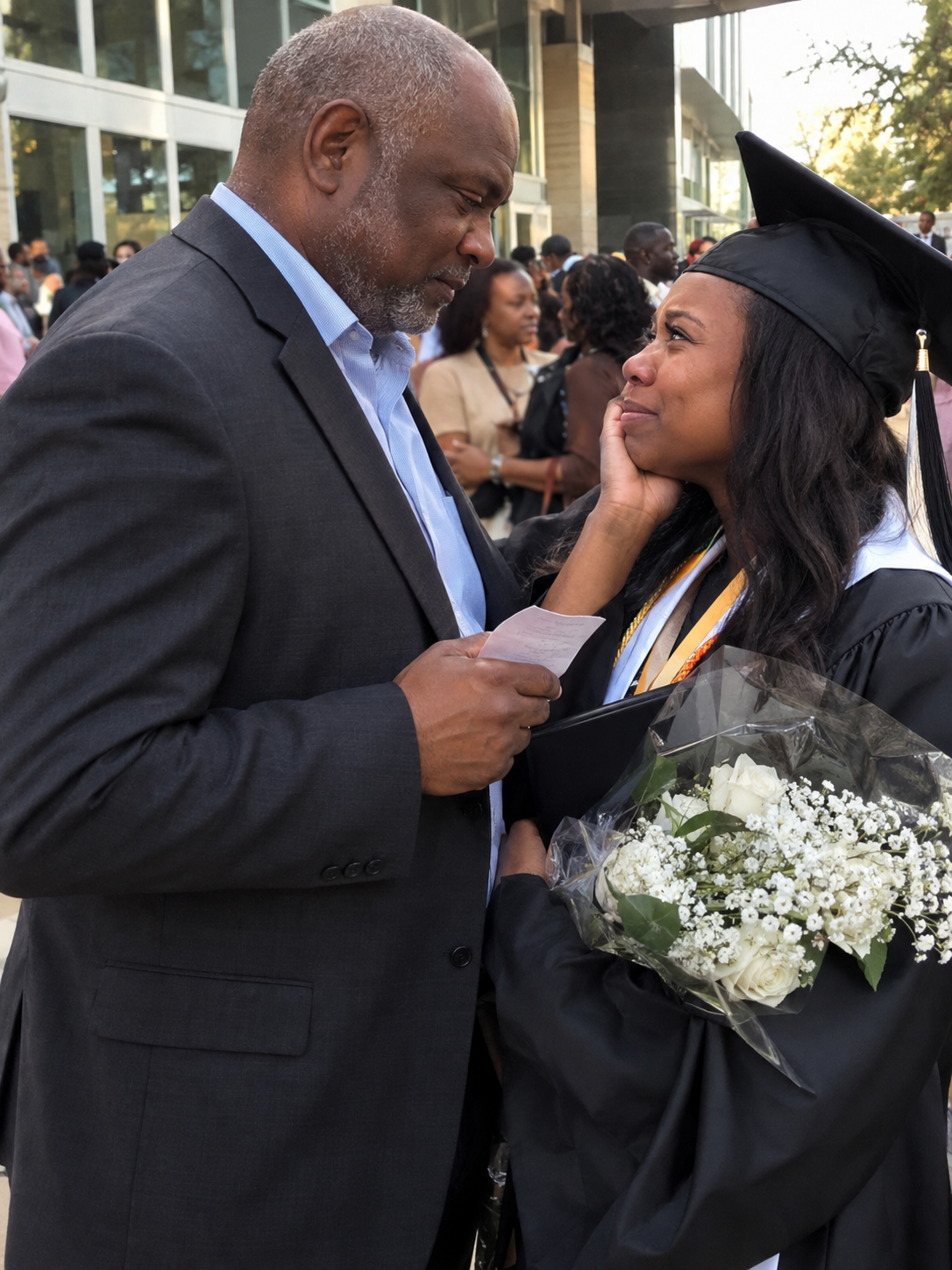
Terrence Hall found the graduation ticket beneath his windshield wiper, with his name written in blue ink and crossed out twice.
At sixty-one, Terrence Hall had learned that the smallest routines often carried the heaviest memories. In Atlanta, Georgia, familiar walls and familiar streets could still hold a surprise. That morning, even the ordinary sounds seemed to ask for closer attention.
His daughter Simone had earned her nursing degree after raising two children and working nights. Terrence had missed much of her childhood while serving a long sentence.
People around Terrence Hall knew pieces of this history, but no one held the entire account. Time had softened the public version while leaving the private questions untouched. Every relative remembered a different detail and protected a different silence.
The ticket came with no note, only a seat number. Terrence could not tell whether Simone wanted him inside the auditorium or wanted him to understand what he had lost.
The discovery made a creased graduation ticket feel heavier than it looked. What had seemed ordinary now connected a present decision to a past nobody had fully explained. Setting it aside would have been easier, but it would not have brought peace.
His grandson called secretly and said Simone had carried the ticket for weeks. She crossed out the name after hearing Terrence describe himself as a proud father to neighbors.
There was enough evidence to keep looking and enough uncertainty to cause harm. Terrence Hall chose to ask one more question before accepting the easiest answer. The answer would affect people who had built entire lives around the older story.
Terrence knew pride sounded like ownership when he had not packed lunches, attended conferences, or paid tuition. He drove to campus but remained outside.
That choice brought old loyalties into the open. Love, pride, and fear had been occupying the same room for years, each pretending to be the only truth. Nobody could move forward while those feelings remained disguised as facts.
Simone found him beside the entrance after the ceremony began. She asked why he always made her come looking for him, even on the day she had earned alone.
No single conversation could repair everything. Still, speaking plainly changed what everyone could deny, and silence stopped controlling the next decision. For the first time, each person had to respond to what actually happened.
Terrence said he feared taking a seat meant claiming credit. Simone answered that showing up was not credit; it was the first payment on a very old debt.
The truth did not erase the lost years. It gave those years their correct names and allowed the people carrying them to put down some of the blame. Grief remained, but it no longer had to defend a false version of the past.
He entered quietly and stood at the back as her name was called. When the audience cheered, he let her children’s voices rise above his own.
What happened next was quiet and practical. A call was returned, a chair was pulled closer, and the first honest plan was made without demanding instant forgiveness. Small actions made the new promise believable in a way speeches could not.
Afterward, Simone gave him one photograph but set clear conditions: consistency, honesty, and no speeches about forgiveness he had not yet earned.
Word traveled through the community, not as gossip but as an invitation to help. People offered time, records, food, rides, or simply their presence. Each contribution showed that care becomes strongest when it is given a specific job.
Terrence keeps the crossed-out ticket in his wallet. Each week he takes the grandchildren to the library, arriving ten minutes early.
That is why a creased graduation ticket remained important. It became a witness to a father trying to repair the years he missed, and a reminder that one brave act can change how a family remembers itself. Its meaning would now be passed forward with the complete story attached.


