Serves 6–8 | Prep: 25 minutes | Bake: 30–35 minutes | Rest: 10 minutes | About 7 minutes to read
Ingredients
Chicken filling
- 3 tablespoons unsalted butter, plus a little for the baking dish
- 1 medium yellow onion, finely diced
- 2 celery stalks, finely diced
- 1 medium carrot, finely diced
- 2 garlic cloves, minced
- 1/3 cup all-purpose flour
- 2 cups low-sodium chicken broth
- 1 cup whole milk
- 1/2 cup heavy cream
- 3 cups cooked, shredded or bite-size chicken (about 1 pound)
- 3/4 cup frozen corn kernels, thawed
- 1 teaspoon dried thyme; 1/2 teaspoon smoked paprika
- 3/4 teaspoon kosher salt, plus more to taste; 1/2 teaspoon black pepper
- 1 tablespoon chopped fresh parsley, optional
Cornbread topping
- 1 cup yellow cornmeal
- 1 cup all-purpose flour
- 2 teaspoons baking powder; 1/2 teaspoon baking soda
- 3/4 teaspoon kosher salt; 1 tablespoon sugar
- 1 large egg
- 1 cup well-shaken buttermilk
- 1/3 cup unsalted butter, melted and cooled slightly
- 1 tablespoon honey or melted butter for finishing, optional
Equipment: A 9-by-13-inch baking dish, a large skillet or Dutch oven, two mixing bowls, a whisk, and an instant-read thermometer.
1. A supper worth gathering around
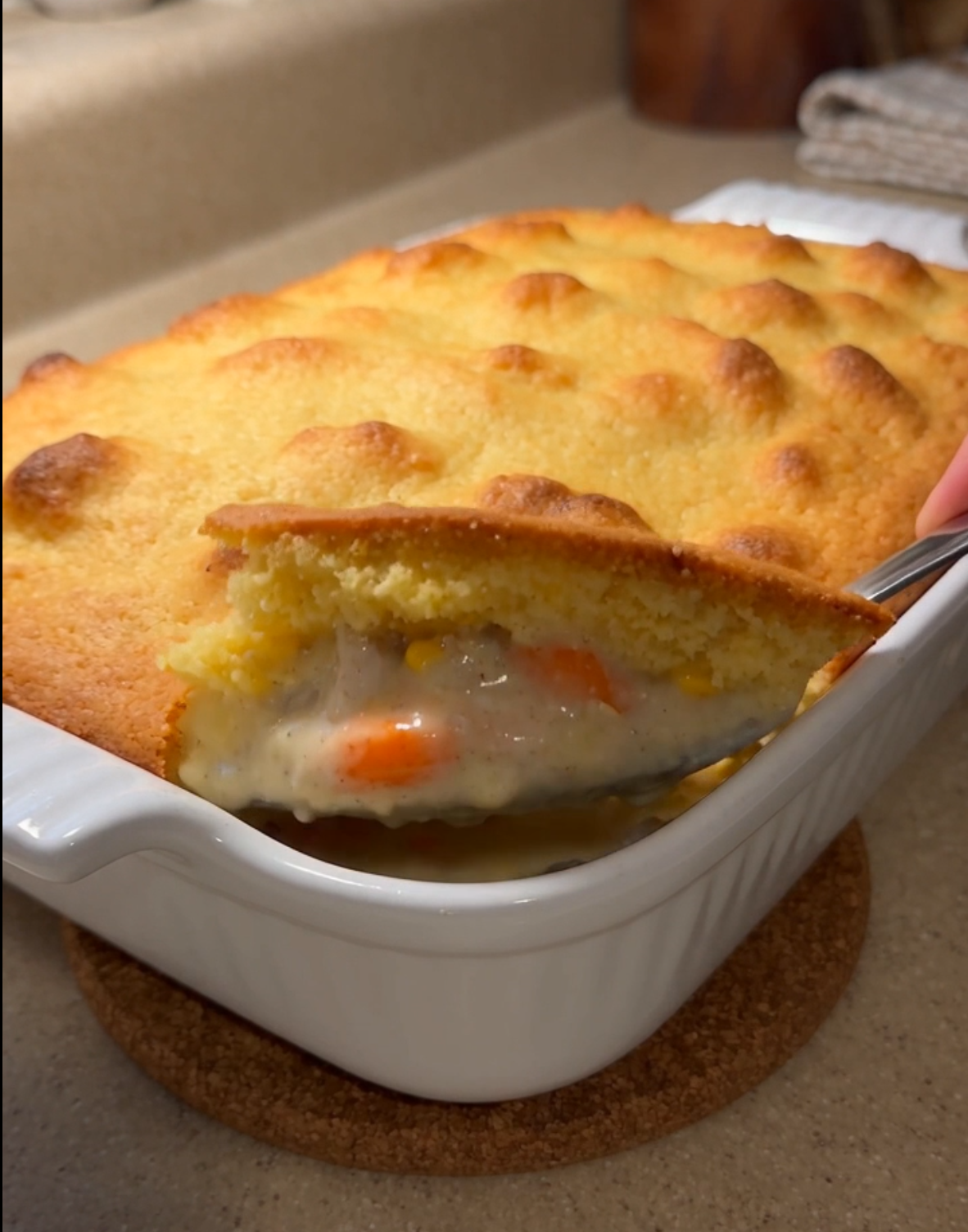
There is a particular comfort in bringing a bubbling casserole straight to the table: golden cornbread on top, creamy chicken beneath, and a little steam rising from the first spoonful. This Southern-inspired chicken and cornbread bake turns familiar pantry ingredients into a hearty family supper. The cornbread is tender in the middle and lightly crisp where it meets the dish’s edges. Underneath, chicken, corn, onion, celery, and carrot sit in a savory sauce. It is the kind of dinner that looks generous before anyone even takes a bite.
2. What makes the layers work
This recipe has two distinct parts, and each needs the right texture before they meet. The chicken filling should be creamy enough to spoon easily but thick enough to support dollops of batter. The cornbread batter should be soft and spreadable, not runny like pancake batter. As the casserole bakes, the exposed top turns deep gold while the underside stays tender from the warm filling. Serve a scoop that includes both layers, and the sweetness of cornmeal balances the savory sauce without turning dinner into dessert.
3. Get the kitchen ready
Heat the oven to 400°F (205°C), with a rack in the center. Lightly butter a 9-by-13-inch baking dish and set it beside the stove. Dice the onion, celery, and carrot into small pieces so they soften at roughly the same pace; mince the garlic separately because it cooks much faster. Measure the broth, milk, cream, and dry topping ingredients before beginning. A ready workspace makes the short sequence from sauce to batter much easier, especially because baking powder works best when the finished batter goes into the oven promptly.
4. Choose the chicken
Use three cups of chicken that is already fully cooked: pulled rotisserie chicken, leftover roast chicken, or simply poached or baked chicken breasts or thighs all work. Cut or shred it into bite-size pieces so every serving has some meat. If cooking chicken specifically for this bake, verify it reaches 165°F (74°C) before chopping and adding it to the sauce. Do not place raw chicken under the cornbread and assume the topping’s baking time will cook it through. Remove any skin or bones before measuring the three cups.
5. Build the vegetable base
Set a large skillet or Dutch oven over medium heat and melt the three tablespoons of butter. Add the onion, celery, and carrot with a small pinch of the measured salt. Cook for about six to eight minutes, stirring occasionally, until the onion looks translucent and the carrot begins to soften. The vegetables should be fragrant, not deeply browned. Add the minced garlic and stir for another thirty to sixty seconds. If the pan seems too hot and the garlic starts coloring quickly, lower the heat before moving on.
6. Make a gentle roux
Sprinkle the one-third cup of flour evenly over the softened vegetables. Stir continuously for about one to two minutes, until no loose white flour remains and the mixture looks like a thick, lightly golden paste. This brief cooking step removes the raw flour taste and gives the sauce enough body to stay with the chicken instead of running to the bottom of the casserole. Scrape the corners of the skillet as you stir. Keep the heat at medium; a pale roux is the goal here, not a dark gravy base.
7. Add the broth in stages
Pour in about half a cup of the chicken broth while whisking or stirring firmly. At first the paste may tighten, which is normal. Continue adding the remaining broth in two or three portions, smoothing each addition before pouring in the next. This gradual method prevents flour lumps and lets you scrape up the flavor on the skillet’s bottom. Once all two cups are incorporated, bring the mixture to a gentle simmer. It should already begin to look glossy and lightly thickened, though it will gain more body in the next step.
8. Finish the creamy sauce
Stir in the whole milk and heavy cream, then add the thyme, smoked paprika, remaining measured salt, and black pepper. Simmer gently for four to six minutes, stirring often, until the sauce coats a spoon and a line drawn through the pan closes slowly. Avoid a hard boil, which can make a dairy-based sauce less smooth. Taste carefully: the filling should be pleasantly seasoned on its own because it has to flavor the chicken and the cornbread above it. Add a little more salt only if needed.
9. Fold in chicken and corn
Add the cooked chicken and thawed corn kernels to the sauce, folding until the chicken is evenly coated. Let the mixture warm for two or three minutes over low heat. Its consistency should resemble a thick chicken pot pie filling: spoonable, with visible pieces of meat and vegetables, but not watery. If it seems unusually stiff, stir in a tablespoon or two of broth; if thin, simmer it a few more minutes before transferring it. Stir in the parsley if using, and taste once more before the topping goes on.
10. Fill the baking dish
Spoon the hot chicken mixture into the prepared baking dish and spread it into an even layer. Leave a little space below the rim so the sauce has room to bubble without spilling over. If your baking dish is shallow, place it on a rimmed sheet pan before it goes into the oven. The filling should still be warm when the cornbread batter is added; that helps the casserole bake evenly. Smooth the surface gently, but leave the chicken and corn visible rather than pressing everything down into a dense layer.
11. Mix the dry topping ingredients
In a medium bowl, whisk together the yellow cornmeal, one cup of all-purpose flour, baking powder, baking soda, three-quarter teaspoon of kosher salt, and the tablespoon of sugar. The small amount of sugar rounds out the corn flavor without making the topping cake-like. Break up any clumps of baking powder with the whisk so the cornbread rises evenly. Use ordinary finely or medium-ground yellow cornmeal; a very coarse grind may need more liquid and can feel gritty in the short baking time used for this casserole.
12. Whisk the wet ingredients
In a second bowl, whisk the egg until the white and yolk are combined, then whisk in the buttermilk. Add the melted butter once it has cooled enough that it will not cook the egg. Buttermilk supplies gentle tang and reacts with the baking soda for a tender crumb. If it is very cold, the butter may form tiny flecks when mixed in; that is fine. Have the filled baking dish close by before combining wet and dry ingredients so the batter can be spooned over the chicken right away.
13. Bring the batter together
Pour the wet mixture into the dry ingredients and fold with a spoon or spatula just until no large pockets of dry flour remain. A few small lumps are desirable. Overmixing develops the flour’s gluten and can make the cornbread tough instead of tender. The finished batter should fall from the spoon in thick mounds; if it looks unusually dry, add one tablespoon of buttermilk and fold once or twice more. Do not let the batter sit for a long period after mixing, since its leavening has already begun working.
14. Top without burying the filling
Drop the batter in several spoonfuls across the hot chicken filling, then gently nudge the mounds toward one another. You can leave a few narrow gaps for little bubbles of creamy sauce to show through. Avoid plunging the spoon deeply into the filling or trying to spread a perfectly thin sheet: that can mix sauce into the batter and leave uneven, underbaked spots. The surface should look rustic and mostly covered. Corn kernels or a little chicken peeking at the edges make the finished bake especially appetizing.
15. Bake until golden
Transfer the dish to the center rack and bake for about thirty to thirty-five minutes. Look for a deeply golden cornbread top, lightly browned high points, and bubbling filling at several edges. If the top colors too quickly before the middle is set, loosely tent it with foil for the last few minutes without pressing foil into the batter. Ovens and dish materials vary, so start checking around the twenty-eight-minute mark. Keep the door closed during most of the bake so the topping can rise and set steadily.
16. Check the center, not just the crust
A golden surface alone does not guarantee the casserole is ready. Insert a toothpick into a thick area of cornbread near the center; it should come out without wet batter, though a few moist crumbs are fine. Probe the chicken filling beneath the topping with an instant-read thermometer, avoiding the dish itself, and confirm the center has reached 165°F (74°C). If either check fails, return the casserole to the oven for another three to five minutes and test again. The chicken was cooked beforehand, but the assembled dish still needs to be thoroughly heated.
17. Give it a short rest
Set the baking dish on a heat-safe trivet and rest the casserole for ten minutes before serving. The sauce thickens slightly as it cools, which makes it easier to lift a generous portion with cornbread and chicken together. During the rest, the hot filling continues to steam, so take care when leaning over the dish. For a shiny finish, brush a tablespoon of melted butter or a little honey over the warm cornbread. Use honey sparingly if you want the topping to stay mostly savory.
18. Serve the full scoop
Use a broad serving spoon to cut down through the cornbread and lift from beneath the chicken filling. Place the portion on a plate so the browned crust, creamy chicken, bright corn, and vegetables are all visible. A crisp green salad, sautéed greens, or simply sliced tomatoes make a fresh companion to this rich bake. It is substantial enough to stand alone, too. If serving a crowd, bring the entire dish to the table and let everyone see the golden top before breaking into it.
19. Make it your family’s version
For a little more heat, add a pinch of cayenne to the sauce or fold finely diced jalapeño into the cornbread batter. For a milder filling, omit the smoked paprika and add another pinch of thyme. Cooked peas can replace some or all of the corn, though corn emphasizes the Southern-style topping. Keep the chicken, creamy sauce, and basic cornbread proportions the same when making small changes so the topping can bake properly. If using salty store-bought broth or rotisserie chicken, taste before adding any extra salt.
20. Store and reheat the leftovers
Cool leftovers promptly and refrigerate in a covered container within two hours. They keep for up to three to four days. For the best texture, warm individual portions in a 350°F (175°C) oven, loosely covered, until hot throughout; uncover briefly at the end to refresh the cornbread surface. A microwave also works for a quick lunch, though the top will be softer. Reheat the center to 165°F (74°C), and add a spoonful of broth beside the filling if it has thickened in the refrigerator. The next-day flavor is every bit as comforting.