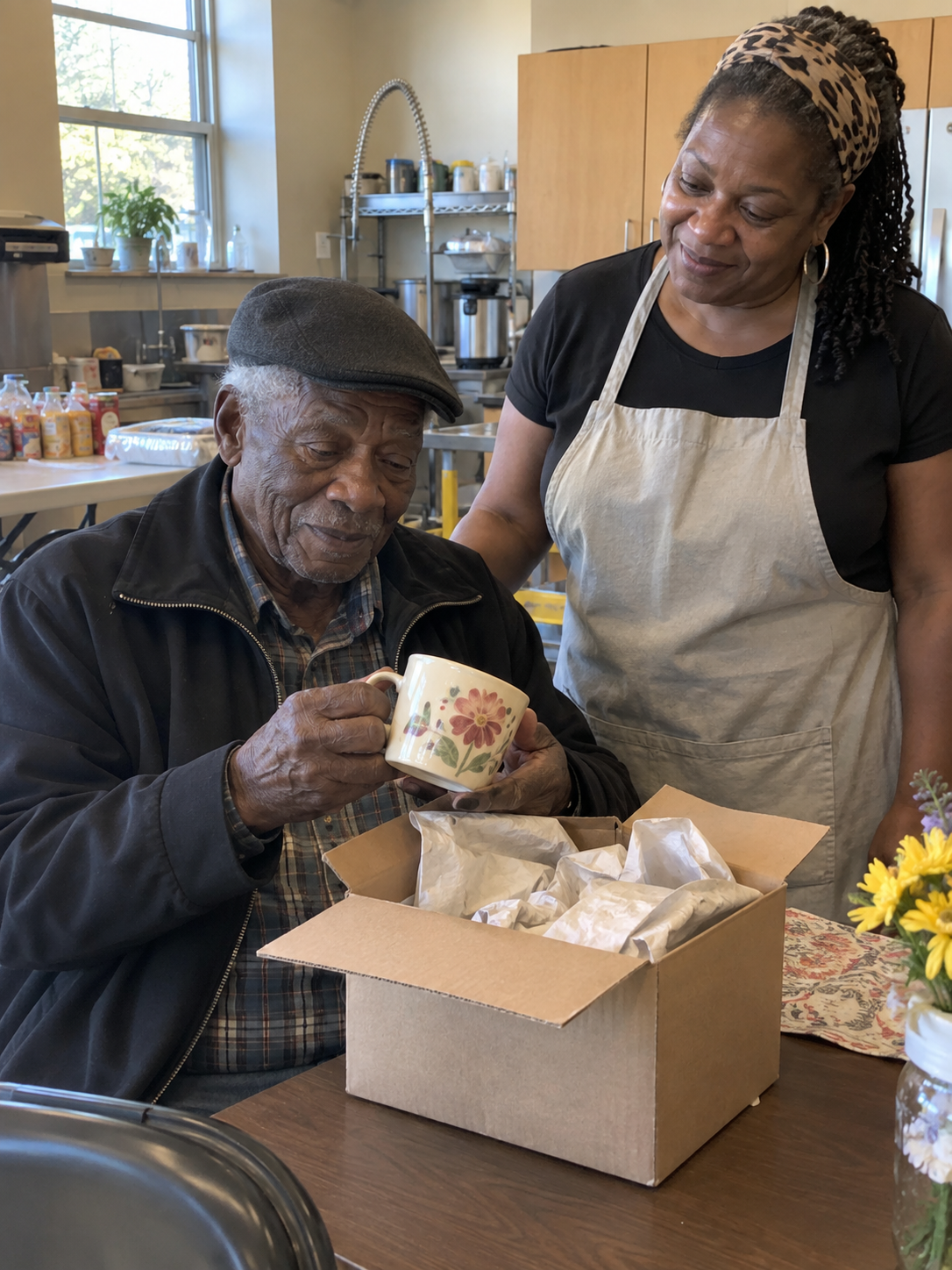
Thomas Greene volunteered at the community center every Thursday morning. He was seventy-seven and preferred jobs that kept his hands busy. He washed dishes, repaired loose cabinet handles, and made coffee for anyone who arrived before the kitchen opened.
The center had served the neighborhood for more than forty years. Its kitchen was being renovated, and volunteers had emptied every cabinet. Behind a stack of old plates, a small cardboard box was found. Inside were cups, utensils, and one white coffee mug with a painted red flower.
A volunteer named Denise held the mug under the light. The paint was worn, but the flower was still clear. She asked whether anyone recognized it. Thomas looked up from the sink and stopped moving.
The mug had belonged to his sister, Alberta. She painted flowers on dishes when she was a teenager and gave them to family members during the holidays. Thomas remembered receiving the mug after he returned from his first job away from home.
Alberta had used the mug every morning. She drank coffee slowly and read the newspaper from front to back. When she died, the family divided her belongings. Thomas thought the mug had been thrown away because it was chipped near the handle.
Denise told him the mug had been found in a box marked with the name of the community center. Thomas explained that Alberta had volunteered there on weekends. She prepared meals for families who were caring for sick relatives and kept extra food in the freezer for anyone who arrived late.
The renovation crew had discovered old donation records in a cabinet. Denise searched through them and found Alberta’s name. She also found a note from a former director thanking her for preparing meals during a winter when the center had very little funding.
Thomas held the mug with both hands. He could still see Alberta standing beside the old stove, wearing a yellow apron and complaining that people never added enough pepper to the beans.
Denise asked whether he wanted to take the mug home. Thomas said he did, but he worried that the chip made it too fragile. Denise suggested using it as a keepsake instead of a daily cup.
The volunteers decided to restore the mug carefully. They cleaned the paint, repaired the chip, and placed a clear protective finish over the flower. They did not repaint the faded areas because Denise said the worn places proved the mug had been used.
Thomas returned the next Thursday. The mug sat in a small box lined with a towel. He opened it slowly and touched the painted flower. Then he told the volunteers that Alberta had promised their mother she would keep serving meals as long as she was able.
Thomas had not known she had made that promise. The donation records showed that she continued volunteering for eighteen years. She had never mentioned it because she believed helping family and neighbors was not something to announce.
The community center placed a photograph of the mug in its kitchen, but Thomas kept the original at home. On Sunday mornings, he filled it with coffee and read the newspaper from front to back, just as Alberta had done.
After several weeks, Thomas brought the mug back to the center for one special breakfast. He used it to serve coffee to new volunteers and told them Alberta’s story. Denise wrote the story in the center’s history book so it would not be lost during the next renovation.
A painted flower on an old mug brought a brother back to a sister’s kitchen, but it also revealed how quietly one woman had cared for her neighbors. Some memories are stored in photo albums. Others wait inside ordinary objects until someone kind enough notices what they mean.


