Rosalind Carter had kept one photograph on her bedroom dresser for nearly fifty years. It showed her mother, Mae, standing outside a church in a cream-colored hat with a wide brim and a small cluster of feathers. Mae wore the hat every Sunday, even when the weather was too warm for a coat.
Rosalind was seventy-eight and had recently begun sorting through the boxes in her attic. She was not moving, and nobody had asked her to clean. She simply felt that some memories deserved a place where they could be seen again instead of remaining beneath blankets and old holiday decorations.
The hat had disappeared after Mae died. Rosalind remembered packing it in a box, but the box was never found. She had searched the closet, the basement, and the storage room at the church. Over time, she accepted that the hat had been lost during one of the many moves her family had made.
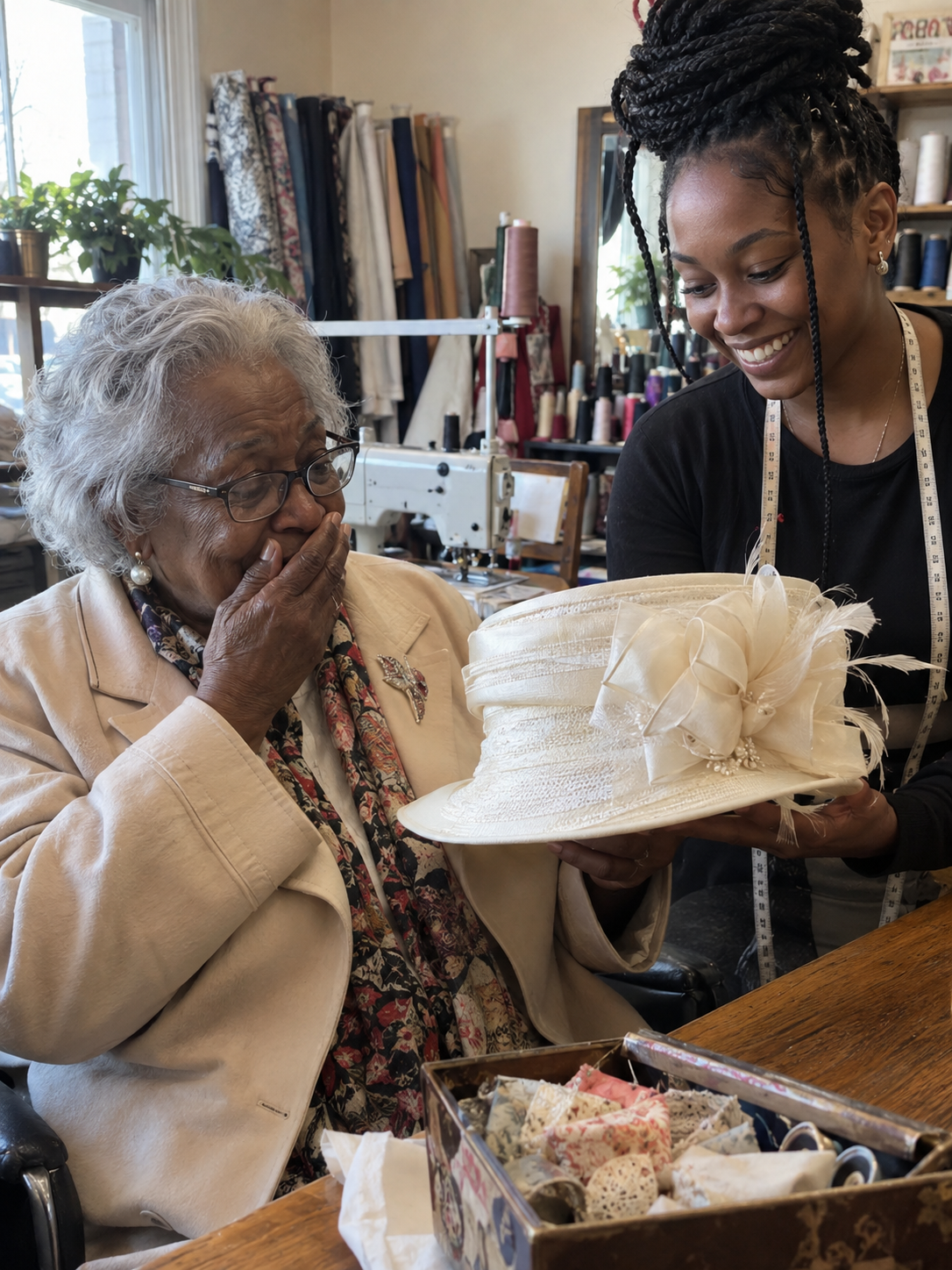
One Saturday, Rosalind carried the photograph to a small tailoring shop downtown. She wanted a similar hat made for her granddaughter’s wedding. The young seamstress, Camille, listened while Rosalind described the shape, the pale color, and the tiny blue thread Mae had sewn beneath the ribbon.
Camille told Rosalind that the details sounded familiar. Her grandmother had once owned a box of fabric and accessories from a church clothing sale. Camille had inherited the box but had never examined every item inside it.
She brought the box from the back room. It held buttons, lace, old ribbons, and several pieces of fabric folded into squares. At the bottom was a narrow strip of cream-colored material with one blue thread stitched through it.
Rosalind touched the thread and immediately recognized the repair. Mae used blue thread in everything because it was the only color she kept beside her sewing machine. She had told Rosalind that a hidden color could make ordinary things feel personal.
Camille asked whether the strip could have come from the hat. Rosalind turned the photograph over and pointed to the edge of the ribbon. The blue thread was visible in the picture, though only if someone knew to look for it.
Camille spent the afternoon comparing the fabric with the old photograph. She found a faint crease that matched the way the ribbon folded beneath the feathers. Rosalind sat beside the sewing machine, holding the picture in her lap and telling stories about her mother’s Sunday mornings.
Mae had raised four children while working during the week. On Sundays, she woke before everyone else, pressed her dress, polished her shoes, and placed the hat on the kitchen table. She believed looking prepared was a way of telling the world that her family mattered.
Camille repaired the hat using the original strip of fabric. She did not replace the faded ribbon or remove every mark. Rosalind asked her to leave the signs of age because the hat was not meant to look new. It was meant to look loved.
When Camille finished, Rosalind placed the hat on her head and looked into the small mirror above the counter. For a moment, she saw her mother standing behind her. The resemblance was not in the face. It was in the posture and the way the brim settled above her eyes.
Rosalind returned to the shop with her granddaughter the following week. Camille had made a small matching ribbon for the bride’s bouquet. The granddaughter cried when she heard that the original hat had been found inside a box connected to the same church community Mae had served.
The wedding photographs showed Rosalind wearing the restored hat while her granddaughter held the bouquet. Camille was invited to the reception and sat with the family as they explained how a missing hat had traveled through three generations.
Rosalind kept the photograph beside the restored hat. She said the hat had survived because people had handled it carefully, even when they did not know whose memory they were holding. Sometimes an heirloom is not valuable because it is expensive. It is valuable because someone loved it enough to keep repairing it.