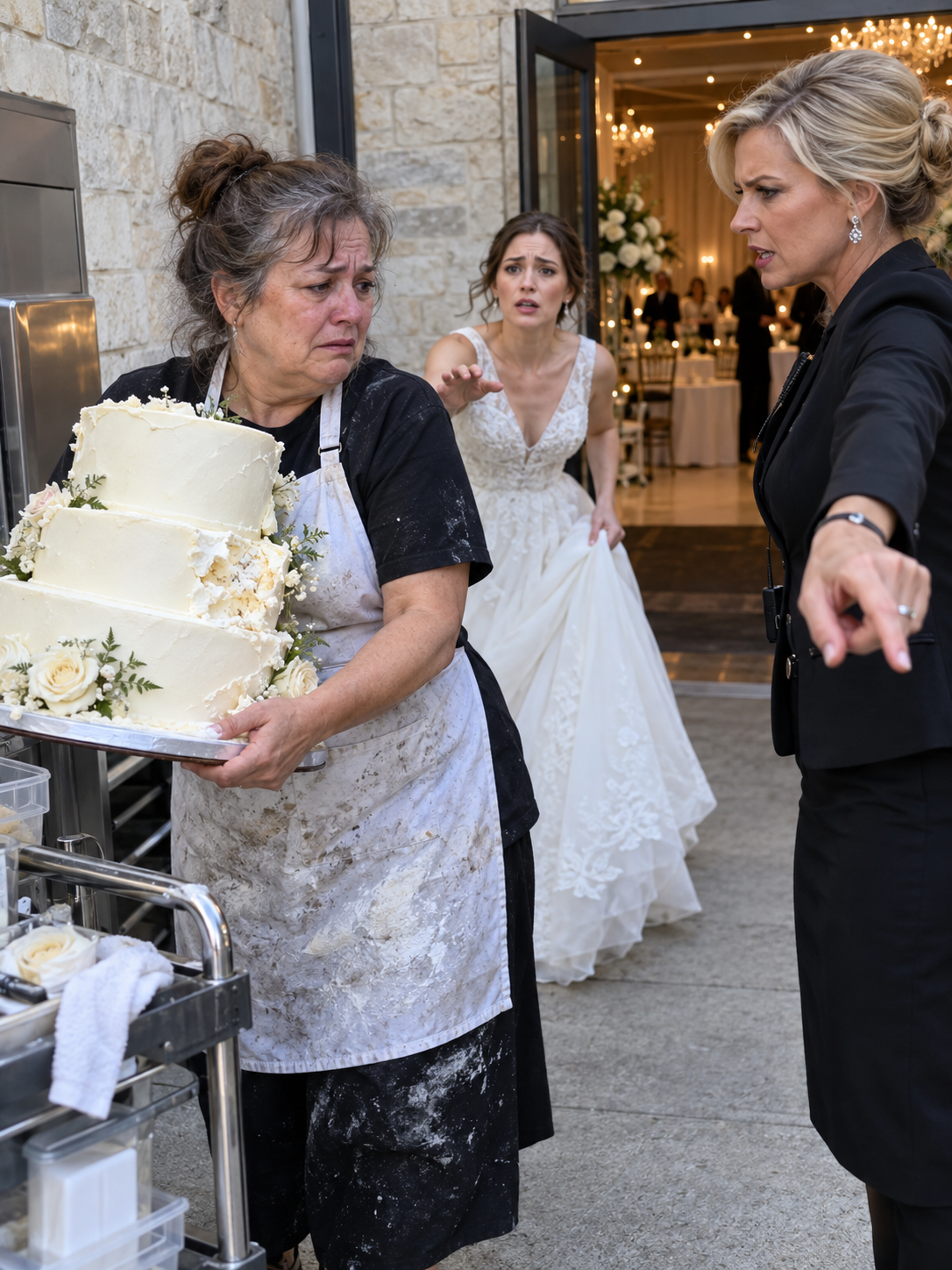
The catering trolley jerked forward, and the cake struck the metal doorframe. Annette caught the board before it fell, but one side collapsed against her apron. White icing streaked her sleeve. The wedding coordinator pointed toward the service exit. Behind her, a bride who had been smiling for photographs suddenly stopped and stared at the small sugar daisies sliding down the damaged tier.
“That cake was never approved,” the coordinator said. Annette tried to explain that the bride had ordered it herself. She had the receipt in her bag, but both hands were holding the board level. A server reached to help. The coordinator waved him back, saying the venue could not display something that looked homemade. Annette looked down at the flowers she had shaped one by one.
She was fifty-two and baked from a licensed shared kitchen three mornings a week. She knew how to deliver, how to keep a cake cool, and how to ask a venue about access. She had done all those things. The confirmation email named a service entrance and a delivery window. None of it prepared her for someone deciding her plain apron meant she had arrived by mistake.
The bride, Rachel, had chosen the cake after tasting a simple lemon sponge at a community market. It reminded her of birthdays when her mother was alive. She had asked for daisies rather than elaborate decorations. Annette offered to make them from sugar, then spent an extra evening practicing the uneven little petals Rachel described. She wanted them to look like flowers picked from a yard.
Rachel came through the doorway before the photographer could follow. “Why is my cake outside?” she asked. The coordinator said there had been a problem with the supplier. Annette felt herself being converted into a problem while she stood there. A server finally took one side of the board so she could straighten her shoulders and speak without fear of dropping what remained.
Rachel did not look at the coordinator’s clipboard. She looked at a daisy near Annette’s wrist, its yellow center marked with three tiny dots. Her mother used to make flowers that way. Rachel had not mentioned the dots at the tasting. She touched the air above one, careful not to disturb it. “Who taught you to do those?” she asked.
Annette named the woman who had taught her to bake when she was nineteen: Linda Mason. Rachel’s mother. The name moved through the doorway with the force of a sound from another room in her childhood. Annette had known Rachel only as Rachel Bennett, using the name from the order. Rachel had known the business only as Annette’s Kitchen. Neither had connected those two parts of their lives.
Linda once ran evening baking classes in the church kitchen. Annette attended with a borrowed mixer and little confidence. After her first failed batch, Linda showed her how to begin again without scraping every mistake into the trash. They stayed friends until Annette moved away. The daisies were a habit she kept because Linda insisted flowers looked friendlier when no two were entirely alike. Linda made students label their recipes with the date and anything they would change next time. Annette still kept those notes. In one margin, Linda had written that a cake should be good enough to share even if nobody owned a camera. Rachel laughed when Annette repeated it. The words sounded so like her mother that she wanted to hear them again.
Rachel remembered a young woman carrying mixing bowls into their house, but she had been a child and did not remember her name. Annette remembered a girl licking lemon icing from a wooden spoon. They looked at each other over the damaged cake, recognizing enough to make the years feel briefly thin. The coordinator began explaining again. Rachel raised a hand and asked her to wait.
First, they moved the cake to a clean preparation table. Annette inspected it with the venue pastry cook, who offered fresh boards and tools. The damaged side could not be restored in time to look as planned. Rachel asked whether the sound sections could be served safely as individual portions after the cook checked them. There were other desserts available. The wedding did not need a perfect photograph of a tower.
The coordinator admitted she had pushed the trolley while trying to clear the doorway. She had not checked the bride’s supplier email, assuming a family member had arranged an unapproved delivery. Rachel asked the venue manager to document the damage and review the charge afterward. She did not want Annette negotiating compensation while trying to hold together a cake, a business, and her composure.
The manager apologized and reassigned the coordinator away from the kitchen while the reception continued. He asked the servers to help Annette and the pastry cook prepare a new display. They set the undamaged top tier on a smaller stand and arranged slices neatly around it. The daisies that survived went among the plates. The design was different, but it still looked like something made for this particular bride. The pastry cook asked Annette where the first cut should go instead of taking over her work. Annette noticed and thanked him. He had equipment and space she needed; she knew the cake’s structure and where the damage stopped. Working together restored some of the authority she lost when the coordinator treated her as someone who needed to be removed from a doorway.
Annette offered to refund part of the order. Rachel refused to decide while everyone was upset. She had hired Annette to bake and deliver the cake, and both had been done. The damage happened afterward. Later they could review expenses fairly with the manager. For now, Rachel asked whether there was enough lemon sponge for her new husband, who had heard about the cake for months.
When the reception began, Rachel introduced the cake simply as a recipe connected to her mother. She did not tell a room full of guests the humiliating details of the service entrance. Annette had not agreed to become entertainment. The bride thanked the people who repaired the display and invited guests to try it before deciding whether a wedding cake needed three perfect tiers to taste like a celebration.
Rachel’s father recognized the flavor at the first bite. He set down his fork and asked where it came from. Annette joined him at the table, explaining the church classes and the three dots in the daisies. They remembered Linda standing over a bowl, telling everyone to stop opening the oven door. Rachel listened to stories she had never heard because she had been too young to know the people telling them.
After dinner, the venue cook packed a few undamaged daisies into a small box. Rachel asked for one to keep with the wedding ribbon. Annette warned that sugar flowers were fragile and should not be expected to last forever. Rachel smiled. She had already learned that keeping something did not always mean preserving it exactly. Sometimes it meant learning how it was made and making it again. Her father asked if Annette had any of the old class recipes. She said she would look when the wedding rush ended. Rachel wanted copies even if the pages were stained or incomplete. She had inherited cookbooks but few working notes from her mother’s kitchen. Discovering a recipe with crossed-out measurements felt more personal than finding another polished photograph in an album.
The venue later covered the documented cost of the damaged work and changed how deliveries were confirmed at the door. Annette accepted the settlement after checking it carefully. She did not need the coordinator’s mistake to ruin the woman’s life, but she needed it acknowledged as damage to paid work. Kindness at the reception did not make the hours spent shaping those flowers free.
Rachel visited Annette’s next market stall carrying a photograph from the wedding. It showed the smaller cake, surrounded by plated slices and guests reaching for forks. She asked whether Annette would teach her to make the daisies. Annette offered a quiet afternoon in the shared kitchen. They mixed sugar paste, rolled uneven petals, and talked about Linda without trying to remember her in only solemn ways.
Their first tray of flowers was crooked. Rachel wanted to remake the largest one. Annette told her what Linda had said about not throwing out every mistake. They kept it. The three dots in its center were almost too close together, but Rachel could see how her mother’s hands had once repeated the same small action. She took a picture before they packed the flowers away. Before they left the kitchen, Rachel wrote the date on the recipe and added one note about her uneven flowers. Annette found a clear sleeve to keep it in. Neither tried to imitate Linda exactly. The afternoon worked because a skill she shared had reached new hands, which would make their own mistakes and eventually have useful advice for someone else.
The cake at the service door became a story Rachel told only when she could include the people who helped after it was damaged. What lasted was the unexpected return of a woman from her mother’s kitchen, carrying a skill Linda had shared decades earlier. The ruined tier never made it into the wedding album. The little daisies did.


