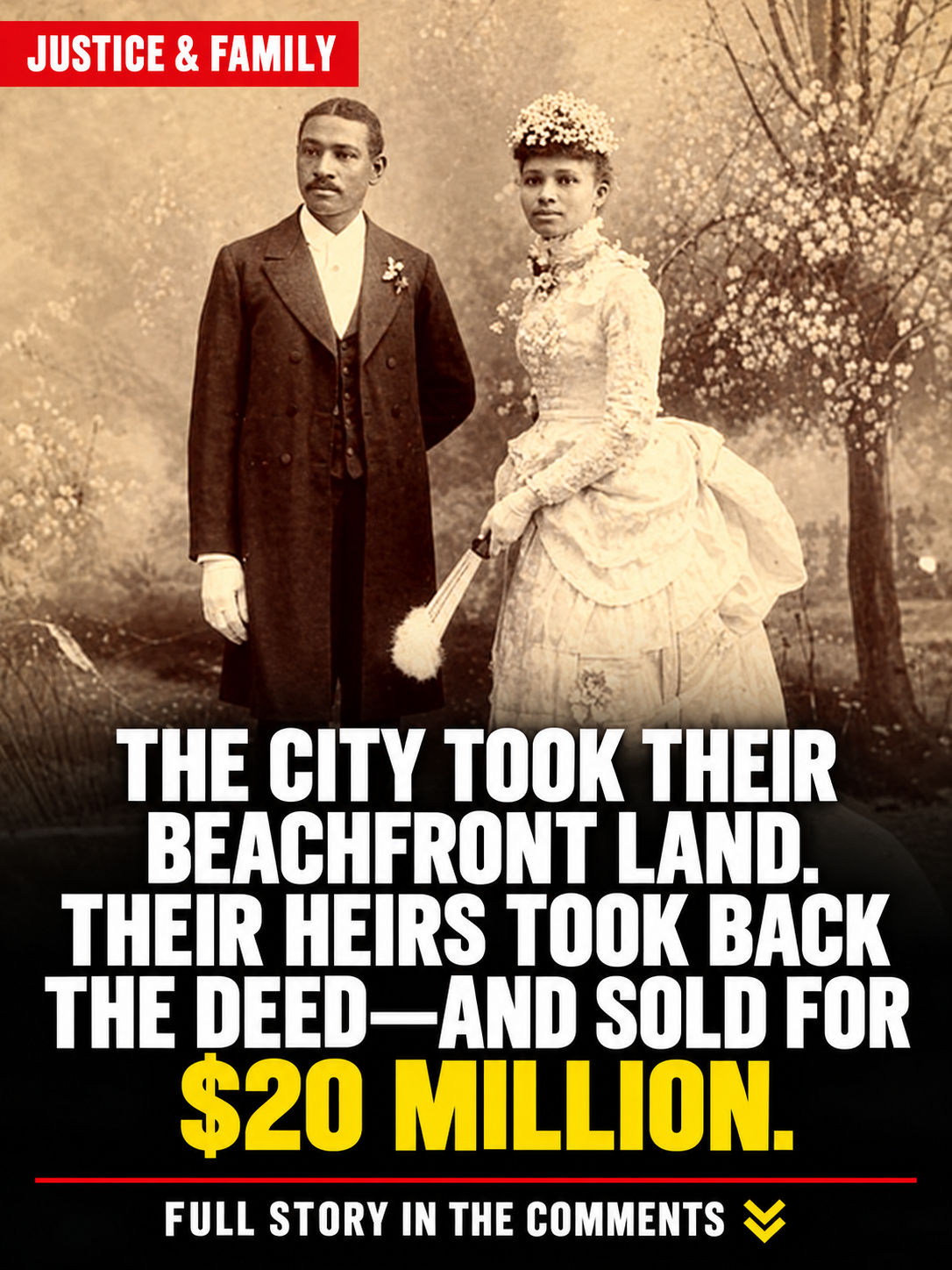
The City Took Their Beachfront Land. Their Heirs Took Back the Deed—and Sold for $20 Million.
Charles and Willa Bruce built a place where Black families could enjoy the Southern California coast. Nearly a century after the city took their beachfront property, their descendants received its ownership back. Then the heirs made a decision that drew new attention: they would sell it for about $20 million. [1] At first glance, receiving land and selling it back can look like an unexpected reversal. The missing piece is control. The ancestors lost the ability to decide what happened to their property. The descendants regained that ability and used it. The financial transaction becomes meaningful when understood as the exercise of a right that the original taking had denied.
The original business stood in Manhattan Beach, where exclusion shaped who could use and enjoy the coast. Bruce’s Beach provided a setting for Black visitors who faced discrimination elsewhere. The enterprise represented more than a pleasant day at the ocean; it represented a family making a living and a community finding welcome. [4] The setting matters because leisure and opportunity were connected. A business welcoming Black beachgoers could create income for its owners while giving patrons access to an experience available unequally elsewhere. The family’s enterprise therefore served private and community purposes at once. Losing it affected both the people who ran the business and those who found a welcome there.
Local opposition targeted that success. Los Angeles County’s official history describes the taking of the property by Manhattan Beach as an act motivated by racism and a desire to drive out a successful Black business and its patrons. This is the government’s own account of the wrong later addressed. [1] Official acknowledgment is important in a story where the original action also came through government. The county’s explanation did not present the land transfer as an arbitrary gift. It linked the modern decision to a documented injustice. That connection gives restitution its meaning: the aim was to respond to what had been taken, not merely to celebrate a family.
The city used eminent domain in the 1920s to condemn the property. That legal mechanism gave the taking an official form, but the existence of a procedure did not remove the racial history around its use. The family lost the land and the business opportunity connected to it. [3] Eminent domain can make the consequences of a taking seem distant from the people affected. Legal documents describe parcels, public purposes and compensation. A family experiences the same action as the loss of a livelihood and a place. Bruce’s Beach asks readers to look at that human consequence alongside the official mechanism used to produce it.
For descendants, the loss reached across generations. Land can provide a livelihood, rise in value or become an inheritance. Once it is taken, a family loses choices that might otherwise remain open to children and grandchildren. That is why this story concerns wealth as well as an address. [2] The effect of property ownership often extends beyond the first buyer. Children may inherit an asset, benefit from its income or use its value to support future plans. A taking can interrupt that sequence. No one can know precisely what would have happened across every missing decade, but the removal of those possibilities helps explain why descendants remained connected to the claim.
The property later came under Los Angeles County ownership. Reversing the taking required a process that involved state legislation and county action. The return was not a private buyer deciding to be generous. Government bodies had to change legal restrictions and approve the transfer of a public asset. [4] The modern process also shows why restoring public property can require more than an apology. Officials have to identify the asset, establish who is entitled to receive it and ensure that the transfer is legally possible. Those steps may sound administrative, but they determine whether acknowledgment becomes a usable right held by the people affected.
In 2021, county leaders began the formal effort to return the land. California legislation helped remove obstacles to the transfer. Officials then had to identify the closest living legal heirs, ensuring that the deed went to descendants entitled to receive it rather than to a merely symbolic recipient. [1] Identifying heirs gave the process a practical responsibility. The land was to be returned to a family through a lawful ownership arrangement. That required more than choosing someone to stand at a ceremony. The distinction matters because restitution concerns enforceable rights, with future financial and legal consequences, rather than only the public appearance of reconciliation.
The county approved the transfer in June 2022 and returned ownership in July. The property went to Bruce Family LLC. That step changed the story from an acknowledgment of historic discrimination into a concrete restoration of ownership. The family had a deed, not only an apology. [1] The deed created those consequences. Ownership allowed the family to enter agreements concerning the parcels and consider what would best serve its members. The emotional moment of a handover thus had a material foundation. It changed the family’s relationship to a valuable asset in a way that a statement of regret, however sincere, could not achieve alone.
The returned parcels were not the nearby municipal park that also bears the Bruce’s Beach name. MB News emphasized that distinction: the family’s former beachfront lots were being used for a county lifeguard facility. Confusing the parcels can lead readers to misunderstand both the restitution and the later sale. [3] Local names can hide important differences between neighboring pieces of land. A park, former resort lots and a present-day public facility may all become associated with the same familiar phrase. Following the actual parcels prevents a dramatic headline from creating the wrong picture. The restoration involved defined property with a defined modern use, which shaped the available agreements.
The initial arrangement allowed the county to lease the property from the family. Reporting put the annual rent at $413,000, with an option connected to a sale price of $20 million. The heirs had practical financial choices after ownership was restored, rather than merely a ceremonial title. [3] The lease arrangement translated ownership into an ongoing income opportunity. A sale offered a different outcome: an immediate sum rather than continued rental payments. These were choices with practical consequences for the family. Readers do not need access to the heirs’ private deliberations to understand why both options could be significant after the restoration of a valuable asset.
Then came the sale decision. In early 2023, county officials announced that the family would sell the property back to Los Angeles County for nearly $20 million. To someone seeing only the last headline, that might appear to reverse the restoration. The sequence is important to understanding why it did not. [2] The modern buyer was also different from the city that had taken the property. Los Angeles County and Manhattan Beach are separate government bodies. Keeping that distinction visible helps readers follow the ownership history. The later sale was a negotiated county transaction after restitution, not simply a claim that the original city returned and immediately seized the same land again.
The city originally took the property from the ancestors. The descendants, after receiving ownership, chose to sell. A taking that removes a family’s choice and a transaction that exercises it are fundamentally different events. Recognizing the difference is necessary to understand the financial outcome of the restoration. [2] That difference is the moral center of the sale story. A person who owns an asset may choose to keep it, rent it or convert it into another form of wealth. Requiring only one outcome would place a new limit on that choice. Restoring ownership has practical meaning because the recipient can decide, rather than having observers decide for them.
BET reported that the family chose a lump-sum sale instead of continuing the rental arrangement. That choice should not be treated as proof that the land had no meaning to them. Families can care deeply about an inheritance while deciding that cash offers the most useful way to benefit the next generation. [4] An inheritance can benefit a family through money as well as through continued possession of land. The two forms may serve different needs or plans. The heirs’ decision should be understood within that range of possibilities. There is no need to invent how the proceeds were allocated or what individual relatives hoped to do with them.
The completed sale was subsequently reported by Observer Group Newspapers. The proceeds gave the heirs something the original owners had been denied: the ability to realize the value of their own property. That is the economic consequence behind the photograph and the headline about a returned deed. [5] Realizing value also changes the relationship between a historical acknowledgment and a household’s future. A ceremony recognizes the past publicly; sale proceeds can support decisions in the present. The county’s transaction gave the restoration an economic consequence, which is why the story belongs in a discussion of generational wealth rather than only commemorative history.
The sale also raises an uncomfortable question about public expectations. Should descendants be required to keep a restored property forever to demonstrate that the original injustice mattered? Restitution is more meaningful when the family can make its own decision, including one that differs from an observer’s preferred symbolic ending. [5] Public expectations can become a burden when observers want a family to supply a particular ending. Some may prefer a restored business or a permanent memorial. Those wishes are different from the family’s rights. Respecting the restoration means allowing the recipients to choose their own use of the property even when that choice is less symbolic than outsiders expected.
Supervisor Janice Hahn’s statement supported the family’s decision as a way to rebuild generational wealth. The public official connected the modern transaction to the loss inflicted on both the original couple and their descendants. Her position helps explain why the sale was presented as an exercise of restored rights. [2] The official support for the sale helps explain why the transaction was not treated as an abandonment of the original cause. Rebuilding wealth can involve changing the form of an asset. The family’s control over that decision was part of the remedy. The restored right did not become less real because the heirs chose a financial outcome.
The $20 million amount should also be kept in proportion. MB News noted confusion around much higher estimates circulating about the property. The relevant transaction concerned specific beachfront parcels and an established price, not every piece of land or park area that shares the Bruce’s Beach name. [3] Large property figures can easily become exaggerated online, especially when a location is famous and the history is emotional. The actual agreement gives the story a firmer basis than a speculative estimate of everything nearby. Being specific about the parcels and sale amount respects both the economic achievement and the limits of what the transaction covered.
The history has lasting relevance for grandparents who think about what they can leave behind. An inheritance is not only an object. It can be an opportunity, financial security or the freedom to decide what best serves a family. The Bruces’ descendants received a choice once denied to their ancestors. [4] Grandparents often think about an inheritance as a way to give younger relatives choices they did not have. This story reverses that familiar direction. Descendants received a choice connected to something their ancestors had lost. The return did not depend on recreating the family’s past; it allowed the present family to decide how an acknowledged history might support its future.
The completed transaction did not rebuild the original resort or return all the decades of income the family might have earned. It did create a substantial material result after a government acknowledged the racist history of the taking. Both the achievement and those limits belong in an honest account. [5] The limits matter because restitution cannot rewind an entire century. The lost business years, family experiences and unrealized opportunities are not all recoverable through one transaction. Nevertheless, a material remedy can change the present. The honest account neither dismisses that result nor claims that it balances every loss associated with the original taking.
The most powerful ending is therefore not simply that the heirs got the land back. They got to decide what to do with it. A beachfront business had been taken from Charles and Willa Bruce; generations later, their family could turn restored ownership into a future of its own choosing. [5] The final decision makes the story larger than a returned deed. It concerns the ability to act as owners after a history in which ownership had been overridden. The family’s chosen sale supplies that last step. The land came back, and the right to decide what it meant for the next generation came back with it.


