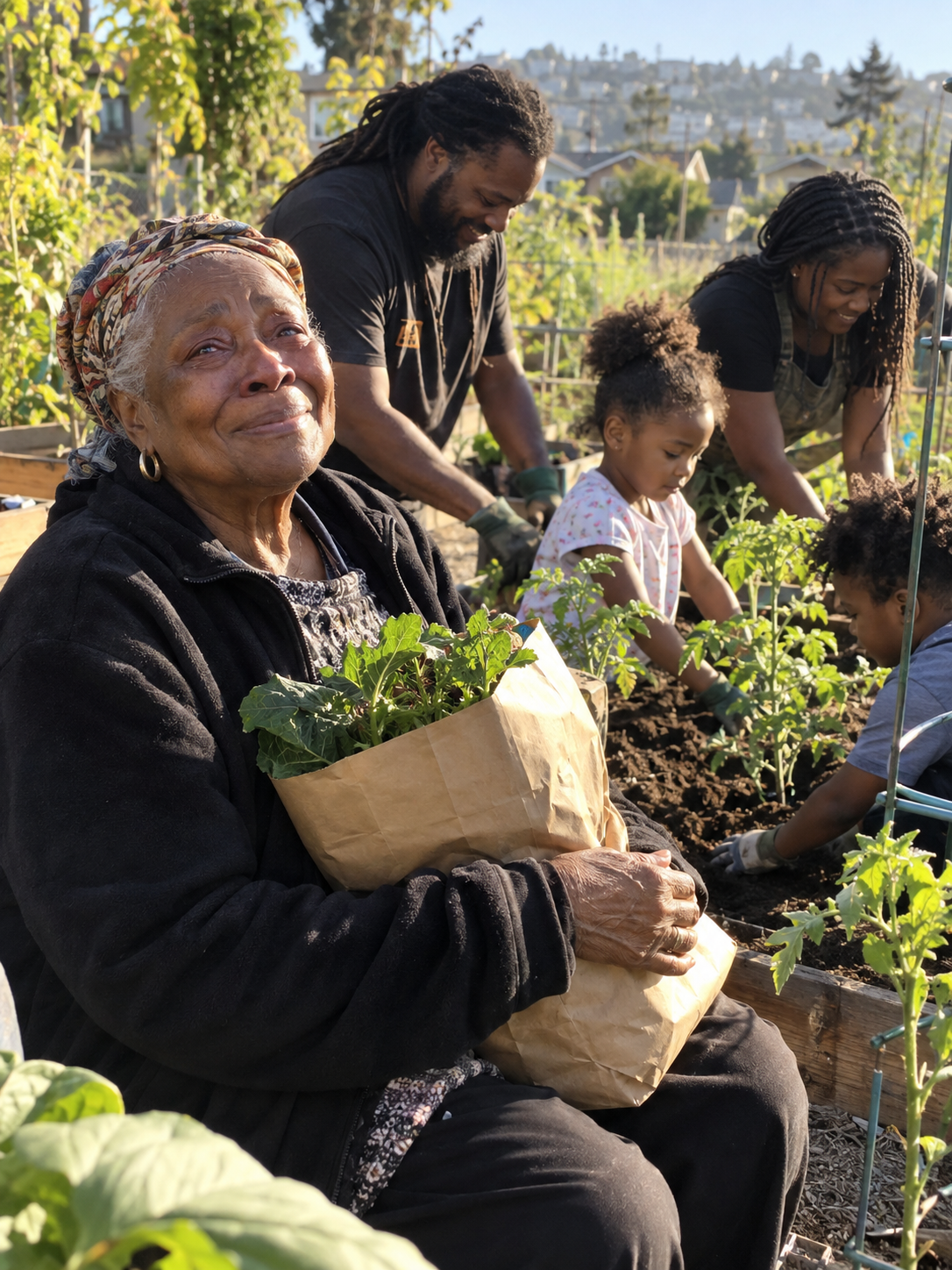
Miss Pearl Robinson planted tomatoes in the vacant lot for twenty-two summers, leaving paper bags of produce on doorsteps before sunrise.
At seventy-eight, Pearl Robinson had learned that the smallest routines often carried the heaviest memories. In Oakland, California, familiar walls and familiar streets could still hold a surprise. That morning, even the ordinary sounds seemed to ask for closer attention.
She knew which neighbor liked collard greens, whose children ate cherry tomatoes, and which elder needed vegetables sliced because of stiff hands.
People around Pearl Robinson knew pieces of this history, but no one held the entire account. Time had softened the public version while leaving the private questions untouched. Every relative remembered a different detail and protected a different silence.
After surgery weakened her legs, Pearl watched from her window as weeds swallowed the garden and assumed the tradition had ended.
The discovery made a row of tomato plants feel heavier than it looked. What had seemed ordinary now connected a present decision to a past nobody had fully explained. Setting it aside would have been easier, but it would not have brought peace.
One Saturday she heard shovels. Thirty neighbors had gathered, each carrying seeds saved from vegetables she had given them over the years.
There was enough evidence to keep looking and enough uncertainty to cause harm. Pearl Robinson chose to ask one more question before accepting the easiest answer. The answer would affect people who had built entire lives around the older story.
Pearl tried to direct the work from a folding chair, but the children insisted she rest. They had drawn a planting map from lessons she did not know they remembered.
That choice brought old loyalties into the open. Love, pride, and fear had been occupying the same room for years, each pretending to be the only truth. Nobody could move forward while those feelings remained disguised as facts.
A developer arrived to discuss purchasing the lot. The neighbors presented records showing Pearl’s garden had served as a community project for decades.
No single conversation could repair everything. Still, speaking plainly changed what everyone could deny, and silence stopped controlling the next decision. For the first time, each person had to respond to what actually happened.
Local shop owners, former recipients, and a legal-aid volunteer raised enough money to place the land in a neighborhood trust.
The truth did not erase the lost years. It gave those years their correct names and allowed the people carrying them to put down some of the blame. Grief remained, but it no longer had to defend a false version of the past.
Pearl pressed her palms together when a wooden sign appeared: “Miss Pearl’s Row—Take What You Need, Leave What You Can.”
What happened next was quiet and practical. A call was returned, a chair was pulled closer, and the first honest plan was made without demanding instant forgiveness. Small actions made the new promise believable in a way speeches could not.
Accessible beds and a smooth path allowed her to garden again. Young volunteers now deliver produce using the same plain paper bags.
Word traveled through the community, not as gossip but as an invitation to help. People offered time, records, food, rides, or simply their presence. Each contribution showed that care becomes strongest when it is given a specific job.
At the first harvest, Pearl tasted one tomato and declared it needed salt. The whole block laughed, relieved to hear her giving orders again.
That is why a row of tomato plants remained important. It became a witness to a neighborhood returning care to the woman who fed it, and a reminder that one brave act can change how a family remembers itself. Its meaning would now be passed forward with the complete story attached.


