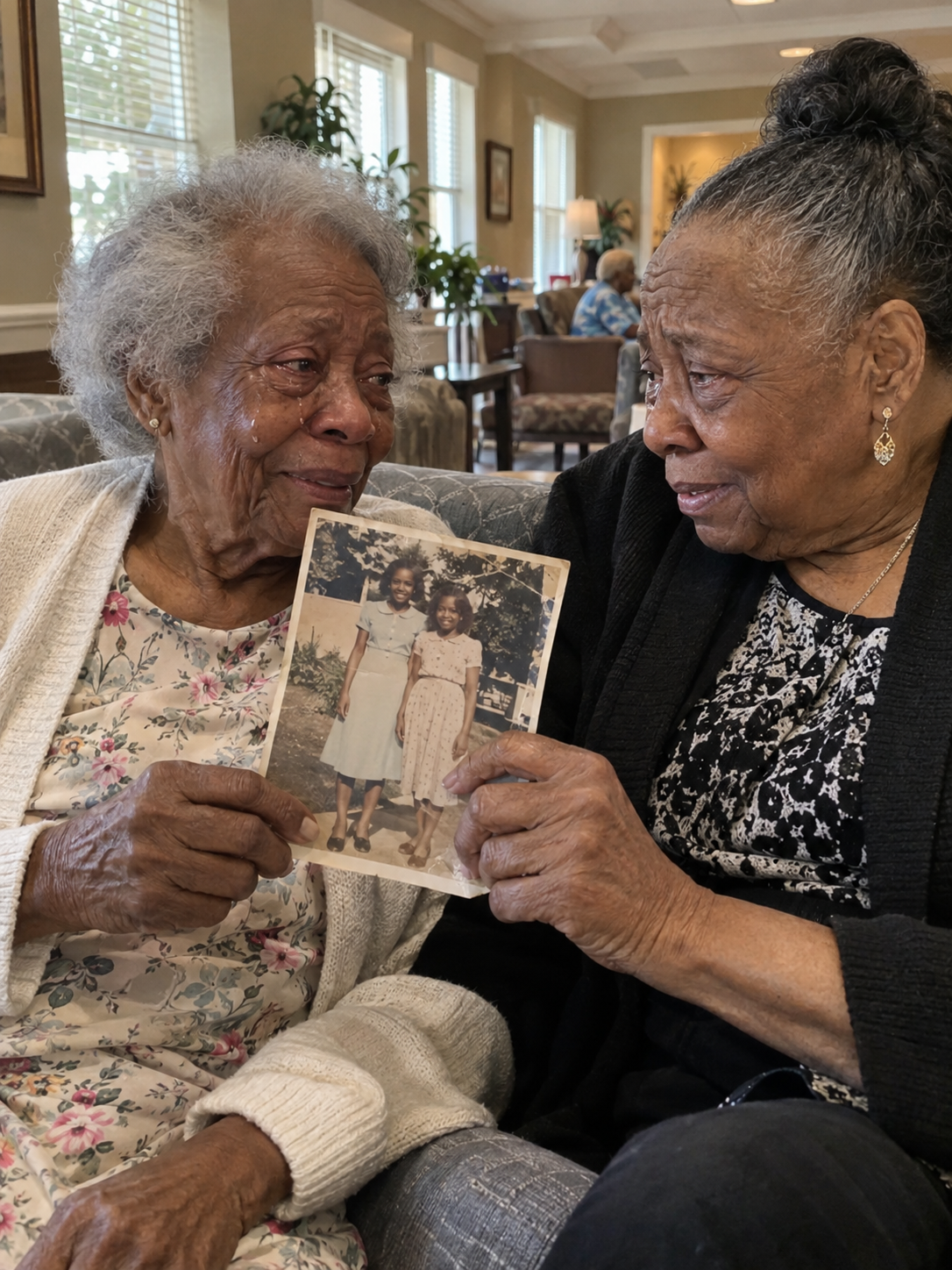
Every evening Gloria Mayfield dusted the piano, and every evening she turned one silver-framed photograph face down before her grandchildren arrived.
At seventy-one, Gloria Mayfield had learned that the smallest routines often carried the heaviest memories. In Savannah, Georgia, familiar walls and familiar streets could still hold a surprise. That morning, even the ordinary sounds seemed to ask for closer attention.
The picture showed Gloria at nineteen beside her older sister Celeste, who left Savannah after a church scandal and was never invited home again.
People around Gloria Mayfield knew pieces of this history, but no one held the entire account. Time had softened the public version while leaving the private questions untouched. Every relative remembered a different detail and protected a different silence.
Gloria’s granddaughter Nia found the photograph and recognized Celeste as the quiet woman who had attended her college recital from the last row.
The discovery made a faded family photograph feel heavier than it looked. What had seemed ordinary now connected a present decision to a past nobody had fully explained. Setting it aside would have been easier, but it would not have brought peace.
A date written on the back matched the week Gloria’s father accused Celeste of taking church funds. Old ledgers later showed the missing amount had paid Gloria’s emergency hospital bill.
There was enough evidence to keep looking and enough uncertainty to cause harm. Gloria Mayfield chose to ask one more question before accepting the easiest answer. The answer would affect people who had built entire lives around the older story.
Gloria realized her sister had accepted disgrace to protect the family from learning that their respected father had borrowed money without permission.
That choice brought old loyalties into the open. Love, pride, and fear had been occupying the same room for years, each pretending to be the only truth. Nobody could move forward while those feelings remained disguised as facts.
At a coastal nursing home, Gloria confronted Celeste with the ledger. Celeste said their father promised the truth would come out after the debt was repaid, but he died first.
No single conversation could repair everything. Still, speaking plainly changed what everyone could deny, and silence stopped controlling the next decision. For the first time, each person had to respond to what actually happened.
Celeste had stayed away because Gloria’s wedding invitation was returned unopened with their mother’s handwriting: “Please let us heal.” She had mistaken rejection for Gloria’s choice.
The truth did not erase the lost years. It gave those years their correct names and allowed the people carrying them to put down some of the blame. Grief remained, but it no longer had to defend a false version of the past.
Gloria placed the photograph upright between them. She apologized for enjoying a protected life while her sister carried a lie that was never hers.
What happened next was quiet and practical. A call was returned, a chair was pulled closer, and the first honest plan was made without demanding instant forgiveness. Small actions made the new promise believable in a way speeches could not.
The sisters returned to church together on its anniversary Sunday. The pastor corrected the congregation’s archived history and publicly restored Celeste’s name.
Word traveled through the community, not as gossip but as an invitation to help. People offered time, records, food, rides, or simply their presence. Each contribution showed that care becomes strongest when it is given a specific job.
Back at home, Gloria moved the photograph from the piano to the front hallway. Her grandchildren now pass both sisters’ faces whenever they enter.
That is why a faded family photograph remained important. It became a witness to the daughter erased from a family portrait, and a reminder that one brave act can change how a family remembers itself. Its meaning would now be passed forward with the complete story attached.


