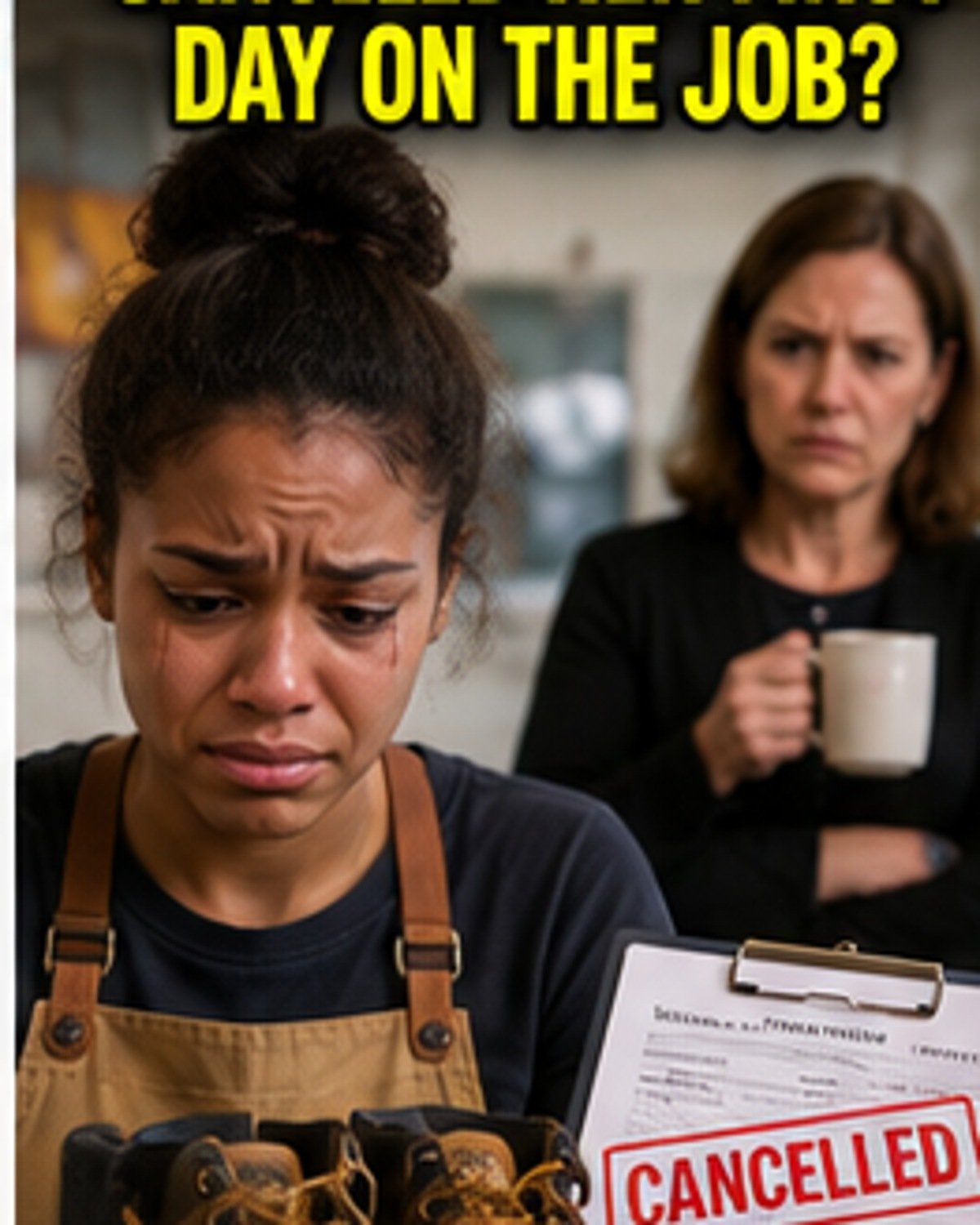
Tiana had been awake since before sunrise, even though her alarm was set for 6:15. Her new work boots were beside the bed, her uniform had been pressed the night before, and the small apprenticeship badge on her shirt felt like proof that months of applications, interviews, and training had finally paid off. The ordinary setting made the moment feel even more unsettling, because nothing about the day had suggested that her apprenticeship was about to become a crisis.
She moved quietly through the apartment so she would not wake her two younger brothers. In the kitchen, she packed a sandwich, checked the bus schedule twice, and smiled when she saw the message from her apprenticeship coordinator reminding her to arrive fifteen minutes early. Tiana tried to focus on the facts in front of her, but every new detail made the situation harder to dismiss as a misunderstanding.
Her mother, Denise, was already sitting at the table with a mug of coffee. She barely looked up when Tiana said, “Today’s the day.” Tiana expected at least a smile, but Denise only asked what time she would be home.
“After five, maybe a little later if they keep me for orientation,” Tiana answered. Her mother’s expression tightened. Denise reminded her that the boys got out of school at three and usually came straight home.
Tiana explained that she had already arranged for a neighbor to watch them for two hours. It was not perfect, but it was temporary, and the apprenticeship could lead to a full-time kitchen position with benefits. Denise said nothing.
Then came a knock at the door. Tiana assumed it was the neighbor, but when she opened it, she found Mr. Alvarez, an official from the apprenticeship program, standing in the hallway with a folder under his arm.
He apologized for coming unannounced. Tiana’s stomach dropped before he even finished his first sentence. He said the office had received an email late the previous evening canceling her start date and stating that she was no longer available for the program.
Tiana stared at him, confused. She had sent no such email. Mr. Alvarez slowly turned his folder around and showed her a printed copy. The message had come from an address belonging to her mother.
For a few seconds, the apartment went completely still. Tiana looked toward the kitchen. Denise remained seated, both hands wrapped around her coffee mug, as if the truth printed on the page had nothing to do with her.
“Why would you do that?” Tiana asked. Her voice was quieter than she expected. Denise finally said the boys needed someone dependable after school, and that family had to come before “some kitchen job.”
Tiana reminded her that this was not just a random job. The apprenticeship included paid training, certification, and a path into a career she had worked toward for more than a year. Denise replied that her brothers were more important.
Mr. Alvarez did not interrupt at first. He let the silence expose exactly what had happened. Then he explained that canceling someone else’s placement without their permission was not a normal family decision; it could permanently damage an applicant’s standing if the office believed the applicant had walked away.
Tiana’s eyes filled with tears. She said she had spent years helping with homework, dinners, school pickups, and bedtime because she loved her brothers. But she had never agreed to give up her future so the arrangement could continue forever.
Denise became defensive and accused Tiana of being selfish. That was when Mr. Alvarez revealed the reason he had come in person instead of simply closing the file.
He stepped into the hallway and waved to someone near the stairs. A woman in a chef’s coat walked up carrying a clipboard. She introduced herself as Executive Chef Marlene Price, the person who had selected Tiana after her final practical exam.
Chef Price said she had seen Tiana’s work and did not believe the sudden cancellation sounded like her. Before removing her from the program, she asked the office to verify it face-to-face.
Then she gave Tiana a choice. If Tiana still wanted the apprenticeship, the position was hers. A later bus could be arranged that morning, and the staff would treat the previous email as unauthorized.
Tiana did not hesitate. She went to her room, picked up her bag, and came back wearing the same boots she had been so proud to lace up an hour earlier. Her mother warned her that she was abandoning the family.
Tiana looked at her brothers’ school photos on the wall and said, “I love them. But loving them doesn’t mean I have to lose my life for them.” Chef Price opened the door, and Mr. Alvarez followed them downstairs.
That first shift was exhausting, loud, and completely worth it. Months later, Tiana earned her first certification and moved into a paid full-time role. The hardest lesson from that morning was not about cooking at all: sometimes protecting your future means refusing to let someone else decide that your dreams are less important than their convenience.


