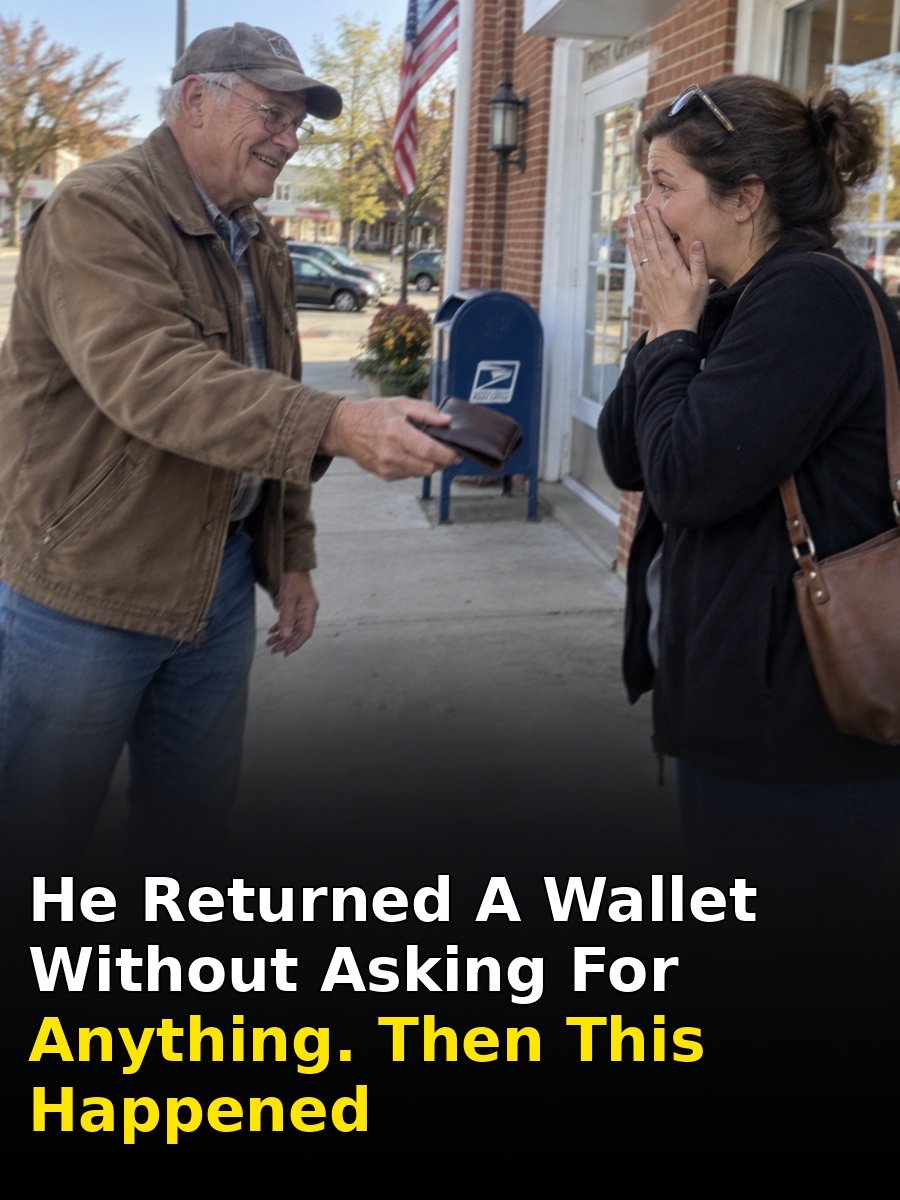
He Returned A Lost Wallet. What Happened At The Post Office Was Not Expected
The object looked ordinary at first: a photograph, a note, an envelope, or a wallet in the wrong place. Its importance appeared only after someone slowed down and asked who had been connected to it.
For older Americans, small objects can preserve memories that never entered a history book. A name on the back of a photograph may identify a neighbor, teacher, veteran, parent, or friend whose story was nearly forgotten.
The discovery brought generations together. Instead of scrolling past another image, they placed it on a table and compared faces, dates, streets, handwriting, and small details in the background.
One person remembered a story from childhood. Another recognized a building that no longer exists. Someone else found an old box that answered a question the family had carried for years.
The emotional part was not the object alone. It was watching people realize that ordinary lives had always been connected to a larger American story made by neighbors, workers, parents, volunteers, and citizens.
Older relatives often keep details that cannot be found online. They remember which shop stayed open late, who helped during a difficult winter, and how a neighborhood looked before it changed.
The family decided to preserve the discovery carefully. They scanned it, wrote down names, and asked relatives to add memories without arguing over every small difference.
Anyone exploring family history should keep originals safe, avoid writing on fragile paper, record where an item came from, and make copies for relatives. Libraries and archives may help verify dates and places.
The story became more meaningful because nobody treated the past as a performance. They listened to one another and allowed the evidence to grow slowly.
By the end, the object had a new place in the house. It was no longer hidden in a box; it became a bridge between generations and a reason to call someone who had been missed.
History is not only made by famous people. It is also made by people who show up, keep promises, return what is lost, and quietly help a community survive.
This is a human-interest story for reflection and entertainment. Verify names, dates, and local details through family records or trusted archives before presenting them as documented history.
For older Americans, small objects can preserve memories that never entered a history book. A name on the back of a photograph may identify a neighbor, teacher, veteran, parent, or friend whose story was nearly forgotten.
One person remembered a story from childhood. Another recognized a building that no longer exists. Someone else found an old box that answered a question the family had carried for years.
Older relatives often keep details that cannot be found online. They remember which shop stayed open late, who helped during a difficult winter, and how a neighborhood looked before it changed.
For older Americans, small objects can preserve memories that never entered a history book. A name on the back of a photograph may identify a neighbor, teacher, veteran, parent, or friend whose story was nearly forgotten.
The discovery brought generations together. Instead of scrolling past another image, they placed it on a table and compared faces, dates, streets, handwriting, and small details in the background.
One person remembered a story from childhood. Another recognized a building that no longer exists. Someone else found an old box that answered a question the family had carried for years.
The emotional part was not the object alone. It was watching people realize that ordinary lives had always been connected to a larger American story made by neighbors, workers, parents, volunteers, and citizens.
Older relatives often keep details that cannot be found online. They remember which shop stayed open late, who helped during a difficult winter, and how a neighborhood looked before it changed.
The family decided to preserve the discovery carefully. They scanned it, wrote down names, and asked relatives to add memories without arguing over every small difference.
Anyone exploring family history should keep originals safe, avoid writing on fragile paper, record where an item came from, and make copies for relatives. Libraries and archives may help verify dates and places.
The story became more meaningful because nobody treated the past as a performance. They listened to one another and allowed the evidence to grow slowly.
By the end, the object had a new place in the house. It was no longer hidden in a box; it became a bridge between generations and a reason to call someone who had been missed.
History is not only made by famous people. It is also made by people who show up, keep promises, return what is lost, and quietly help a community survive.
This is a human-interest story for reflection and entertainment. Verify names, dates, and local details through family records or trusted archives before presenting them as documented history.
Source and note: Educational content only. Verify personal questions with a qualified professional or trusted archive.