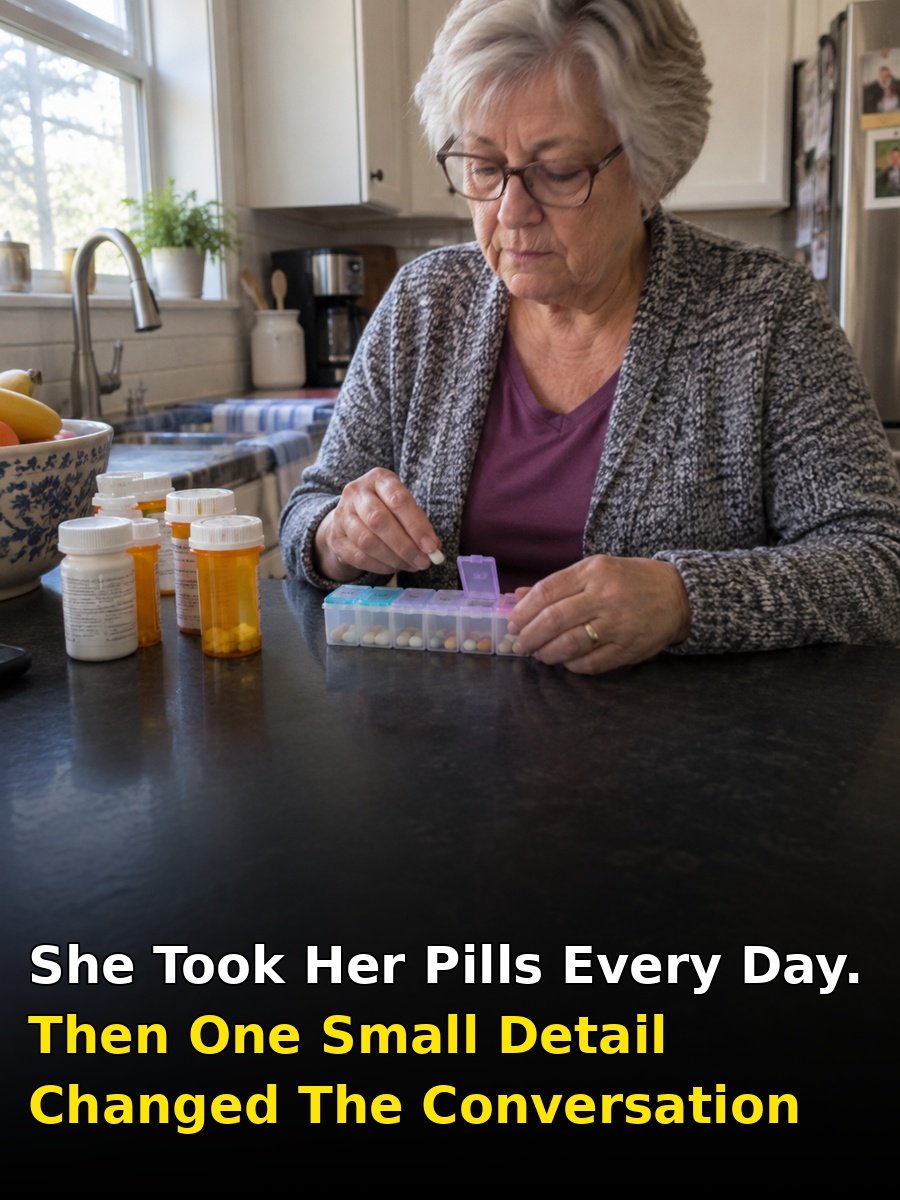
A Weekly Pill Organizer Can Hide A Problem Older Adults Should Notice
The moment looked ordinary, but one small change made the family pause. There was no internet diagnosis and no dramatic announcement. Someone simply noticed a pattern and decided it was worth writing down before making assumptions.
That is often the safest beginning for an older adult: observe carefully, record the details, and ask a qualified professional a clear question. A single symptom or number rarely explains everything by itself.
Older adults may manage prescriptions, appointments, household responsibilities, and several changes at once. A small notebook can help track timing, food, sleep, activity, medicines, and anything that seems different.
Never stop, double, share, or replace a prescription because of an online article. A pharmacist or clinician can check interactions, side effects, and the person’s medical history.
Home conditions matter too. Better lighting, clear walkways, secure rugs, handrails, and frequently used items within reach can reduce preventable problems and support independence.
A family member should ask permission before taking over. Respectful help often works better than criticism, especially when the older adult is trying to remain independent.
Use official health sources for general education, but remember that recommendations can change with age, kidney function, heart conditions, allergies, and other personal factors.
Urgent symptoms such as trouble breathing, chest pain, fainting, sudden weakness, severe confusion, or a serious injury require immediate medical help. Do not wait for social-media advice.
Less urgent but persistent changes should still be discussed with a doctor or pharmacist. Bring the medicine list and notes so the conversation is specific rather than vague.
The family in this story did not panic. They asked a better question, checked a reliable source, and followed up with a professional. That process brought clarity and prevented guesswork.
The practical lesson is simple: notice changes early, write down what happened, and treat online information as preparation for a conversation—not as a personal diagnosis.
This article is educational only. Read the linked official guidance and speak with a qualified healthcare professional about any personal symptom or medicine concern.
That is often the safest beginning for an older adult: observe carefully, record the details, and ask a qualified professional a clear question. A single symptom or number rarely explains everything by itself.
Never stop, double, share, or replace a prescription because of an online article. A pharmacist or clinician can check interactions, side effects, and the person’s medical history.
A family member should ask permission before taking over. Respectful help often works better than criticism, especially when the older adult is trying to remain independent.
That is often the safest beginning for an older adult: observe carefully, record the details, and ask a qualified professional a clear question. A single symptom or number rarely explains everything by itself.
Older adults may manage prescriptions, appointments, household responsibilities, and several changes at once. A small notebook can help track timing, food, sleep, activity, medicines, and anything that seems different.
Never stop, double, share, or replace a prescription because of an online article. A pharmacist or clinician can check interactions, side effects, and the person’s medical history.
Home conditions matter too. Better lighting, clear walkways, secure rugs, handrails, and frequently used items within reach can reduce preventable problems and support independence.
A family member should ask permission before taking over. Respectful help often works better than criticism, especially when the older adult is trying to remain independent.
Use official health sources for general education, but remember that recommendations can change with age, kidney function, heart conditions, allergies, and other personal factors.
Urgent symptoms such as trouble breathing, chest pain, fainting, sudden weakness, severe confusion, or a serious injury require immediate medical help. Do not wait for social-media advice.
Less urgent but persistent changes should still be discussed with a doctor or pharmacist. Bring the medicine list and notes so the conversation is specific rather than vague.
The family in this story did not panic. They asked a better question, checked a reliable source, and followed up with a professional. That process brought clarity and prevented guesswork.
The practical lesson is simple: notice changes early, write down what happened, and treat online information as preparation for a conversation—not as a personal diagnosis.
This article is educational only. Read the linked official guidance and speak with a qualified healthcare professional about any personal symptom or medicine concern.
Source and note: Educational content only. Verify personal questions with a qualified professional or trusted archive.