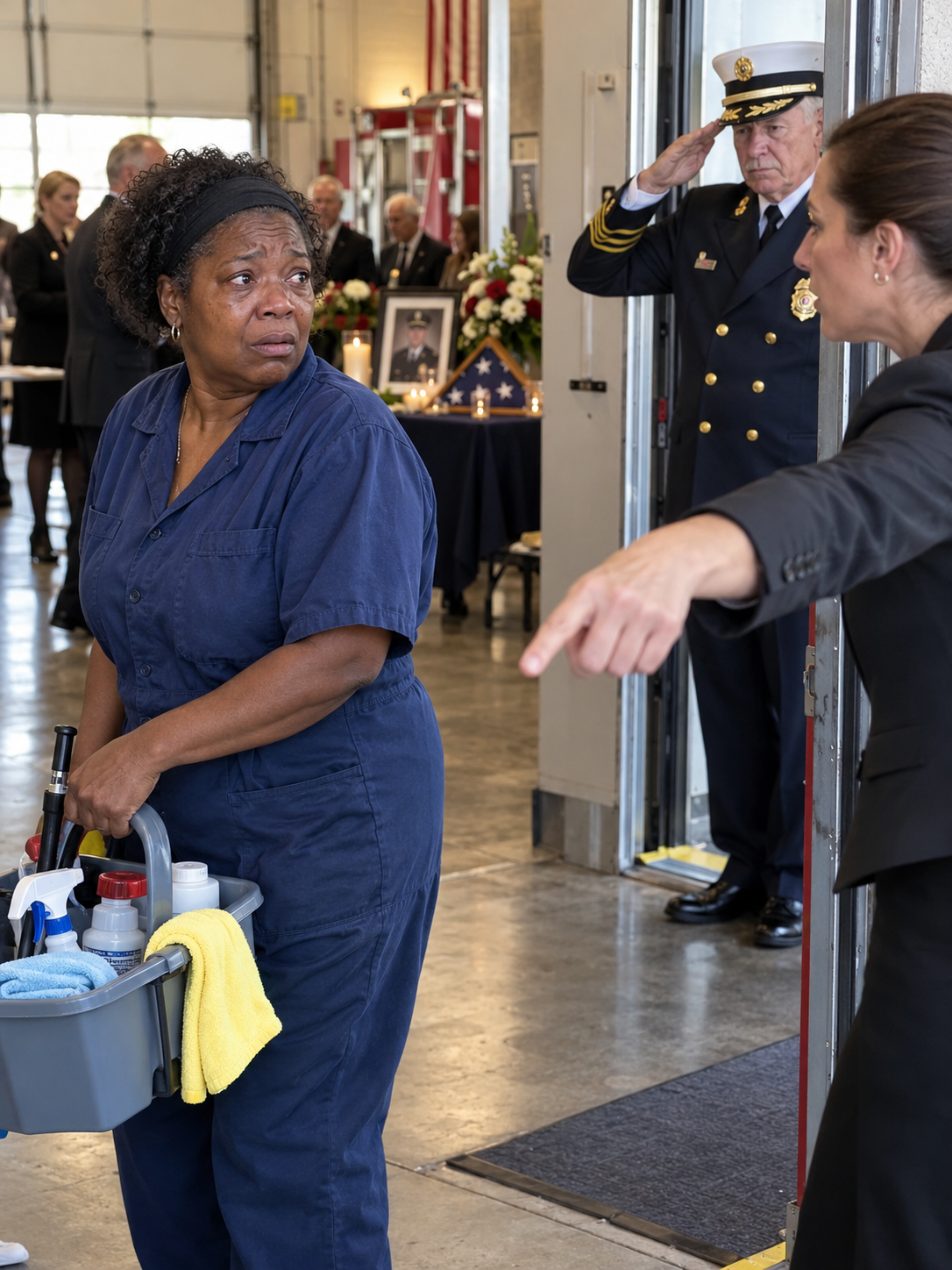
“Staff use the rear entrance,” the organizer said, pointing past the memorial display. Naomi Brooks stopped with a cleaning caddy in her hand. She had come through the fire station’s side door because it was the door she remembered. In the reception room, families were placing photographs beside folded programs. Someone had left a chair empty beneath her husband’s name.
Naomi was fifty-five. She cleaned offices three evenings a week and cared for her mother during the day. Before leaving home, she had meant to change out of her blue work coveralls. Then her mother’s ride was delayed, a building alarm needed resetting, and the ceremony clock kept moving. She decided being there mattered more than arriving dressed the way she had planned.
The organizer looked at the caddy rather than the invitation she held beside it. “We already have somebody doing the floors,” he said. A few guests turned. Naomi explained that she was there for the memorial, but he asked her to wait in the corridor while he found the catering supervisor. She felt the sharp embarrassment of being explained to other people before she had been heard.
Her husband, Ellis, had died six years earlier after a long illness. He had served with the station’s volunteer crew for most of their marriage. Naomi had served there too, though she rarely mentioned it at work. She remembered carrying extra socks in the truck, filling reports after midnight, and sitting with families while the firefighters finished what needed to be done outside.
“My name is Naomi Brooks,” she repeated. The organizer checked a shortened guest list, running a finger down surnames without asking whether Brooks might appear under a family entry. He told her the room was reserved. Naomi looked at the empty chair and thought of turning around. Grief made familiar places unpredictable; she had used most of her courage simply to walk through the door.
Then the fire chief appeared from the adjoining room. He saw Naomi by the memorial and stopped mid-conversation. Instead of asking about the cleaning equipment, he raised his hand in the salute they used for former crew members. The organizer stepped aside, suddenly uncertain. Naomi stood with the caddy against her leg while the chief crossed the room and said her name.
Chief Alvarez had joined the station when Naomi and Ellis were already experienced volunteers. He remembered her guiding a shaken family to a warm car after a winter house fire. He remembered Ellis returning from calls to find Naomi washing mugs at two in the morning. He had invited her personally, sending the card to an address she had occupied for twenty-four years.
Naomi put down the caddy and shook his hand. She did not want the room turned into a public lesson with her at its center. “I just want to sit by Ellis,” she said. Alvarez nodded and led her to the empty chair. The organizer followed, carrying the invitation Naomi had left on the table, finally reading the part that said family and former crew. Marissa had placed a small sprig of rosemary beside the frame earlier that morning. Naomi straightened it before sitting. Ellis used to bring herbs from the yard into the kitchen in old jam jars. The familiar smell reached her before the speeches began, giving the formal room one ordinary detail that belonged entirely to the man they were there to remember.
As the names were read, Naomi held the program with both hands. She recognized people by the photographs their families had chosen: a fishing cap, an uneven grin, a face younger than memory had made it. Ellis’s daughter had submitted a picture from a picnic. Naomi was glad. She preferred the man laughing beside a smoky grill to the formal portrait everyone expected.
The chief spoke briefly about work that was easy to see and work that happened afterward. He named firefighters, dispatchers, volunteers, and the people who kept the station ready for the next call. He did not describe Naomi as a surprise hidden beneath a uniform. She appreciated that. Her cleaning clothes were not a disguise from which someone needed to rescue her real identity.
During the reception, the organizer approached with an apology. He explained that he was new and had been told to separate contractors from invited guests. Naomi asked why he had not read the invitation when she offered it. He had no useful answer. She let the silence last. Her work clothes had supplied an assumption he had been willing to trust more than her words.
“I would have deserved a polite answer if I really had come to clean,” she said. He nodded, then asked whether there was anything he could do. Naomi told him to greet the people arriving at the rear entrance with the same care he was now showing her. Some were paid workers. Some were relatives helping with food. Everyone was carrying something the ceremony needed. He went to the corridor immediately and welcomed the catering crew carrying trays from a van. Naomi watched him offer to hold the door rather than question why they were there. She did not congratulate him. Courtesy could become a habit through practice, and he had an afternoon full of opportunities to practice it without placing her in charge of his progress.
Her stepdaughter, Marissa, arrived late after a delayed train. She spotted Naomi by Ellis’s photograph and sat beside her without mentioning the coveralls. Together they remembered his inability to leave a loose cupboard hinge alone. He would visit someone for dinner and ask for a screwdriver before dessert. Marissa laughed, then cried, and Naomi reached for her hand under the edge of the table.
Alvarez joined them with an old station album. Naomi found herself on a page from a flood response, standing behind three people she had nearly forgotten. She asked for a copy to show her mother. Marissa had never seen the picture. She knew Naomi had volunteered, but she had not understood the hours that existed outside the family stories told around their own dinner table. One photograph showed a younger Naomi labeling cups with people’s names. She had forgotten doing that until Marissa asked. Families waiting for news kept losing track of their drinks, and she thought it might save them one small inconvenience. The memory made Alvarez smile. It also reminded Naomi that being useful had often meant noticing something too ordinary for a report.
The organizer brought over tea and asked permission before placing it near the photographs. Naomi thanked him. She could see he was trying to repair the moment through small acts rather than another elaborate apology. She did not need to promise forgiveness on a timetable that made him comfortable. They could both finish the afternoon with a clearer understanding of how it had gone wrong.
Before leaving, Naomi picked up the caddy. Alvarez offered to carry it to the car, and she accepted because her hands were full of the album copies. Outside, he apologized for the station’s welcome. He said future organizers would have complete family lists and a simple instruction to ask before making assumptions. Naomi told him that would help everyone, including the person whose job actually was the floor.
Her mother was awake when she got home. Naomi placed the flood photograph on the bedside table and began naming the crew. Her mother remembered Ellis’s smile at once. She asked why Naomi still had her work clothes on. Naomi said it had been a crowded day. Then she sat down and told her the whole story, including the part she had nearly decided to leave out.
At her next cleaning job, a receptionist asked about the photograph Naomi had tucked inside her bag. Naomi told her she had once volunteered at the station. The receptionist said she had never guessed. Naomi smiled politely, then asked where the building kept spare bin liners. She was proud of that earlier work. She was also proud of doing the job for which she had arrived that evening. The receptionist later asked whether the building’s cleaning schedule could be moved for a meeting. Naomi checked her route and suggested a workable time instead of agreeing automatically. She had other commitments, and the memorial had sharpened her sense that having a service job did not make her time endlessly adjustable. The receptionist accepted the answer and put it on the calendar.
Marissa framed a copy of the picnic photograph for Naomi. In the background, barely visible, stood the old station door. Naomi remembered Ellis holding it open while people carried food inside. It seemed the right detail to keep. A memorial should have offered that kind of welcome without requiring the chief to recognize a face from twenty years before.
The salute stayed with Naomi, but the most valuable part of the afternoon came afterward: sitting beside Marissa, telling ordinary stories, and hearing Ellis’s name spoken with affection. She had arrived carrying cleaning supplies and grief. She left with both still hers, along with a photograph that reminded her how much of a person’s life no stranger can read from a uniform.


